Writing Tip: Redemption as a Movie Theme
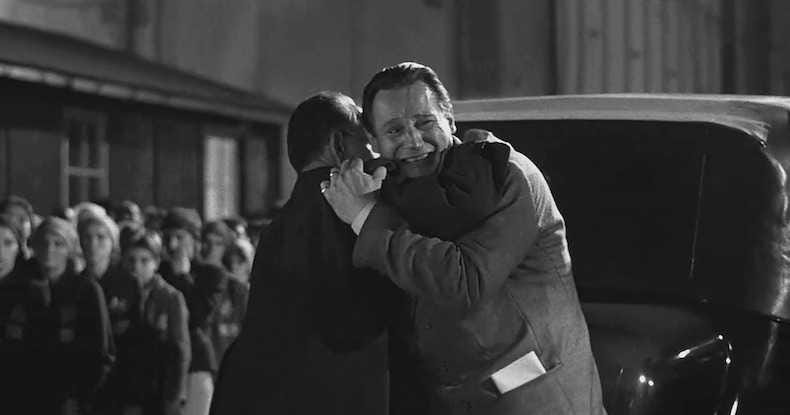
A character seeking freedom from psychological bondage to a past event is one of the most common themes in movies.

A character seeking freedom from psychological bondage to a past event is one of the most common themes in movies.
I have a background in the academic study of theology, a B.A. in religious studies from the University of Virginia and a Masters of Divinity degree from Yale. So it is only natural I bring that perspective to how I view and understand screenwriting and movies.
A few years ago, I started a series called The Theology of Screenwriting. It ended up being 25 posts on such subjects as Sin, Incarnation, Grace, Predestination, and Hell. You may access those posts here.
Let me be clear, when I say theological, I mean it — in this context — in a secular way. How does that make sense?
The word “theology” is a combination of two Greek words: “theos” which means God and “logos” which means word. So theology is words about God. What if for this series we think of God as a metaphor for an explanation for the big questions of life? Thus, theology as words about the meaning of life. Broadly speaking that is one dynamic movies hit on consistently, characters forced to confront their values, behaviors, and world views related to who they are and how they should act.
In this respect, movies and theology wade in very much the same thematic waters. As Andrew Stanton noted about Lawrence of Arabia in this TED Talk, how the central theme of that story is the question asked of the Protagonist “who are you,” that issue exists at the core of perhaps every movie, an existential exploration of a character or characters’ self-identity. So, too, with theology.
Also, movies tend to be about characters at critical junctures in their lives, facing a journey from the Old World into a New World where through a series of challenges and lessons they undergo a significant metamorphosis. Sounds an awful lot like a conversion experience.
Thus, it is only natural there will be a lot of crossover of theological themes in movies. Indeed, it should not be surprising that the #1 rated movie in the IMDB Top 250 is The Shawshank Redemption. But while a theological theme in a movie may have a religious or spiritual connotation, I am more interested in exploring such themes metaphorically to find the widest value possible for screenwriters at large.
By working with this non-religious take on the concept, we can avail ourselves of numerous powerful theological themes in screenwriting regardless of whether our stories are secular or non-secular.
Redemption
Generally, redemption means deliverance, rescue. In theological terms, it can mean atonement for guilt. For our purposes related to screenwriting, I prefer this: To free someone from bondage.
Metaphorically, bondage can translate into being tied to some event or circumstance in the past, a character bound to it emotionally, even spiritually. They are not free to move on with their psychological development, and certainly not toward Unity, unless and until they confront this bondage and resolve it. If they do, they achieve redemption.
Consider these movie examples:
- The Silence of the Lambs: Clarice Starling life is bound to the murder of her father [a sheriff] when she was 11 years old. The guilt she feels about his death was concretized in the experiences she had on her uncle’s Montana farm — the spring slaughter of the lambs — and her attempt to rescue one of the animals, which she was unable to do. As Hannibal Lecter — her Mentor — determines, if she can save Catherine Martin [kidnap victim], she can silence the lambs. Unstated is this dynamic: Clarice also needs to slay Buffalo Bill as a blood sacrifice to achieve redemption for her father’s death.

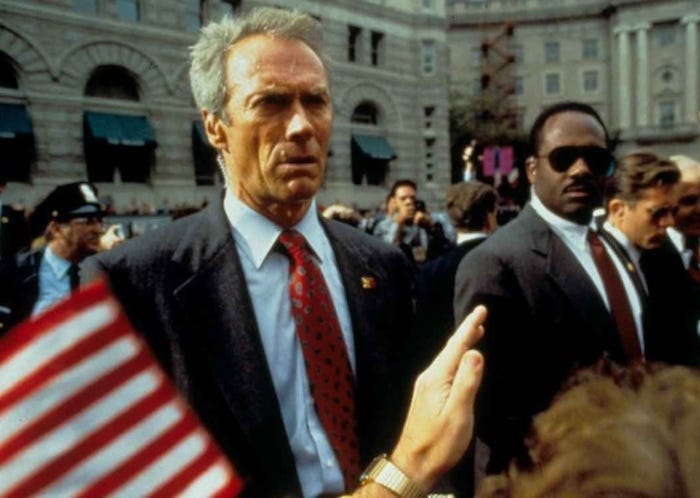
- In the Line of Fire: Secret Service agent Frank Horrigan is bound to the assassination of President John Kennedy, a death he believes he should have prevented. Decades later when a shrewd assassin appears on the scene, Horrigan is determined not to let history repeat itself. In order to redeem himself, Horrigan must stop this assassin from killing the current President of the United States. If he can succeed, he will achieve redemption.
- The Shawshank Redemption: Andy Dufresne is bound to the murder of his wife and her lover. Although this is a crime for which he is wrongly convicted, Andy comes to realize through his tenure at Shawshank that he is guilty of having driven his wife away, complicit in her adultery and eventual death. Andy’s redemption lies in the hope he instills in his fellow prisoners — from little things like getting them ‘suds on the roof’ to playing a Mozart opera over the loudspeaker system to big things like expanding the library. Andy’s life well-spent behind bars ‘earns’ him his freedom through his escape. But his redemption is not complete until Red, finally freed from prison, faces a choice — “Get busy living, or get busy dying”.
It is Andy’s influence — fanning the flames of hope — and a promise Red makes to Andy that keeps Red from following Brook’s path toward suicide, balancing out the death of Andy’s wife.
Redemption is a powerful theological movie theme. It provides a simple, understandable psychological dynamic with a clean beginning, a clear ending, and a satisfying resolution.