Writing Tip: Enter Late, Exit Early
“You always attack a movie scene as late as you possibly can. You always come into the scene at the last possible moment.”
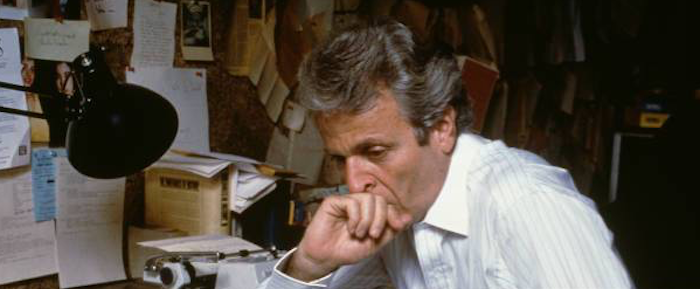
“You always attack a movie scene as late as you possibly can. You always come into the scene at the last possible moment.”
I cannot recall the first time I heard this screenwriting mantra — Enter Late, Exit Early — but it was soon after I broke into the business in the late 80s.
Something to remember every time you write a scene. What is the latest possible moment in the action I can enter the scene? What is the earliest possible moment in the action action I can exit the scene?
Hitchcock said, “Drama is life with the dull parts cut out.” That’s part of what this mantra is about, omitting scene description and dialogue that doesn’t contribute to the entertainment value of your script.
However, it’s more than that. “Enter late, exit early” is a reflection of a key aspect of screenwriting. Unlike a novel, where a writer can take their merry time getting from here to there, a screenplay or teleplay — because there are specific limits to page count — requires a kind of relentlessness.
Obviously, it can vary from script to script, genre to genre, but generally there is a drive to a script that constantly pushes the narrative forward. As a movie or TV writer, we have to traffic in an economy of words, not only per the look of a script page, where white space is as important as black ink, but about every choice we make in terms of scene and sequence construction.
Here’s how William Goldman, screenwriter of Butch Cassidy and the Sundance Kid, All the President’s Men, The Princess Bride and many more movies, describes a screenwriter’s mentality:
You always attack a movie scene as late as you possibly can. You always come into the scene at the last possible moment. Get on. The camera is relentless. Makes you keep running.
That may well have been the origin of, “Enter late, exit early.”
How to determine when to enter and exit a scene? Start with this question:
What is critical to include in the scene?
Notice that word — critical. I didn’t say ‘necessary’ or ‘important’, I used the stronger word to provoke your thinking: If this bit of business or that doesn’t feel critical to a scene, then it’s likely you can start the scene after or before that bit of business plays out.
How to determine if a bit of business is critical or not:
• Does it impact the plot?
• Does it add invaluable insight into a character’s motivation?
• Does it make the scene more memorable?
• Is it a payoff to an earlier scene or set-up for a future one?
• Does the scene simply not work without it?
In this regard, it might be helpful for you to imagine the movie within your story universe. The story universe itself is organic, like our own, and continues on with its own activity. The movie is what you carve out of that daily continuous stream of action in your story universe. In some ways, it’s as important what you omit from a scene as what you choose to keep.
To that end, check this out: The 3 E’s of Scene-Writing: Essential, Efficient, Entertaining.
And remember: Enter Late, Exit Early.