Writing on Assignment
In Hollywood, it’s known as an O.W.A.. In the film school at DePaul University, it’s called SCWR 305 405.

In Hollywood, it’s known as an O.W.A.. In the film school at DePaul University, it’s called SCWR 305 405.
In Hollywood, an O.W.A. is an Open Writing Assignment. These are projects studios, production companies, and/or financiers own and either have developed or want to begin developing as potential movies. They can based on a magazine article, a fiction or nonfiction book, a video game, board game, existing script … basically any type of I.P. (Intellectual Property) which is thought to have potential to become a screenplay which results in a greenlit film project.
I have been hired to write 20+ O.W.A.s. in addition to 10+ original projects, either spec scripts or pitches. It’s a lot harder to land an O.W.A. nowadays primarily because there are fewer of them. But that’s a subject for another day. Today, I want to talk about a really cool variation on this theme.
At the DePaul University film school where I am an assistant professor, one of the required screenwriting classes for the major is known as Writing on Assignment. In the course catalog, it is listed as SCWR 305 405. That means it is open to both undergraduate and graduate students. Here is the course description:
Modeled after professional writing assignments, this advanced course challenges students to complete a feature length screenplay within specific parameters provided by the instructor in ten weeks. Lectures and strict weekly page submission deadlines provide a practical framework on how to write quickly without sacrificing quality. Constructive analysis will be used in discussing produced scripts, weekly assignments and group workshops to reveal the writer’s unique voice and perspective.
I am currently teaching the course for the second time and I love it! Here’s what we do. In our very first class session (Week 1), after introductions and a walk-through of the syllabus, I bring out three hats. They happen to be from three of my movies: K-9, Alaska, and Trojan War. In each hat are little strips of paper with information on each.
The Trojan War hat is for Genre.
The Alaska hat is for Budget.
And the K-9 hat is for Actors.
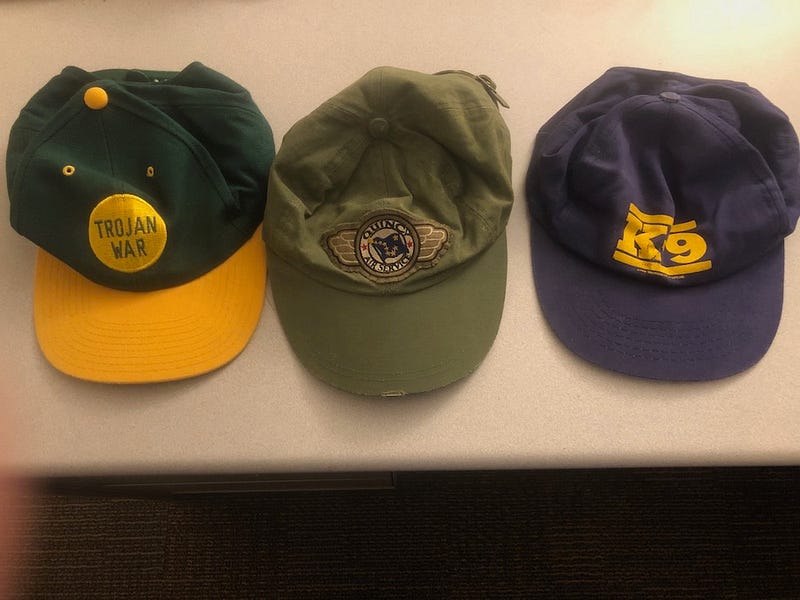
One by one, students come up front and select a slip of paper from each hat. And THAT is what they are going to write.
Ten weeks. From those three slips of paper … to a complete original feature length screenplay.
Here are the random choices students had this quarter.
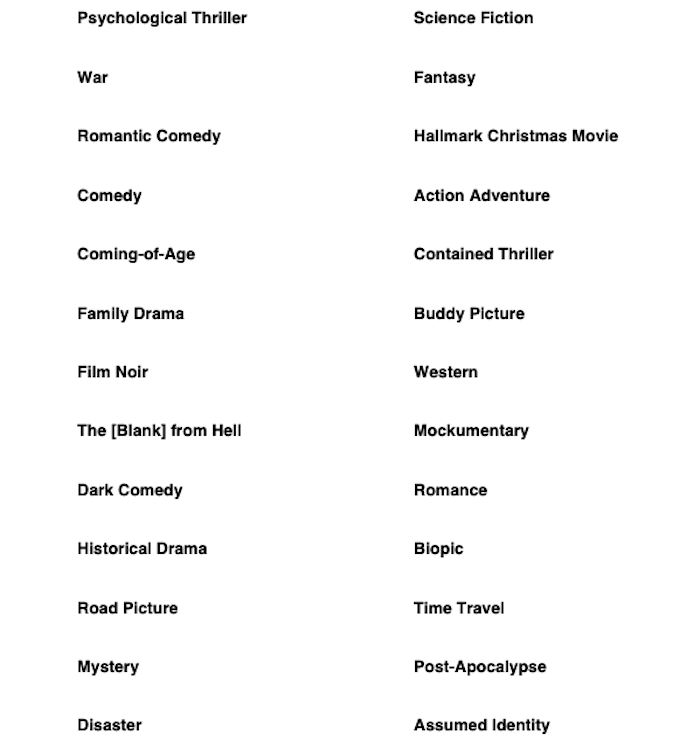

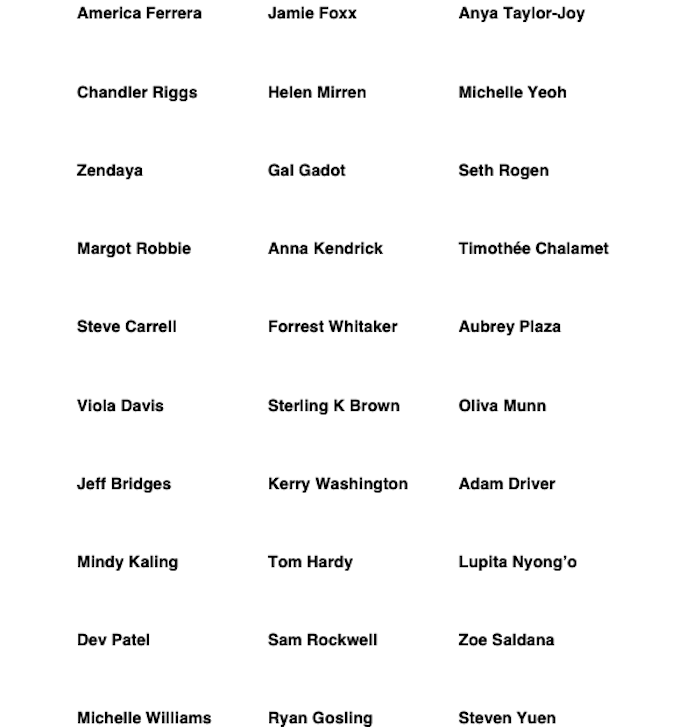
Here are a few of the projects students are writing this quarter based on their random drawings:
$12M / Mystery / Adam Driver
$100M / Action Adventure / Margot Robbie
$1.5M / Contained Thriller / Mindy Kaling
$15M / Psychological Thriller / Aubrey Plaza
$250K / Buddy Picture / Seth Rogen
$50K / War / Jeff Bridges
For three weeks, we meet in class where students go through these steps:
- One-Minute Project Pitch
- Protagonist Character Treatment
- Ten Major Plotline Points
Then they are off to the races as they pound out a minimum of ninety pages over the course of six weeks.
Each student gets the opportunity to have either Act One or Act Two Part A table read and workshopped in class. The actors? The other students.
The final two weeks, we emulate a writers room as we read and critique Act Two Part B and Act Three pages.
Here are the key learning outcomes from this course:
- Students are pulled out of their creative comfort zones. They have to work within the perimeters of their Genre, Budget, and Actor. This is a great exercise as they quite literally learn to write on assignment.
- Many students end up writing in an unfamiliar or even disliked genre, but are encouraged to find a way to personally connect to the material.
- Some students don’t care for their actor. This is a lesson in the realpolitik of Hollywood. This situation happens. But hey, a writer has to eat. And sometimes, a gig is a gig.
- But here’s the really big lesson: This exercise is a full frontal assault at perfectionism. Many students have been trained through their educations to know the rules … stay within the lines … dot every “i” and cross every “t”. While important, this mentality can suffocate creativity. I tell my students: “I want you to have fun writing this script. I want you to be absolutely free to write the story the way you feel it needs to be written.” This is where I bust out my Obi-Wan Kenobi impersonation and say, “Go with your feelings!”
The stories my students have come up with this quarter are amazing. And sure, we’re only in the Act One stage, and as I tell them, “Everyone can write a first act.” We all know what’s required to set up a story. The real challenge will be Act Two. But that’s part of their learning experience. Facing the Great Unknown of the Story’s Middle … just keep pushing yourself forward.
Ninety pages. This is not the time to be precious with your writing. This is the time to pound out pages. Get it down. Then get it right. But first …
Get. It. Down. On the page.
The course is a great combination of hard work and fun. The table reads … workshops … critique sessions … to watch each writer become invested in helping the members of their cohort not only get to Fade Out, but improve their story with suggestions …
I just love this class.
So here’s a thought: Why don’t YOU do your OWN writing on assignment? Pick a Genre. Budget. Actor. Draw them out of a hat. Come up with a story concept. Spend a week getting to know your Protagonist and other characters as they emerge into being. Create a workable set of major Plotline points. Then write a draft.
Productivity over Perfectionism.
The process can help you later on when you’re in Hollywood and you land a real O.W.A.
Final thought: I can’t wait for the day when one of these student scripts ends up getting produced. How much fun will that be when they’re interviewed. “Oh, yeah, the whole thing started with these three hats…”