Writing and the Creative Life: “The best way to have a good idea…”
…is to have lots of ideas.” Those are the words of Linus Pauling, chemist, biochemist, peace activist, author, and educator, the only…
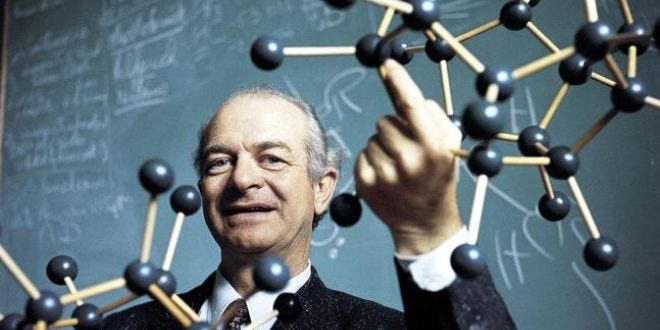
…is to have lots of ideas.” Those are the words of Linus Pauling, chemist, biochemist, peace activist, author, and educator, the only person to be awarded two unshared Nobel Prizes. Not the pedigree of a writing ‘guru,’ but one would be hard pressed to find a better piece of creative advice.
Consider the screenwriting trade. Story ideas are our lifeblood. The success of a spec script or pitch is significantly tied to the project’s underlying story concept. Why? Because everything flows from it — from acquisition and development to production and marketing, all tied to the central idea of the story.
Here is an excerpt from an interview I did in 2009 with an anonymous marketing executive at one of the major Hollywood movie studios:
Q: This summer, several movie stars had movies that under-performed at the box office (e.g., Will Ferrell, Denzel Washington, John Travolta). Meanwhile a number of pre-branded movies (Star Trek, Transformers 2, Ice Age 3, Up — because of Pixar) and strong story concept movies (District 9) did great box office. Do you see this as a trend: Studios relying less on A-list movie stars to open movies?
A: I have absolutely seen a trend in studios relying less on A-list stars to open movies. I think the general audience is growing more savvy when it comes to film. As discussed above, I think audiences today are looking for strong story concepts. They realize that an A-list name does not necessarily equal a great story, and people today want a great story…they don’t care who tells it.
Q: To zero in on this last question, if Movie A had an A-list star and Movie B had an incredible story concept, which would you prefer to take on for a marketing campaign?
A: I would absolutely rather work on a film with an incredible story concept than one with an A-list star in it. Like I said before, films with great storylines speak for themselves. [emphasis added]
For a screenwriter, the importance of ideas goes beyond story concept because every time we go up for an OWA (Open Writing Assignment), we are brought into either a brand new project or one that has been in development for some length of time, yet still requires rewriting. In either case, we are expected to bring in a take on the material and that requires us to generate ideas on how to approach the story.
Screenwriters can look at ideas at an even more granular level: What about a character’s personality traits? Backstory? Way of speaking? Psychological makeup? The ability to generate and assess ideas is critical in the brainstorming and story development process.
Same thing with plotting: How to bridge this scene and that? How to handle exposition? How to make scenes visual and entertaining? Subplots. Transitions. Themes. All of that requires a screenwriter to be comfortable trafficking in the world of ideas.
In truth, it goes beyond being comfortable:
- A screenwriter needs to be committed: We have a responsibility to generate story ideas, from overarching story concepts down to tiny grace notes relative to plot and character.
- A screenwriter needs to be consistent: We need to conjure up story ideas on a daily basis, indeed, that should be our default mindset.
- A screenwriter needs to be creative: We must apply at least some part of our imaginative self in an ongoing effort to surface and develop story ideas.
This reality extends to TV writers and I would assume it does as well to novelists, short story writers, even poets.
What we have considered up to this point speaks to the “have lots of ideas” part of Pauling’s observation. What about the relationship of that to actually ending up with some good ideas?
I’m sure there’s a mathematical explanation or formula tied to the notion that the more ideas we generate, the more likely we will stumble upon some good ones.
From an aesthetic perspective, however, it’s less about logic and more about faith. That is if we commit ourselves to filling our lives with ideas, that effort will somehow connect us to Good Ideas. Not in any sort of mechanistic way, but rather more in the fashion of Magic. Conjuring up lots of ideas somehow pleases the Muses… and occasionally they bestow upon us some Great Ideas.
Hence the sudden idea that strikes us as we fall asleep… take a shower… go for a run… stand in the grocery store checkout line… sit staring at nothing…
Cognitive neuroscientists may come up with a causal, physical link between generating lots of ideas to the manifestation of a few Great Ideas.
But even if that is the case, I will prefer to believe this: When a Great Idea strikes out of the blue, it is tied in some metaphysical way to all that effort we’ve put in day after day churning through a mass of mundane notions.
It’s an object of faith a writer has a right to claim.
Unlike Linus Pauling, I won’t be getting a Nobel Prize, but I am glad to take his observation — The best way to have a good idea is to have lots of ideas — and make it a part of my creative belief system!
Writing and the Creative Life is a Go Into The Story series in which we explore creativity from the practical to the psychological, the latest in brain science to a spiritual take on the subject. Hopefully, the more we understand about our creative self, the better we will become as writers.
For more articles in the Writing and Creative Life series, go here.