Writing a Logline for a Character Driven Drama
“Who’s your Protagonist? What is the distinctive issue they’re confronting, the source of their conflict? What is at the emotional core of…

“Who’s your Protagonist? What is the distinctive issue they’re confronting, the source of their conflict? What is at the emotional core of your story?”
In a recent online screenwriting class, one of the writers in the group posted this:
I write dramas and I almost always find it hard to write a logline. Yes, one could argue I might do things in the wrong order if I don’t write the logline first, but that’s just the way my writer’s heart works. I do outline before I write and I strive to have a clear beginning, middle and end and build all the way to the climax. I also have very few characters in my scripts.
So I wonder, since my dramas are about painful struggles (drug abuse, coming out, spiritual awakenings etc.) and at the core, often hiding a secret from friends or family because *fill in the emotional core wound* — -
Do I have a hard time writing a logline simply because my plot is too weak compared to the theme? Maybe I have too many themes? Maybe my plot is not simple or clear enough? Are my stories “blurry” as in there’s too much going on so I can’t easily pick out the main plot?
And further; how do you then balance theme vs plot in a logline, or is the logline for plot only? If it’s plot only, how will I then be able to “advertise” and “tease” the reader with the emotional core and what’s really going on in the story?
Maybe I find all this hard because non of my scripts are about a single mission to Mars. Maybe I get blinded by theme. I really don’t know. All I know is that I always start with character and dive into their painful journey to unity.
Here is my response:
You’ve packed a lot of issues into one post, each of them important. Let me begin by starting with a writing mantra I came up with years ago:
The purpose of a logline is not to tell the story, but sell the story.
You want to give a reader just enough to hook their interest. All too often, writers pack too much information into a logline, but it’s called a logline, not a longline.
Again, you’re just trying to give the reader something which grabs their attention, so they say, “Yeah, I’ll take a look at that script.”
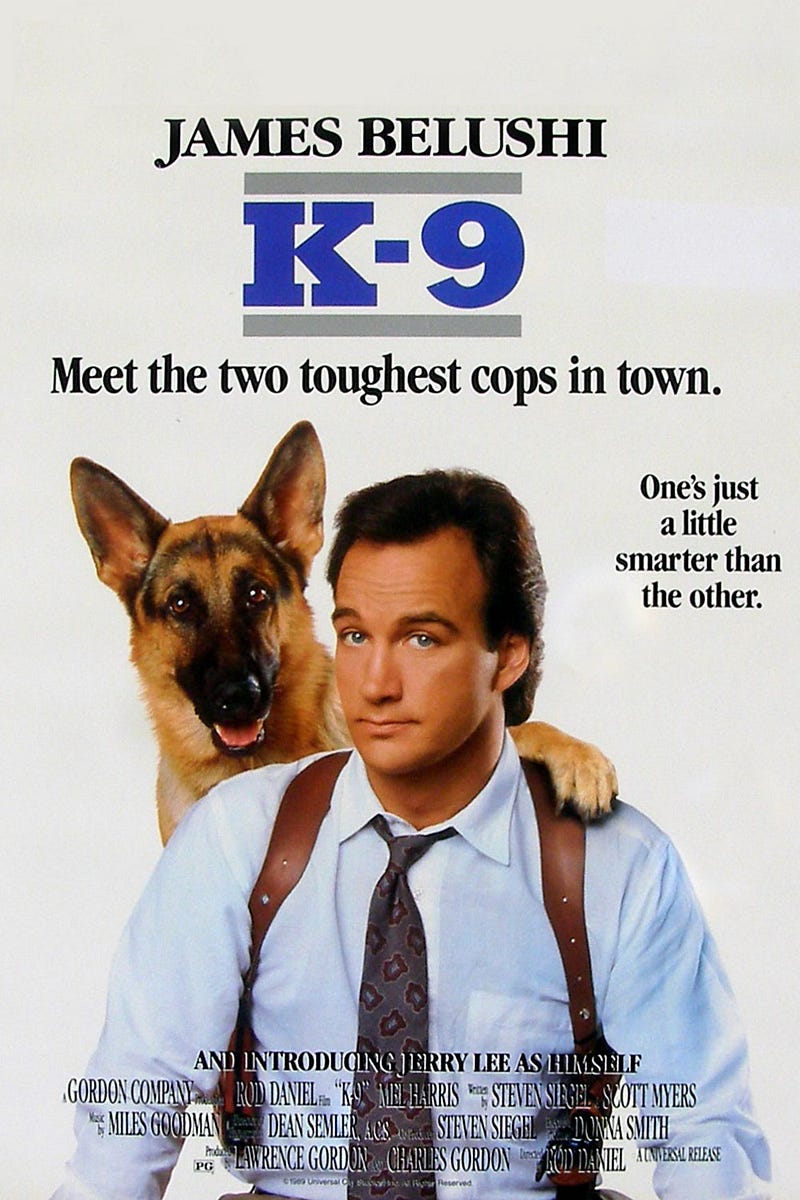
This is easier to do with a high concept like my movie K-9. Here’s the six word version:
Loner cop. New partner. Police dog.
Boom! You see the movie. That’s one of the values of a high concept is a writer can zero in on the story conceit — that single narrative element which makes the story unique. In the case of K-9, it’s a buddy action comedy — with a police dog.
However, it looks like you write character driven dramas and those are much more challenging, so no wonder you struggle with composing loglines for your stories.
Typically, a logline is comprised of three elements: Protagonist. Goal. Nemesis. But what if in the case of your stories, the opposition dynamic is not an actual character, but a psychological condition? That still functions as an antagonist force.
But if your story is more complex, then perhaps you can try a different approach to your logline. Here is an excerpt from my Craft class — Story Summaries: From Loglines to Beat Sheets:
Work with these three elements: Protagonist, Distinctive, Emotion.
- Protagonist: Give the reader the primary character’s perspective into the story.
- Distinctive: Provide some key narrative element that will hook the reader.
- Emotion: Present a point of emotional connection for the reader.
With a complex story, you’re not going to be able to grab a reader with a simple logline, so you have to go at them laterally with a distinctive hook and an emotional connection. Here is a pretty good IMDB example:
Forrest Gump: Forrest Gump, while not intelligent, has accidentally been present at many historic moments, but his true love, Jenny, eludes him.
Protagonist: Forrest.
Distinctive: He leads a fateful life that intersects him with numerous historic moments.
Emotion: He pursues his true love throughout his quixotic journey.
The Godfather: The aging patriarch of an organized crime dynasty transfers control of his clandestine empire to his reluctant son.
Protagonist: Don Corleone.
Distinctive: Organized crime dynasty.
Emotion: Transfers control of an empire to a reluctant son.
If you put your mind to it and focus on the right narrative elements, even sprawling stories can be described in a logline.
That excerpt is more about sprawling stories, however, because one of the struggles you have is conveying the emotion in your loglines, why not lean into it? Who’s your Protagonist? What is the distinctive issue they’re confronting, the source of their conflict? What is at the emotional core of your story?
Re theme: I’ll be interested to see what your thoughts are at the end of this week after you’ve gone through all of the content in this class. In the meantime, I’ll just say this: Theme is more relevant to a tagline, than a logline. A logline is more about plot, you are correct in that observation. A tagline is more about what the story means.
Here’s an example. This is a logline from IMDb about the movie Get Out:
A young African-American visits his white girlfriend’s parents for the weekend, where his simmering uneasiness about their reception of him eventually reaches a boiling point.
Here is a tagline:
Just because you’re invited, doesn’t mean you’re welcome.
To me, the tagline suggests the psychological thriller tone of the movie as compared to the logline, but that’s my point:
Logline → Plot
Tagline → Theme
Let’s face it: Loglines are a pain in the posterior. Even if you’re working with a high concept story, getting it right is a struggle. And they are important because that’s the shorthand everyone will use when interfacing with that particular script project.
But when a writer has got a complex story or a character driven drama, that makes the logline-crafting process even more of a challenge.
If you’ve got such a script, try working with those three angles cited above:
Protagonist. Distinctive. Emotion.
That may help.