Writers’ Shut-It-Down Strategy Has Been Effective
Executives privately admit the WGA’s strategy is working.
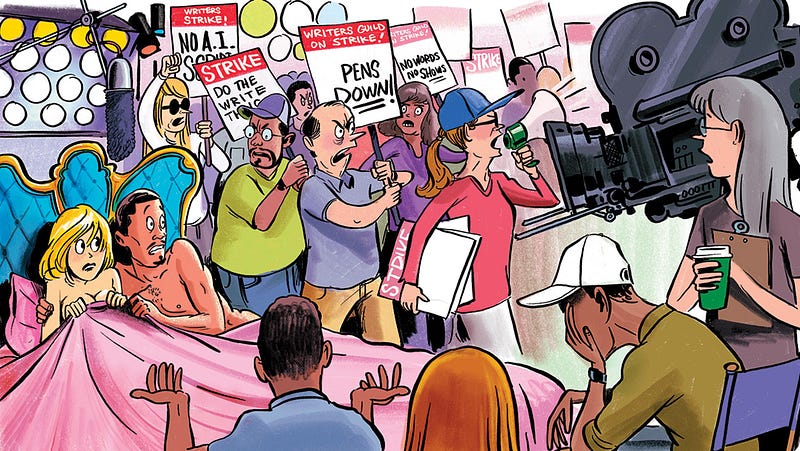
Executives privately admit the WGA’s strategy is working.
Featured in The Hollywood Reporter yesterday (5/31/23): Writers’ Shut-It-Down Strategy Has Been Effective, Executives Privately Concede.
Right now, Warren Leight — the veteran showrunner of Law & Order: Special Victims Unit and Writers Guild strike captain — is losing sleep to make sure a TV program doesn’t make it to air. He’s a key figure in his union’s pivot to embrace a more targeted picketing strategy, which seeks to shut down productions.
“This morning we had two dozen people at 2 a.m. out on the street, blocking Billions, which is metaphorically perfect,” he told The Hollywood Reporter’s TV’s Top 5 podcast on May 24, discussing a recent expansion from show-of-force protests at corporate headquarters to more disruptive actions meant to affect bottom lines and reorient power dynamics. The strategy change-up emerged from the membership’s rank and file, he says, although the guild brass now “realizes that this is a pretty powerful thing.”
Leight, drawing on connections from his long history as a TV writer and showrunner as well as his high profile on social media, has, along with a growing number of WGA counterparts, helped organize a series of successful labor actions — small groups assembling within hours, whose protest lines are often respected (and sometimes joined) by Teamsters, IATSE members and other sympathetic allies. The result is production shutdowns. “The whole idea is to empty the [content] pipeline,” he says.
The closures have crossed the country, from Loot and Good Trouble in Los Angeles to The Chi in Chicago and Evil in New York.
Earlier in May, writers picketed the on-location L.A. shoot of writer-director Aziz Ansari’s Lionsgate film Good Fortune for about two and a half days, until production was suspended indefinitely on May 19. Picketer Kyra Jones (Woke, Queens) says these actions “hit [employers] in the pockets harder than anything else that we’re doing. And so hopefully that will get them to get us back on track and get us back working.” Adds Lauren Conn (The Lost Symbol), who also joined the Good Fortune picket line, “We have to make sure that no writing is happening across the board.”
Besides potentially hitting networks in the balance sheet, these collective actions disrupting production serve to energize Guild members. From the article:
“It stops production, but it’s also a way to advertise strength and determination,” explains Georgetown professor Michael Kazin
This level of organization by the WGA and commitment by its members to show up in the middle of the night to picket and stop production is light years away from the experience of the strike in 2007–2008. The fact that other union members are refusing to cross picket lines and sometimes even tipping off the Guild where production is happening is a sign that workers across the board know this strike is about an industry at a crossroads. Again from the article:
“Right now, everybody’s ‘below the line,’ ” [Wade] Cordts, a member of both SAG-AFTRA and IATSE, observes. “It’s these megacorporations that are trying to break labor.”
Even if you’re not in the Writers Guild, you can support the strike by showing up and picketing along with Guild members. Go here to find the picketing schedule.
For the rest of The Hollywood Reporter article, go here.
For the latest updates on the strike and news resources, go here.