Why the war over streaming data is at the heart of Hollywood’s strikes
“When the companies act like, ‘Oh, no, we could never possibly disclose this,’ that’s just disingenuous.”
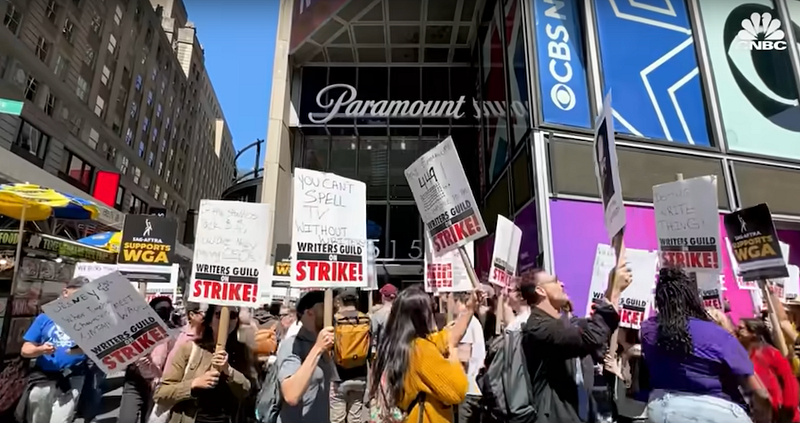
“When the companies act like, ‘Oh, no, we could never possibly disclose this,’ that’s just disingenuous.”
From the Los Angeles Times:
Years ago, at the beginning of the streaming wars, writers like “One Day at a Time” reboot co-showrunner Gloria Calderón Kellett called Netflix a “black hole” because, unlike with broadcast TV, she didn’t know how many people were watching the show.
Rivals such as Apple TV+, Amazon Prime Video, Disney+ and Paramount+ adopted a similarly opaque approach to viewership, rarely revealing exactly how large a show’s audience was.
For writers, it was a trade-off: On one hand, some creators liked not being held to the standard of daily Nielsen ratings. On the other, data for a hit series can be helpful leverage in negotiating future deals.
Now the battle for transparency in streaming data has become one of the biggest dividing lines in the ongoing actors’ and writers’ strikes, dual work stoppages that Hollywood hasn’t seen since the 1960s. Performers union SAG-AFTRA and the Writers Guild of America say video streaming services have benefited from the work of their members, and they want film and TV writers and actors to be rewarded when they make a hit.
To achieve that goal, actors and writers say, they need to know how many people are watching.
Unless the companies provide transparent viewership numbers, there is no possible way to create anything even approaching a fair system for residual compensation.
Why the resistance to revealing their numbers? The article mentions one possibility:
For years, streamers have been reluctant to share more data with the public. If they did, they would reveal not only which shows were big successes but also the ones that were costly flops.
If it were revealed that a majority of the programs on, let’s say, Netflix were, indeed, “flops,” that could crater the company’s stock valuation. It has taken over a year for Netflix to recover from one stock crash. Another one could cause some real financial damage to the company.
But this appears to be a real “immovable object meets an irresistible force” as the Guild is determined to get transparent viewership numbers in any sort of deal.
It appears that negotiations between the WGA and the AMPTP will resume this week. Hopefully, there will be significant movement by the companies.
To read the rest of the L.A. Times article, go here.
#WGAStrong
For the latest updates on the strike and news resources, go here.
Please consider contributing to the Entertainment Community Fund.