“Why It’s A Wonderful Life is the greatest film ever made”
Filmmaker Marshall Herskovitz reminds us about the remarkable power of this holiday classic.
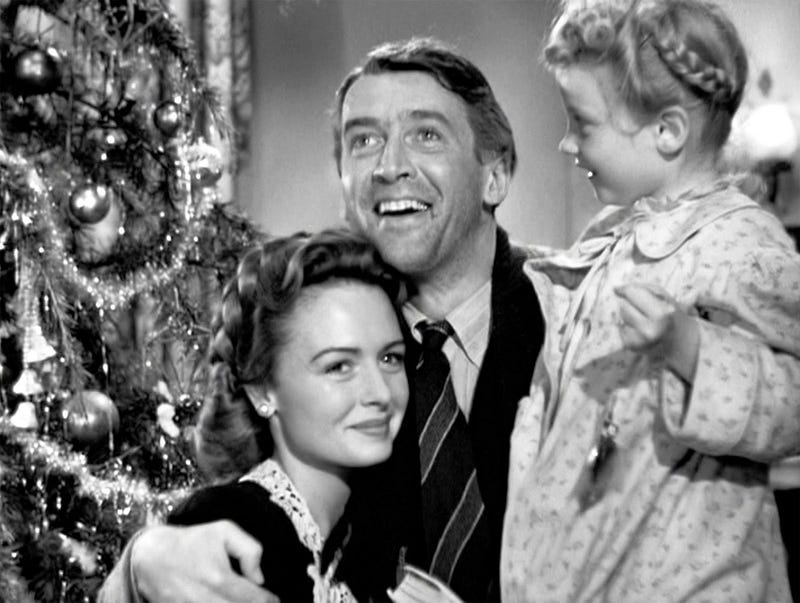
Filmmaker Marshall Herskovitz reminds us about the remarkable power of this holiday classic.
Every year around this time of year, I feature an essay or reflection about It’s a Wonderful Life. Here is an article from a few years back inspired by a Twitter thread by Marshall Herskovitz (@MHerskovitz). Herskovitz, whose writing-producing credits include thirtysomething, Quarterlife, Once and Again, and Nashville, zeroed in some of the most compelling aspects of the movie. That twitter thread is reprinted by permission in its entirety (collated by ThreadReaderApp) .
2) Yes, many think it’s corny and sentimental — as so many of Capra’s films were. There was even a nickname: Capra corn. But when you look deeply at IAWL, you realize it’s actually a very dark story. A man with huge dreams sacrifices all of them for the sake of the people he…
3)…loves. A miserable man who considers himself to be a failure. Hardly corny. In fact, the film illuminates something rarely ever talked about in our culture: the destruction of men. We don’t talk about it because men are supposed to be the privileged ones, the powerful…
4)…ones, the aggressors. White men have always been at the top of the cultural hierarchy. Except that most men don’t experience life that way. Like George Bailey they have dreams they must give up in order to become responsible adults. They don’t feel powerful, don’t make…
5)…enough money, don’t see a rosy future. Deaths of despair are heavily weighted toward men in America. And it’s all there in IAWL. That kind of real despair was rare in films made in 1946. And what’s amazing is that Capra is then able to flip the lens, and show what was also..
6)…there all the time: the wondrous web of love and friendship also available to every man, whether he knows it or not. Even more remarkable is that Capra achieves this by telling eight different stories — Harry, Ma, Uncle Billy, Mary, Ernie, Violet, Mr. Gower, Martini/Nick -
7)…that reveal instantly what the world would be like if George had never lived. As a screenwriter for 45 years, I can attest that it’s a remarkable feat of storytelling. On a personal note, it’s also the only film that ever influenced how I see life. I first saw it in college
8)…on a UHF channel in the middle of the night. And though I loved it, at 20 I thought George Bailey really was a failure, that he should have gone off and followed his dreams. Only over time, as I watched the film at 25 and 30 and 40 did I come to understand the profound…
9)…truth expressed in the film, that giving your life over to something larger than yourself is the main reason to be alive. And the greatest source of joy. There are 100 other reasons why this film is great: casting, performances, dialogue. One example: the broken top of the..
10)…newel post is a three act play. George is first bemused by how the loose newel post represents the state of disrepair in the old Granville house. Then in his darkest moment, that broken newel post fills him with rage as it represents the mess he’s made of his life.
11) Finally, when he’s seen what the world would have been without him, when he realizes how precious this messed up old house is to him, he kisses the newel post when it comes off in his hand. None of this happened by accident, or was improvised. It was built into the…
12)…script, another building block in the epic story of a single ordinary life. That’s finally why the film is so great: it reveals the epic in all of us. We cry for George Bailey not out of sadness but out of awe at the size of his life, at how much love is in it.
13) We cry because we’re reminded — when we can lift our heads above the indignities and struggles and failures and frustrations of everyday living — that such love is possible in every human life.
Like Marshall, I first saw the movie late at night when I was in college. The ending reduced me to a sobbing mess. Over the years, I’ve probably watched the film a dozen times and to this day, I still wonder at its emotional power. This series of tweets gets at the heart of it.
Joseph Campbell wrote, “A hero is someone who has given his or her life to something bigger than oneself.” Marshall’s analysis of It’s a Wonderful Life takes this to the next level of meaning: Giving your life over to something larger than yourself is the main reason to be alive [emphasis added].
We may not think of George Bailey as a hero. In fact, a critique one occasionally will see about the movie is that George is a passive Protagonist. This not only represents a simplistic grasp of screenwriting theory, it also entirely misses the point of the movie. George could have gone off to “build things… design new buildings… plan modern cities.” You know, be a conventional active Protagonist. Instead, time and again, he chose to deny his own desires in order to serve his fellow citizens of Bedford Falls. This does not mean he is a passive character, rather he is a reactive one. Constantly confronted, even tempted to seize the life he dreams of, he “gives himself over” to the people he lives with, both at home and in town. He acts in response to the needs of others. As his father Peter tells him in what turns out to be their final conversation:
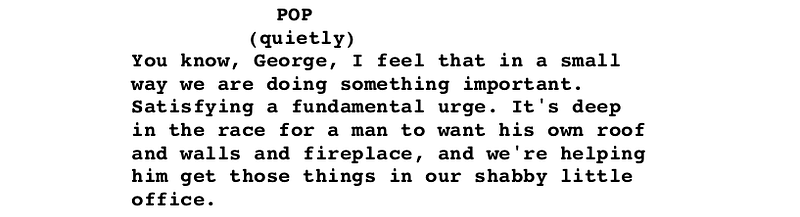
At first, George can’t imagine the simple heroism involved in what his father does, day after day, with the Bailey Savings & Loan. Finding himself stuck in that rut, as Marshall notes, the movie evolves into a “dark story” which explores George’s brush with despair — after all, he does contemplate committing suicide — then pulls off a narrative miracle: it “flips the lens” through the appearance of Clarence Oddbody. This Angel Second Class gives George the opportunity to see how the world would be if he “hadn’t been born.”
This ordinary man goes on an extraordinary adventure witnessing the spiraling impact his life has had on the people he most cares about. As Marshall notes:
We cry for George Bailey not out of sadness but out of awe at the size of his life, at how much love is in it. We cry because we’re reminded — when we can lift our heads above the indignities and struggles and failures and frustrations of everyday living — that such love is possible in every human life.
And that is why I cry when I watch the movie. It reaffirms an essential truth: That one individual can make a difference in the lives of others. I want to believe that’s true. In this day and age of such cynicism and selfishness, I have to believe it’s true.
You want heroism? How about sacrificing something for someone else? You want meaning in life? How about extending a helping hand? You want a reason to be alive? How about sharing your talents for the greater good?
Marshall Herskovitz and his longtime creative partner Ed Zwick have a production company. It’s called Bedford Falls Productions. Hmm. Wonder what the inspiration for that was…
If you haven’t watched It’s a Wonderful Life, do yourself a favor. Check it out. And if you have seen the movie… watch it again.
Thanks, Marshall, for your twitter thread. And oh yes, that bit of business with the banister knob…
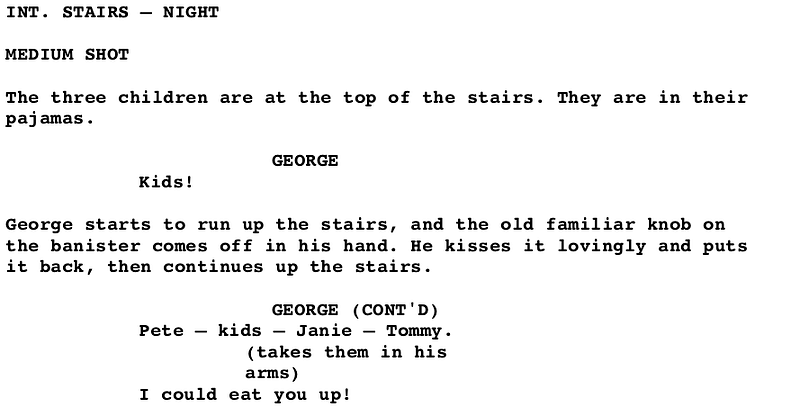
…is, indeed, a subplot in three acts. That is one of dozens of setups, payoffs, and callbacks in the story. Yet another reason It’s a Wonderful Life is one of the greatest movies ever made.
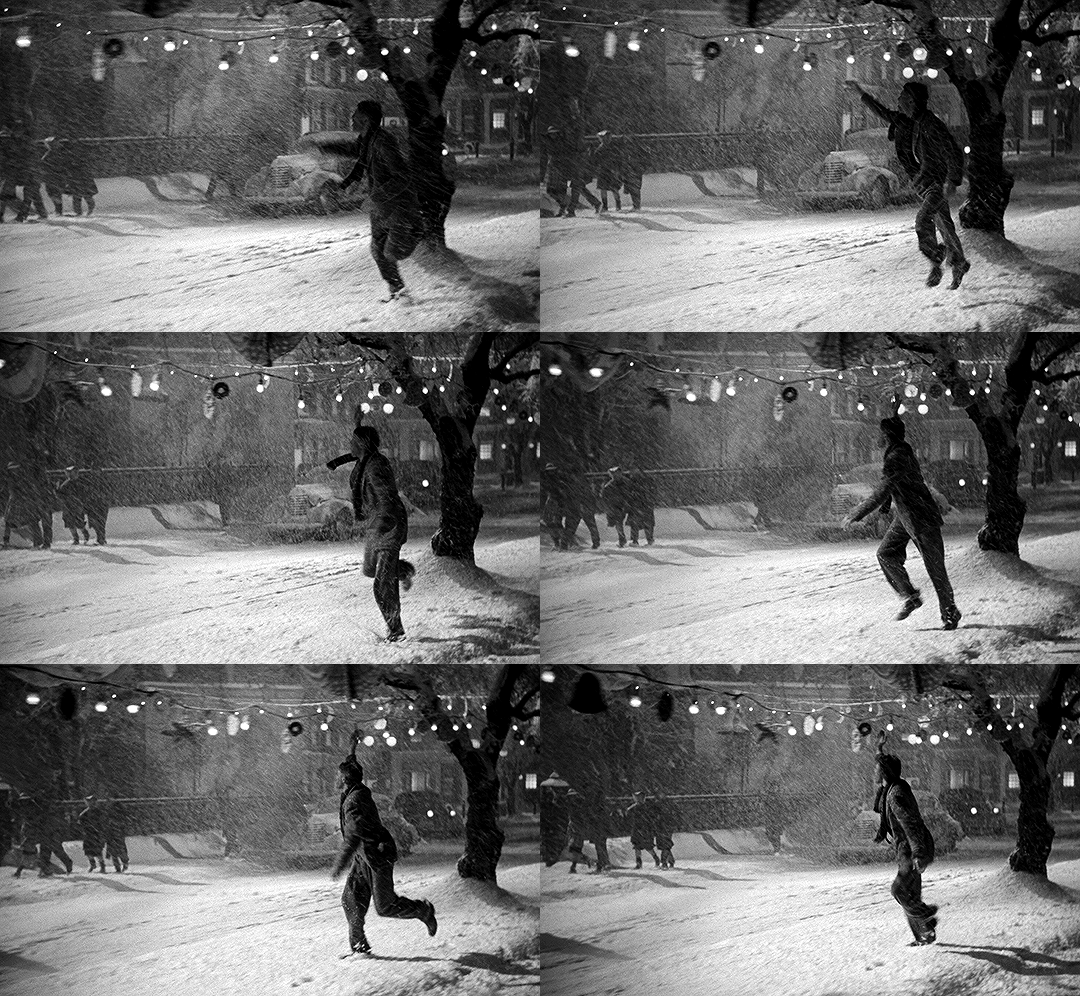
Enjoy It’s a Wonderful Life!