What Writers Can Learn from the Stars of “Star Wars”
Insights into the writing craft from the actors of Star Wars: The Last Jedi.
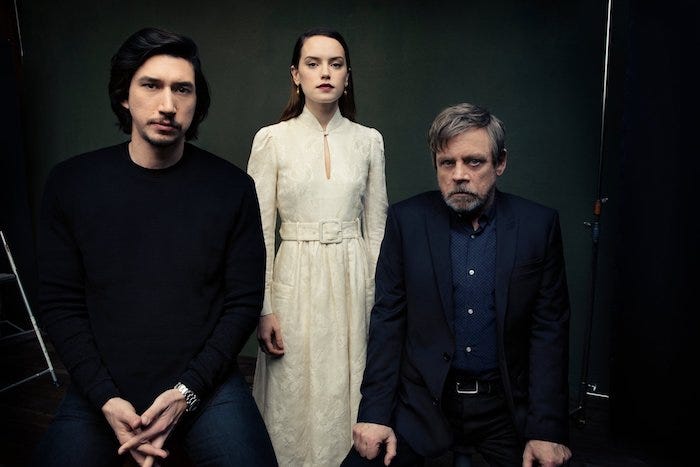
Insights into the writing craft from the actors of Star Wars: The Last Jedi.
If you want a slew of news articles, blog posts, and fan theories about the latest installment in the Star Wars series, check out my Saturday Hot Links post which goes live tomorrow. Quite literally dozens of links about The Last Jedi to ease your science fiction fever.
Today, however, I prefer to bring us back to Earth from a New York Times article (12/17/2017) titled: “The All-Stars of ‘Star War’”. Specifically, I want to look at some comments from the actors about their roles as they provide keen insights into the craft of writing.
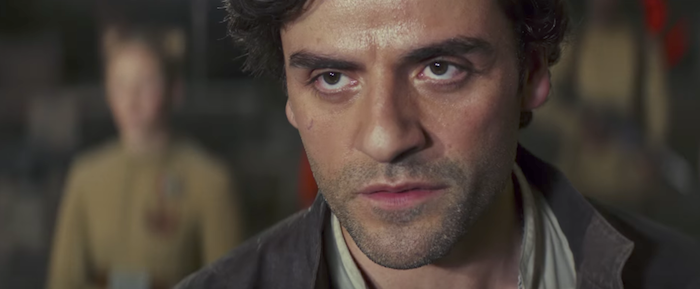
First, here is Oscar Issac who plays the role of Dameron Poe, the headstrong pilot and one of the heroes of SW:VII and SW:VIII:
— there are actors you were paired with and worked with closely on the last film. What was it like to have those relationships scrambled and rearranged on “The Last Jedi”?
ISAAC What Rian [Johnson, the writer-director of The Last Jedi] did so well was that he asked the really tough questions. Not only of the characters, but also about the themes that “Star Wars” brings up. What is to be a Jedi? What is it to be a hero? What is it to be, in my case, a hotshot pilot? And then try to find the opposite of that — the hardest thing, the thing that’s furthest away, and have that be what the character has to deal with. Even in pairing the characters, he’s taking away what you know, and making you as uncomfortable as possible. [emphasis added]
This is something I’ve been preaching and teaching for years in terms of a Protagonist’s story: Dig into their psyche, discover what it is they fear the most, then force them to confront that in their unfolding narrative. That is a great way to create a specific, meaningful psychological connection between the Plotline — the events which transpire in the Physical World — and the Themeline — the emotional arc of the character in the Psychological World.
Moreover, if you construct a scenario in which the Protagonist has to confront the “hardest thing, the thing that’s furthest away,” you create a classic underdog dynamic stacking the odds heavily against the central character’s success. This, in turn, elevates the drama of the story.
Finally, this: Working with a story set-up in which it has to be “what the character has to deal with,” we enter into the domain of what I call the Narrative Imperative. The story is specific to THIS character at THIS time on THIS journey with THIS outcome. The Protagonist’s beginning state of Disunity, the fundamental disconnect from key aspects of their True Self, almost always dictates the events, even the other characters which they confront and intersect along the way.
Next, we turn to this comment Andy Serkis who plays the role of the arch-villain Snoke:
The thing about Snoke is, leaders are fearful people, because when you’re in a position of maximum power, you can only lose power. And that fear drives nearly all decisions. That fear then makes you aggressive. It makes you want to destroy others. It makes you unable to see or care about others. But when you’re creating a villain character, it’s about humanizing — there’s something important in the task of creating Snoke to find his vulnerability, because that makes him even more dangerous and despicable. [emphasis added]

Two things. First, that’s an interesting thought, isn’t it? When you’re in a position of maximum power, you can only lose power. Thus, it stands to reason that the most powerful beings must have at the core of their being a profound fear of LOSING power. If we, as writers, can lean into that with our Nemesis characters, that is one way to do this: But when you’re creating a villain character, it’s about humanizing. Why is humanizing the Bad Gal so important? Because if there is something within the psyche, even behavior of the Bad Guy to which we, as humans, can relate, that shrinks the emotional distance between us and them. They go from an I-It to an I-You connection. There is something human, something which with we resonate, so that even as much of a psychopath as they may be… we can have some measure of empathy for them. That makes for a much more interesting psychological dynamic both within the story universe between the story’s characters and us, script reader and movie viewer.
The final comment from the article via Adam Driver, who does a magnificent job playing Kylo Ren, underscores this point:
It was less interesting to think of him as pure evil, because I don’t really know what that is. He’s someone who thinks he’s right, more than he thinks what he’s doing is bad. When I meet people who are unable to hear the other side, who not only think they’re right but they’re justified, then there’s no end to what they would do to make sure that their side wins. To me, that’s more dangerous, because the boundaries are limitless. As opposed to just being evil, that seems like it can’t sustain itself. When you feel morally justified, that feels more long-lasting and more unpredictable. [emphasis added]

There you go. What Adam did with Kylo Ren, as written by Rian Johnson, was inhabit this presumably evil character and transform him into a protagonist. Not the Protagonist in the story, but rather a protagonist to himself. Which is, after all, what EVERY character in a story experiences: Seeing the world through their eyes as a protagonist. So, Kylo Ren is not just “evil,” he feels “morally justified,” and that makes the dimensions the storytellers and actor may explore with the character to be “more long-lasting and more unpredictable”.
Of course, these references bring to mind a previous GITS post The Existential Questions of the Star Wars Series because they are — AGAIN! — in play in The Last Jedi. Here is an extended excerpt from that post:
Two questions pulse within the heart of the Star Wars universe.
The very first words of the trailer for Star Wars: Episode VII — The Force Awakens are: Who are you?
The very last words of the teaser trailer for Rogue One: A Star Wars Story are: What will you become?
Both are questions directed at the story’s Protagonists:
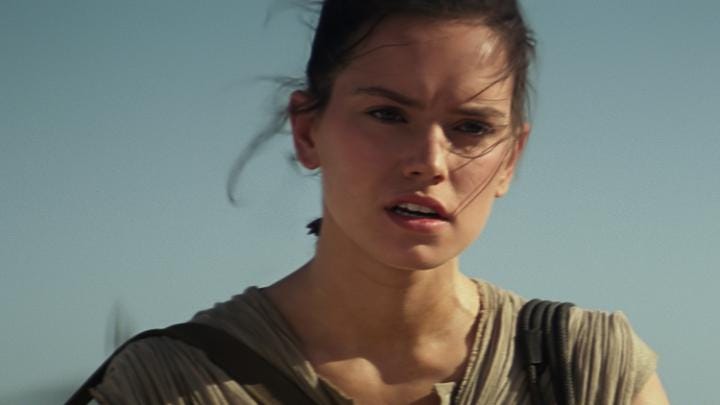
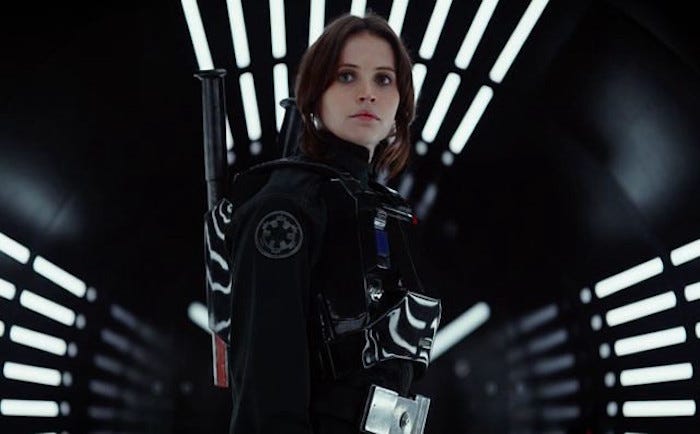
This is more than just an interesting coincidence as these are existential questions which speak to very essence of the Hero’s Journey. Joseph Campbell asserted that the entire point of the heroine’s adventures is to facilitate their transformation. They begin in an incomplete state, what I call Disunity, and end up in having changed toward a more actualized, authentic state, approaching what I call Unity.
Indeed on a psychological level, the entire point of the Light Side and the Dark Side of The Force is precisely about these questions: Who are you? What will you become?
In The Last Jedi, Luke asks Rey: “Who are you?” Sure, he wants to know who she is specifically, but the question has an existential subtext to it, particularly in light of another question Luke asks her later: “Why are you here?” Rey provides a cursory answer about trying to bring Luke back to the rebellion, then Luke stops her and asks the same question with a specific inflection: “Why are YOU here?”
Who are you? Why are you here? What will you become?
If you think about it, those questions exist in the Star Wars oeuvre for almost every single primary character. Indeed, one can argue that most, if not all of the surprising character choices Rian Johnson made in The Last Jedi are infused with these existential questions. Rey, Kylo Ren, Finn, Poe, Rose, Snope, and on and on. Each character confronted by circumstances which compel them to confront competing drives, impulses, and instincts with their respective psyches.
Which is to say that in terms of writing, we do well to steep ourselves in the rich psychological dynamics at play in our characters, but not just to discover what’s at work there, but rather to ask some fundamental existential questions about their very essence:
Who are you? Why are you here? What will you become?
For the rest of the New York Times article, go here.