Video: Why Mini-Rooms Are a Problem
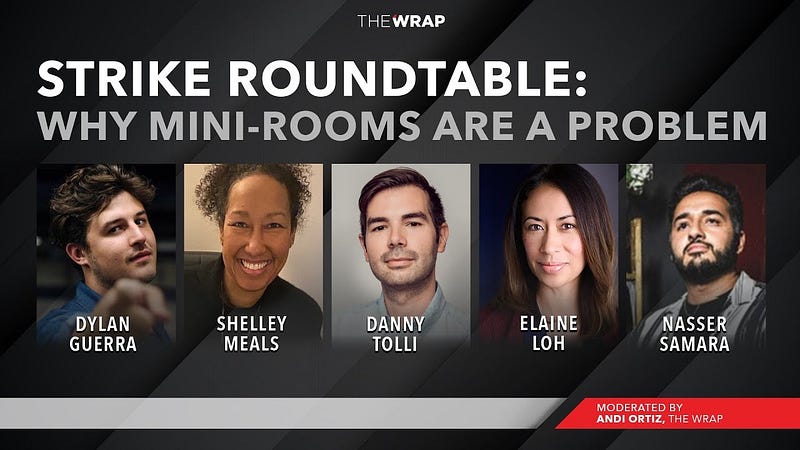
A Strike Roundtable with five TV writers.
A Strike Roundtable with five TV writers.
From TheWrap:
Writers Shelley Meals (Shadow and Bone), Danny Tolli (Roswell, New Mexico), Elaine Loh (Gossip Girl), Dylan Guerra (The Other Two) and Nasser Samara (iCarly) explain the pitfalls of the writers’ mini-room process, currently a hot-button issue in the 2023 WGA strike against the AMPTP. Moderated by TheWrap’s Andi Ortiz.
Here is the video for the complete roundtable:
Here is an excerpt from an accompanying article:
“I think that frustration boils to the top a lot in these mini-rooms,” Tolli said. “Television is supposed to be a collaborative medium. When you’re in a writers’ room, you’re bringing forth your own personal experiences that you can then infuse in a show, that’s what makes great art.”
He continued, “And you don’t have time for that in a mini-room. You are there to do the eight episodes very quickly, get everything down so that you can turn it into the studio to get your green light and then put all the work on the showrunner.”
Tolli recalled that one of his “most frustrating experiences” in a mini-room came when, a little over a month into writing the scripts, he and his coworkers were told that the show they were to use as a potential guidepost was no longer trending on X (formerly known as Twitter), and so they had to try something else.
Meals echoed the idea that major greenlighting and tonal decisions are coming from data, rather than quality, saying that the frustration is only heightened when feedback on those scripts doesn’t really feel like it’s coming from a human.
“A lot of times it feels like these notes that you’re getting aren’t even really from the executives, they’re from the algorithm,” Meals lamented. “It was telling them what notes to give? It’s nuts.”
Loh added that the compressed timeline — mini-rooms often only span a few weeks, rather than a traditional writers’ room being up and running for a full season — makes it even harder to deliver good material.
“I don’t begrudge the studios and streamers whatsoever for the fact that they want to make money, but they want to make money from a creative product,” she said. “And so you need that time and investment, not to be just chasing Twitter trends, in order to make a good product.”
To read the rest of the article, go here.
#WGAStrong
For the latest updates on the strike and news resources, go here.
Please consider contributing to the Entertainment Community Fund.