Video: “Raising the Stakes on the Call to Adventure”
Reflections on a screenplay’s Act One end by five-time Black List screenwriter Jonathan Stokes.
Reflections on a screenplay’s Act One end by five-time Black List screenwriter Jonathan Stokes.
Recently, I discovered a video series produced by screenwriter, director, producer, and author Jonathan W. Stokes. It’s called Raising the Stakes and in two seasons, Stokes has created ten videos. Here is his description of the series:
Raising the Stakes is a video essay series about story theory. My hope is that screenwriters, authors, film-lovers, and storytellers of all kinds will find something useful in this channel.
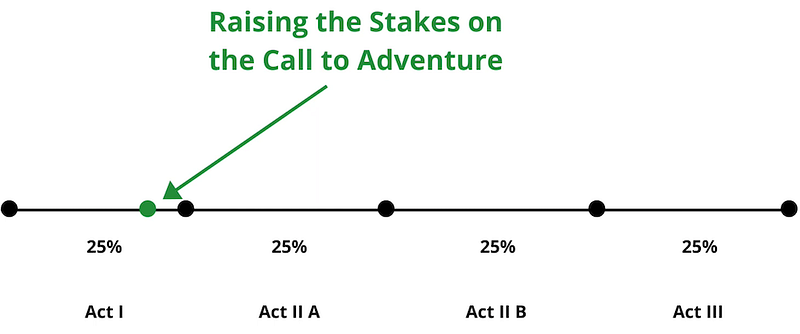
I checked out several of the videos and I found it to be an excellent resource. For example, here is one called: Raising the Stakes on the Call to Adventure.
Stokes makes the point that while the Call to Adventure — often referred to in Hollywood development circles as the Inciting Incident — is important, it’s the Act One end (which Stokes refers to as Raising the Stakes) which actually propels the Protagonist into their journey. How? Stokes cites two elements:
- The Act One end presents the Protagonist with a specific goal.
- This event or chain of events makes that goal a personal one.
The two dynamics combine to raise the stakes.
- By exhibiting a specific goal to the Protagonist, this transforms the general nature of the Call to Adventure into something definable: Go here to accomplish this. In my language system, I call this the Conscious Goal. By the end of Act One, the Protagonist knows what they must do. It’s specific and, therefore, achievable (at least in theory).
- By making that goal personal, it converts the theoretical challenge of the Call to Adventure into something grounded in the distinctive emotional life of the Protagonist. It’s not only Go here to accomplish this. The Conscious Goal is now infused with direct meaning to the Protagonist. This journey you take is the journey you need to take. The Act One end creates an opening for the Protagonist’s Unconscious Goal, their deepest Need, to emerge into the light of consciousness.
As Joseph Campbell writes in The Hero With a Thousand Faces:
The passage of the mythological hero may be over ground, incidentally; fundamentally it is inward — into depths where obscure resistances are overcome, and long lost, forgotten powers are revivified, to be made available for the transfiguration of the world… [Now] it appears that the perilous journey was a labor not of attainment but reattainment, not discovery but rediscovery
The end of Act One not only raises the stakes because the Protagonist is presented with a specific goal, giving shape to the physical journey they are about to take; it also represents a challenge in that their upcoming psychological journey will test them to see if they have the capacity, courage, and strength to change.
As I tell my students, the core of a story is about the Protagonist’s self-identity. It poses this question of the story’s central character: Who are you? On an existential level, there are no stakes greater than confronting and — hopefully — answering this question.
There are countless video series about screenwriting theory and screenplay structure. Some are helpful. Others not so much. What’s notable about Raising the Stakes is you not only get insight into the craft, you can feel confident the content is credible because Stokes is a professional screenwriter who has achieved considerable success in Hollywood. Plus, the videos are really well-crafted.
Website: jonathanwstokes.com
YouTube: Raising The Stakes
Twitter: @jonathanwstokes
I will be interviewing Jonathon next year as part of my ongoing series of conversations with Black List writers. If you have any questions about any of his videos in the Raising the Stakes series, post them here.