Video: “Atonement with the Father”
Another in the terrific screenwriting series Raising the Stakes.
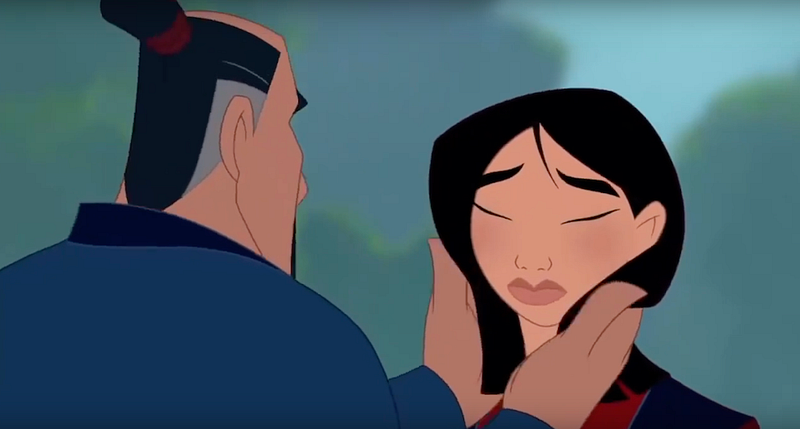
Another in the terrific screenwriting series Raising the Stakes.
Jonathan W. Stokes is a screenwriter with a unique credit to his name: Five of his original screenplays have been named to the annual Black List. That alone should get your attention, but there’s also this: Over the last few years, he has produced an excellent video series called Raising the Stakes.
Recently, Jonathan released Season 3, Episode 2: Atonement with the Father.
Jonathan begins the video by noting this is one of seventeen stages or movements in Joseph Campbell’s articulation of the Hero’s Journey. While not a requisite dynamic in the Journey, it is a common one. It figures. The Parent-Child relationship is universal to the human experience, whether a biological or symbolic connection. Consider the examples in the video featured above:
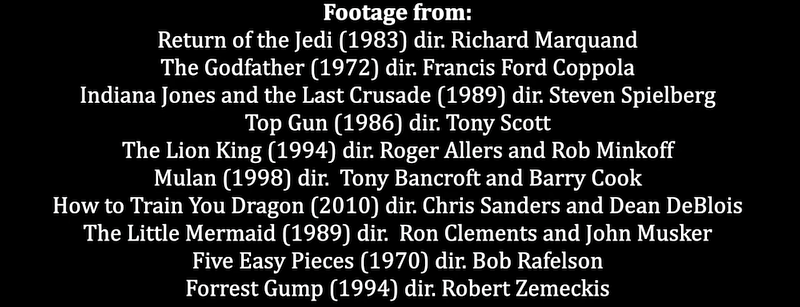

Jonathan has chosen a wide range of cinematic genres and parent-child relationships to make this point. In his commentary on the ending of Bend It Like Beckham, Jonathan says this:
Feel how powerful this is … and universal. See how this can elevate our work? Isn’t this a wonderful rite of passage we should all have? Where we forgive our parents … or they forgive us?
As I watched Jonathan’s excellent video, I could not help but think about the ending of Everything Everywhere All At Once. For all its spectacle, at its core, the story is about a mother-daughter relationship. Here is a transcription of the interchange between Evelyn (mother) and Joy (daughter) at the end of the movie:
Joy Wang: Mom, just stop! Good for you. You’re figuring your shit out. And that’s great. I’m really, really happy for you. But I’m tired. I don’t want to hurt anymore. And for some reason when I’m with you, it just hurts the both of us. So let’s just go our separate ways, okay? Just let me go!
Evelyn Wang: Wait. You are getting fat. And you never call me even though we have a family plan. And it’s free. You only visit when you need something. And you got a tattoo and I don’t care if it’s supposed to represent our family. You know I hate tattoos. And of all the places I could be, why would I want to be here with you? Yes, you’re right. It doesn’t make sense.
Waymond Wang: Evelyn, stop. That’s enough!
Joy Wang: Let her finish!
Evelyn Wang: Maybe it’s like you said. Maybe there is something out there, some new discovery that will make us feel like even smaller pieces of shit. Something that explains why you still went looking for me through all of this noise. And why, no matter what, I still want to be here with you. I will always, always, want to be here with you.
Joy starts crying.
Joy Wang: So what? You’re just gonna ignore everything else? You could be anything, anywhere. Why not go somewhere where your daughter is more than just this? Here, all we get are a few specks of time where any of this actually makes any sense.
Evelyn Wang: Then I will cherish these few specks of time.
Evelyn and Joy embrace.
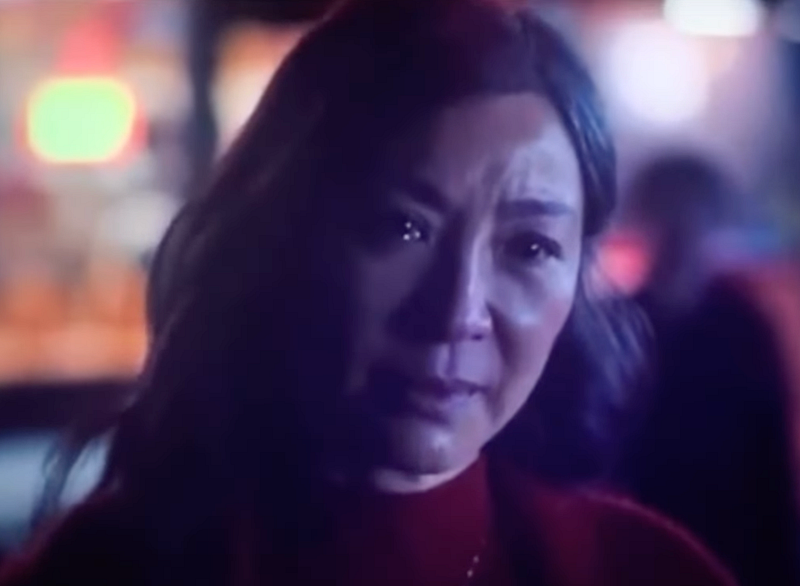

This moment. This atonement. This moment of confession and connection is why Evelyn goes on her journey. It’s why Joy goes on her journey. Everything. Everywhere. That happens. Leads to this speck of time. All at once. A mother and daughter acknowledging that they see each other… and the love they share is real and more powerful than the calamities of life. As Jonathan says in the video:
Don’t we want Dad or Mom to tell us they’re proud of us?
Often, that moment of atonement … at-ONE-ment … is the key to a story. As Oscar-nominated screenwriter says:
“At the top of my computer in big, bold letters, it says, ‘What is the simple emotional journey?’ I look at that all the time.”
People go to movies for an emotional experience. The resolution of a parent-child relationship is a path toward an emotional catharsis.
For more videos in Jonathan Stokes’ excellent Raising the Stakes series, go here. While you’re there, why not subscribe? There are more videos to come in S3 and by subscribing, you won’t miss them.
For more background on Jonathan W. Stokes, you can go here.
By the way, I recently interviewed Jonathan. Look for that chat later on this summer.