Video: 10 Screenwriting Tips from The Coen Brothers
Joel and Ethan Coen share insights into how they wrote and directed two of their films: Fargo and No Country for Old Men.
Joel and Ethan Coen share insights into how they wrote and directed two of their films: Fargo and No Country for Old Men.
Outstanding Screenplays with a video compilation featuring the filmmakers Joel and Ethan Coen. Their screenwriting credits include Blood Simple., Raising Arizona, Miller’s Crossing, Barton Fink, The Big Lebowski, O Brother Where Art Thou?, A Serious Man, True Grit, and Inside Llewyn Davis. In this video, the brothers discuss writing and directing two of their movies: Fargo and No Country for Old Men.
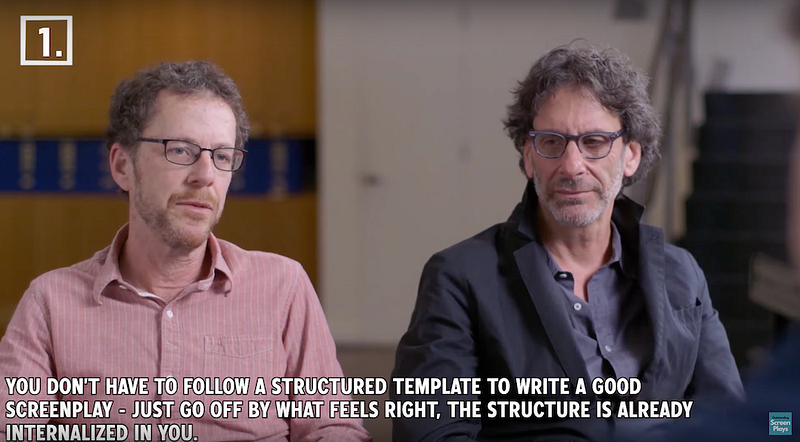
1:28–01 — You don’t have to follow a structured template to write a good screenplay — just go off by what feels right, the structure is already internalized in you.
2:09–02 — Make violence necessary for the story and the characters, rather than gratuitous.
3:36–03 — If you’re being true to the real world, your screenplay needs to be capricious, even if that means killing off important characters and changing the trajectory of the plot suddenly to reveal what the story is really about.
6:01–04 — Writing period pieces makes for a much more transporting exoticized experience for the audience than writing a contemporary story.
8:11–05 — Adapt the plot from real life, and make up your own characters to fit into that story.
8:48–06 — Don’t try to have your own unique style just for the sake of it, instead think about what the right “language” is for each project individually and a style might naturally emerge from your taste being reflected in them.
10:28–07 — Start writing a character that you would like to see a certain actor play, and write your next story from that character, even if you don’t end up casting that actor.
11:14–08 — Find your own process of making movies that works, even if that means pre-thinking the entire movie in your head before shooting.
13:16–09 — Whatever genre you’re writing in, the writing process is always the same — at the end of the day, it’s about problem solving.
14:02–10 — Focus your screenwriting on the story and let the audience draw their own conclusions about the film’s social commentary if they would like.
There’s so much wisdom here, much of it I already emphasize with my film school students. Here’s one which is particularly relevant as I am doing a panel today talking about Narrative Voice: Genre + Style.
Don’t try to have your own unique style just for the sake of it, instead think about what the right “language” is for each project individually and a style might naturally emerge from your taste being reflected in them.
I make this precise point: The Narrative Voice must match the story, specifically the style the writer uses when crafting scene description. I like to think of Narrative Voice as a screenplay’s invisible character. We write the story, but Narrative Voice tells it.
For more Outstanding Screenplay videos, go here.
For 100s more videos featuring screenwriters and filmmakers. go here.