Tweetstorm: Jeff Willis on Copyrights and Protecting Your Written Material
On December 18, studio executive Jeff Willis went on a tweetstorm about writers legally protecting their stories. Reprinted in its entirety…
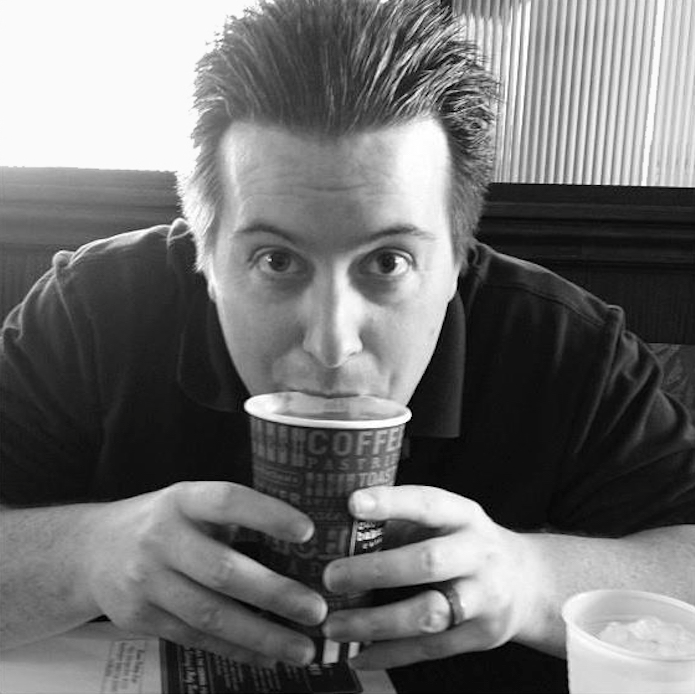
On December 18, studio executive Jeff Willis went on a tweetstorm about writers legally protecting their stories. Reprinted in its entirety by permission.
Today, let’s talk about copyright. What it is, what it isn’t, and what you should and shouldn’t be worried about.
DISCLAIMER: Nothing on the internet can replace sound, specific legal advice. Always get input from an attorney before taking legal action.
For more information or answers to specific questions, you can always check out the USCO’s website: http://www.copyright.gov
They’ve got a great bunch of resources, including a helpful FAQ and several circulars about specific issues if you’ve got questions.
The most important thing to understand is that copyright is legal protection for original works fixed in a tangible medium of expression.
Things that can be copyrighted: screenplays, novels, short stories, song lyrics, poems, architectural plans, etc.
Things that cannot be copyrighted: ideas, story concepts, titles, facts or other publicly available information, etc.
Copyright covers unpublished works. You can register a book that hasn’t been published, or a script that hasn’t sold.
With copyright infringement, one of the most common misconceptions is that if someone writes or makes something similar to yours…
… it’s automatically IP theft. But that’s only true if someone has stolen the *execution* of your idea in addition to the idea itself.
It’s not infringement if you see something similar and think, “Hey, they took my idea for a buddy cop movie set on a space station!”…
… especially if the similarities end there and the other work has significantly different characters, plot points, dialogue, etc.
You cannot copyright the title of your screenplay. Some titles can be trademarked if they’re widely known/branded, and the use of titles…
… in the industry is governed by the Title Registration Bureau of the MPAA. But those are topics for another day.
The two most important things to remember about a title are that (1) a title is not generally unique to or protectible by you…
… and (2) let the prodco worry about changing it if need be. Use the title you want to use until they tell you it needs to be changed.
The next somewhat-ambiguous thing about copyright protection is when it takes effect.
Technically, something’s copyrighted the minute you put it into fixed form. Like as soon as you write it down or type it.
But for cases of infringement, it all comes down to what you can prove. And the best way to prove you wrote something…
… is to *register* your copyright with the United States Copyright Office, which acts as an independent, objective third party…
… that can produce court-accepted evidence that you registered/owned that property first.
The WGA Script Registry also offers a registration service, but there are some significant differences. They are:
1. The Script Registry merely records a “date of creation” while the USCO establishes legal ownership.
The legal ownership established by the USCO is what you need to sue for statutory damages.
Without being able to sue for statutory damages, you can only sue for actual damages, which — when it comes to IP — are often very minimal.
Statutory damages are typically a large lump sum per work, to account for potential losses, while actual damages are actual existing losses.
2. The Script Registry’s record expires after five years. USCO registration lasts until 70 years after you die.
The WGA Script Registry is $20 and the USCO is $35 (through their online registration service).
If you ask me, an extra $15 seems like a bargain for a whole lifetime +70 years of protection versus only five years with the WGA.
Another sadly popular issue with copyright is the so-called “Poor Man’s Copyright,” which is the persistent myth that mailing a copy…
Poor Man’s Copyright is a myth. It does not work. It won’t hold up in court. Don’t try it.
Copyright protection for unpublished works is available from the USCO regardless of your nationality or the location where it was written.
For published works there are criteria to follow, but unpublished works (like spec screenplays) can be registered by anyone worldwide.
Notice of copyright — that fancy little © symbol — is not required to show evidence of copyright protection.
You don’t need to put a copyright notice on your screenplay cover page (or anywhere else).
The effective date of copyright registration is when the USCO received all necessary materials, regardless of how long it took to process.
If you sent everything on January 1st and didn’t get a confirmation until September 30th, the registration date will be as of January 1st.
One of the toughest questions about copyright registration is when to register your work.
Copyright only covers what’s already been written, so if you copyright something and then rewrite it, the new stuff isn’t protected.
So it makes sense to register only once the script is pretty much as done as it’s going to get (without someone paying you to revise it).
Personally, if you’re going to register the copyright to your script, I’d recommend just before you send it for read requests.
If you’re worried about registering your script copyright it before you even seek feedback, you need to find more trustworthy readers.
It’s a waste of money to register knowing that significant changes to the script are likely coming right around the corner.
Which brings me to the last point I want to make about copyright, which is the irrational fear that Hollywood is going to steal your work.
The honest truth is that it costs a reputable company far less to actually buy a script than to get caught stealing one.
A company’s reputation and insurance premiums are worth far more than even WGA minimum, which makes theft a bad business decision.
If a company seems sketchy or if you do your research and find that they have a track record of rights disputes, don’t send it to them.
You can do far more to fend off copyright infringement with simple due diligence than you ever could with fancy legal maneuvering.
I’ll get into submission releases in a future series, but for now just know that a legit prodco isn’t out to screw you and steal your stuff.
Just protect your work with the USCO when it’s in as close to final form as you can get, and do your research before sending it out.
Those two simple steps will take care of 99% of the potential IP theft concerns out there.
For more information on copyright, I highly recommend you visit http://www.copyright.gov/ and familiarize yourself with the specifics.
And, as always, ask an attorney (in this case one that specializes in IP) if you have any specific or nuanced questions about copyright.
Copyright isn’t as scary as it seems. In most cases, when dealing with professional writers and professional companies, it’s a non-issue.
After graduating from the film program at California State University, Long Beach, Jeff landed his first industry job in 2005 as a business affairs assistant at Beacon Pictures and has been working his way up the corporate ladder ever since. From there, he moved on to work in production and creative affairs for two smaller start-up companies, and then transitioned back into business affairs for his five year tenure at The Weinstein Company. He landed his current position at Marvel Studios in January 2016, where he oversees credits and business affairs administration.
On the writing front, Jeff has been hired for a handful of paid writing assignments and sold an original feature (written with sometimes writing partner Bob Saenz) which was released on the PixL Movie Channel in November 2015. After years of ranting screenwriting business advice into the void on Twitter, Jeff started the All Writes Reserved blog late last year to share his industry insights with other writers.
You can follow Jeff on Twitter (@jwillis81) or his blog All Writes Reserved.
Jeff will be the guest on this week’s Scriptchat on Sunday at 5PM Pacific.
You may read all of the Screenwriting Tweetstorms here.