To beat or not to beat: That is the question
Some reflections on the use of Beat in a screenplay.
Some reflections on the use of Beat in a screenplay.
Last night, I stepped in it. Yep, I did something I am loathe to see in the online screenwriting universe: create a controversy over some simple aspect of the craft.
You’d think after blogging for 13+ years and being on Twitter for nearly that long, I’d have learned my lesson. Apparently not!
Some context. I composed a tweet on the heels of reading a former university student’s script which used Beat or A beat 50+ times. Since their draft is long and they will be dealing with tightening up relative to page count, if you figure the use of Beat = three lines:
Line-Space
Beat
Line-Space
50 x 3 = 150 lines. That comes out to about 3 script pages.
That’s the primary “place” I was coming from when I dashed off my tweet, calling into question the value of Beat where one word takes up three lines.
The other thing is having studied screenwriting for over three decades — and a considerable part of that tracking screenplay format and style — the use of Beat became popularized in the 80s. And like so many trends which emerge, such as breaking the fourth wall in scene description, there was a time when its use became an issue. I remember conversations with studio execs and producers who expressed their distaste for the use of Beat because it was distracting. I’ve even heard actors tell me they didn’t like it because it was dictating how they should read a line or play out a moment.
That said, let me say what I should have written in the original tweet: There are no rules. You can do whatever you want. If you want to use Beat or A beat or A long beat, that is entirely your choice. If this is part of your writing style or narrative voice, you are free to use it, just as you are free to do anything to best convey your story.
For example, here is an excerpt from one of the most memorable scenes in No Country for Old Men:
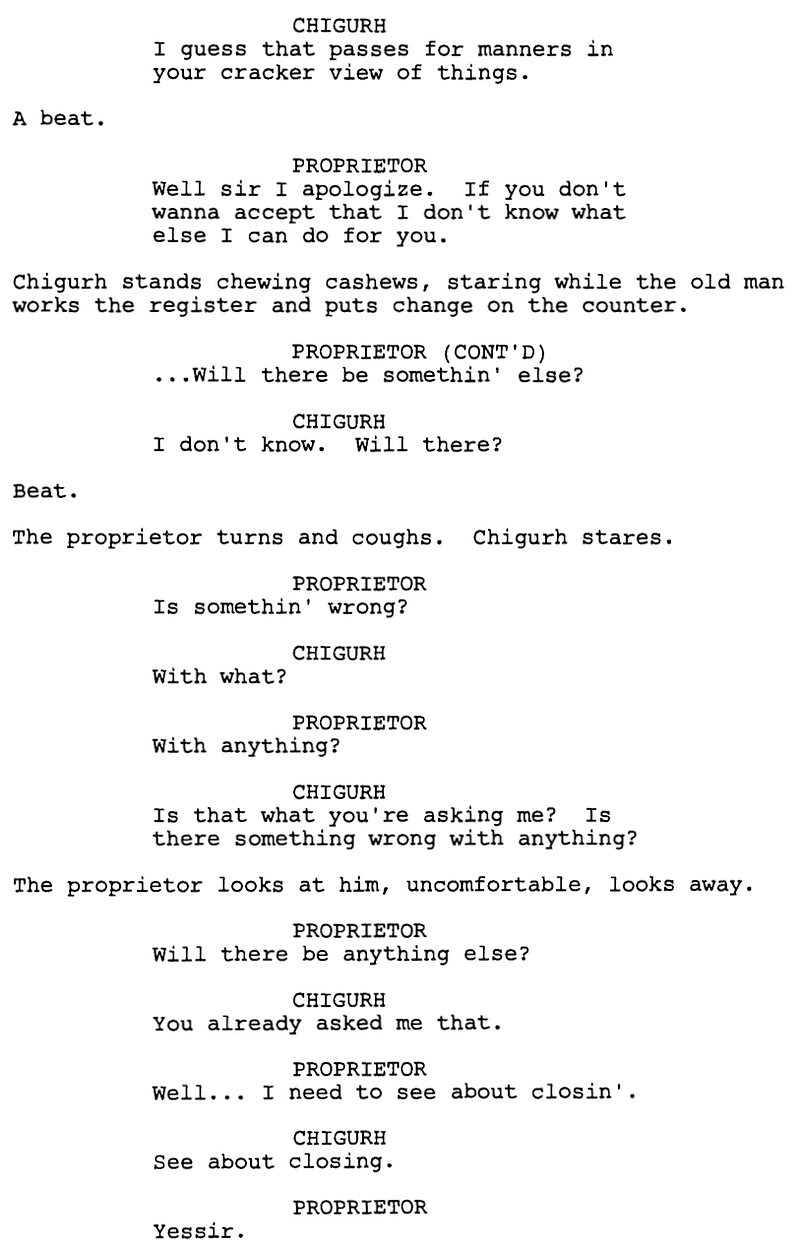
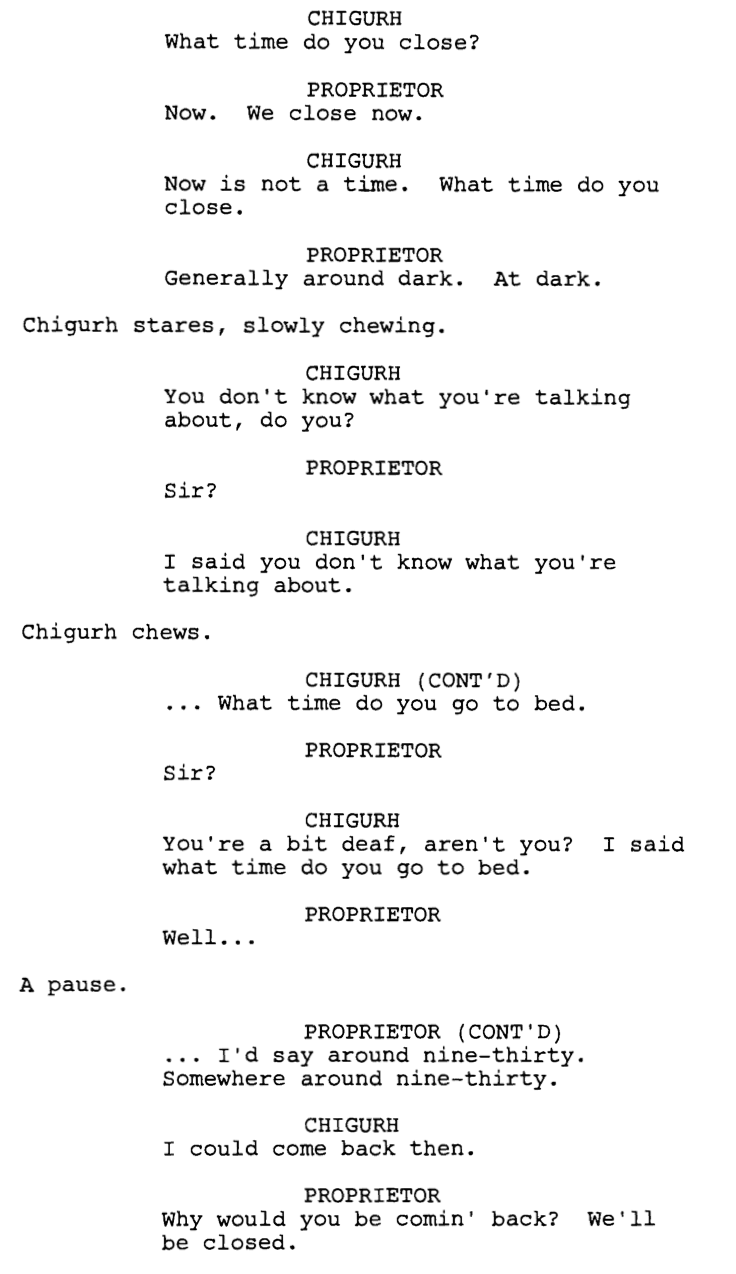
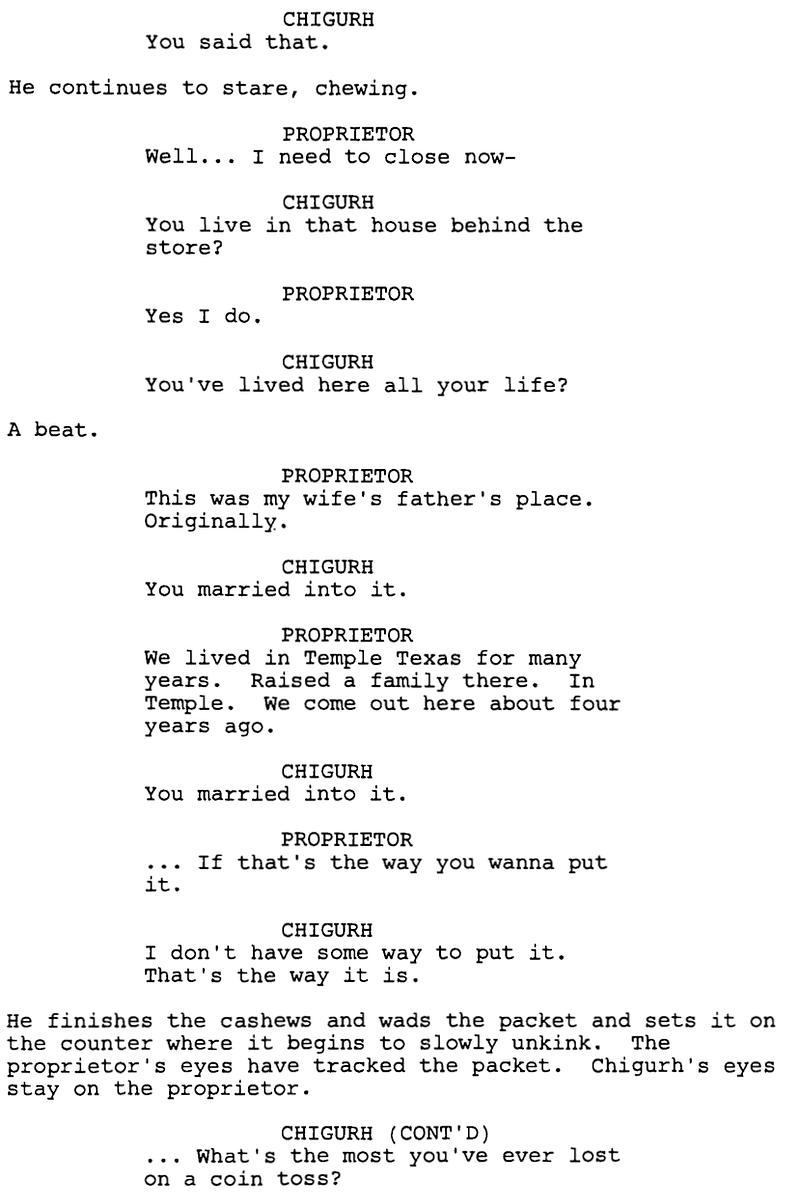
It’s interesting how the script weaves between variations of Beat and description of a moment with lines like The proprietor turns and coughs. Chigurh stares. And clearly, if the Coens choose to do anything in their scripts, that’s a touchstone for skillful writing.
In the twitter thread, James Simpson makes this point:
Upbraided in the ensuing tweetstorm by some who are fans of Beat, let me round out my reflections on the subject by saying this: Whatever you choose to do to handle a pause or quiet moment in scene description or even a parenthetical in dialogue, whether to use Beat or something more descriptive like This is a struggle, MADISON can’t say it, or CASSANDRA might have been hit by a truck, be thoughtful about it. What are you trying to convey? What is your intention for that moment? Be judicious in whatever choice you make.
In my tweet, I critiqued the use of Beat that it is value neutral. However, upon further reflection, perhaps that is precisely what is needed in a specific moment … to allow the reader to fill in the space with their own emotions.
Beyond that, I hope this tiny brouhaha reminds each of us that we are free to do whatever we need to do to serve our story best. If using beat is part of what you do as a writer … go for it. As those noted screenwriting gurus The Go-Go’s say:
Your comments welcome.
UPDATE: Mea culpa! The people have spoken and they like their beats! My rhetoric in the original tweet was too harsh. Weird because I don’t believe there are any screenwriting rules and I didn’t think I was dictating anyone not to use beat, just trying to make this point:
Clearly, it didn’t come across that way to a lot of people.
In fact, Craig does use beat in his Emmy-award winning screenplays for the TV series Chernobyl. For example from the first episode:
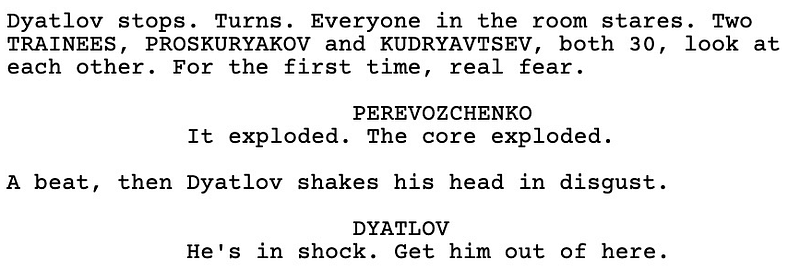
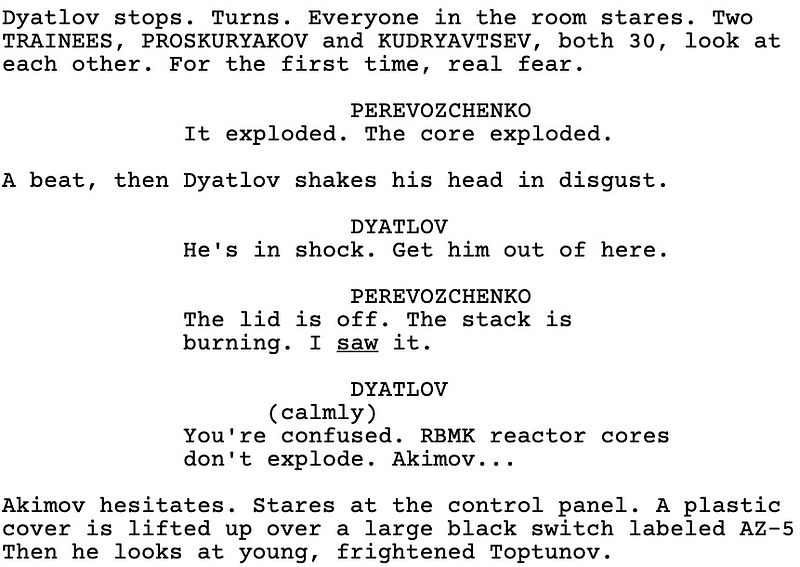
Some folks mentioned other award-winning screenplays which use beat.
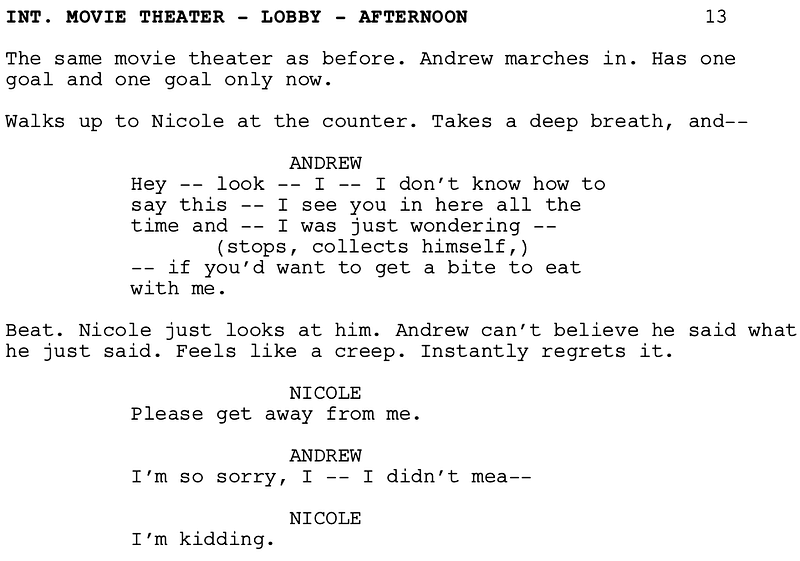
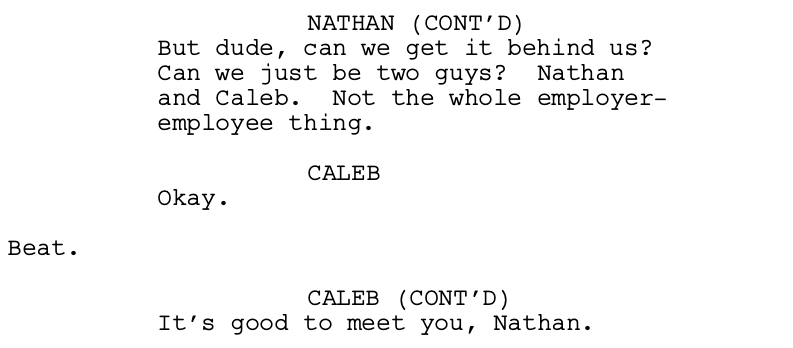
There are professional screenwriters who use beat and, of course, I know that. As noted above, I composed my ill-conceived tweet after just reading a script from a young writer who used it so much that it became a distraction. That’s no excuse for a tweet which comes off as telling people what to do and not do. As Craig Mazin wrote in his inimitable style:
Yes, I should have taken a beat before tweeting about beats.
I apologize. After this aberration in my behavior, I will return to what I’ve been doing for thirteen years on the blog and social media: Encouraging writers to find their distinctive voice and do whatever they need to do to write their stories the best, most effective and entertaining way possible.
I have deleted the tweet to minimize any further controversy.