The Theology of Cinema: Sin
“Theologically speaking, we can think of sin in two ways: (1) The act of committing a transgression, breaking some sort of moral or…

“Theologically speaking, we can think of sin in two ways: (1) The act of committing a transgression, breaking some sort of moral or religious law. (2) Living in a sinful state, to be a sinner, to be separated from God.”
As many of you may know, I have a background in the academic study of theology, a B.A. in religious studies from the University of Virginia and a Masters of Divinity degree from Yale. So it is only natural I bring that perspective to how I view and understand movies and screenwriting.
Let me be clear, when I say theological, I mean it — in this context — in a secular way. How does that make sense?
The word theology is a combination of two Greek words: “theos” which means God and “logos” which means word. So theology is words about God. What if for this series we think of God as a metaphor for an explanation for the big questions of life? Thus, theology as words about the meaning of life. Broadly speaking that is one dynamic movies hit on consistently, characters forced to confront their values, behaviors, and world views related to who they are and how they should act.
In this respect, movies and theology wade in very much the same thematic waters. As Andrew Stanton noted about Lawrence of Arabia in this TED Talk, how the central theme of that story is the question asked of the Protagonist “who are you,” that issue exists at the core of perhaps every movie, an existential exploration of a character or characters’ self-identity. So, too, with theology.
Also, movies tend to be about characters at critical junctures in their lives, facing a journey from the Old World into a New World where through a series of challenges and lessons they undergo a significant metamorphosis. Sounds an awful lot like a conversion experience to me.
Thus, it is only natural there will be a lot of crossover of theological themes in movies. But while a theological theme in a movie may have a religious or spiritual connotation, I am more interested in exploring such themes metaphorically to find the widest value possible for screenwriters at large.
By working with this non-religious take on the concept, we can avail ourselves of numerous powerful theological themes in screenwriting regardless of whether our stories are secular or non-secular.
Today: Sin.
Theologically speaking, we can think of sin in two ways: (1) The act of committing a transgression, breaking some sort of moral or religious law. (2) Living in a sinful state, to be a sinner, to be separated from God. Let’s look at each use metaphorically.
Sin as wrongdoing: There have been countless movies in which characters have been the victim of wrongdoing or have done wrong themselves. Randomly going through the IMDB Top 250 List:
- In The Shawshank Redemption, Red is guilty of murder, a sin of commission. And while Andy may not have murdered his wife, he ‘confesses’ to Red that he is guilty of having driven her away and into the arms of her lover, a sin of omission, failing to love his wife enough.
- In Raiders of the Lost Ark, Indiana is guilty of having broken a young woman’s heart [Marion].
- In Chinatown, Evelyn’s daughter exists because Evelyn’s father forced himself sexually upon Evelyn.
- In Citizen Kane, Charles’ mother is guilty of wrongdoing, at least in Kane’s eyes, by yanking him away from his idyllic snowy childhood in Colorado and sending him off to boarding school back East.
Wall Street, The Godfather, The Godfather: Part II, Platoon, Unforgiven, Goodfellas, Star Wars, Casablanca, The Apartment, The Dark Knight, even a ribald comedy like The Hangover, and perhaps the ultimate homage to the power of sin Se7en, we see this dynamic of wrongdoing, its impact from the past, or watching it unfold in the present, in movie after movie.
Sin as brokenness: Even more broadly, we may look at the concept of living in a sinful state as descriptive of almost every single Protagonist figure in movies — with the exception of stories where the Protagonist is the change agent, not a character going through their own metamorphosis.
Most mainstream Hollywood movies are a single Protagonist with a positive arc. Thus, most movies feature a Protagonist who begins in a ‘sinful’ or broken state. There is a fundamental disconnect between who they are in the world and who they are supposed to be existentially, their journey in part about getting in touch with their need.
- In The Silence of the Lambs, Clarice attempts to be a grown-up by becoming an FBI field agent, but a big part of her psyche is that wounded 11 year-old girl whose father, a sheriff, was murdered in the line of duty.
- In Schindler’s List, Oskar is a war profiteer heedless of the slaughter of the Jews going on all around him.
- In Psycho, Norman is literally living out the roles of two personalities, a classic state of brokenness.
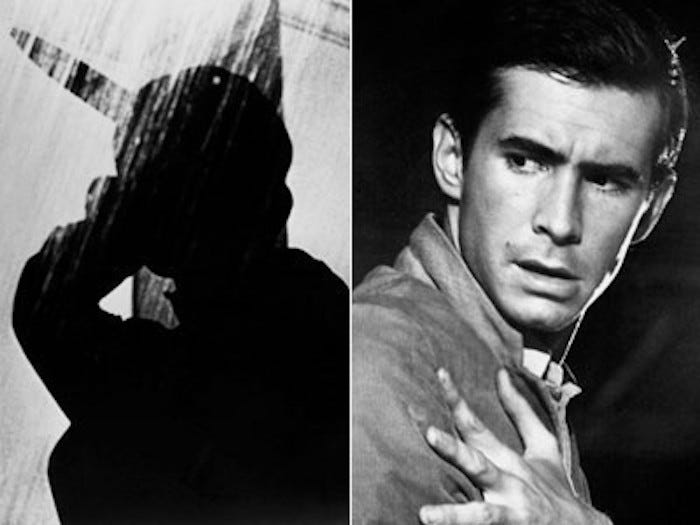
Sunset Blvd., Apocalypse Now, Memento, American History X, Taxi Driver, Double Indemnity, The Wizard of Oz, even Back to the Future all have Protagonist characters living in a state of brokenness.
In terms of screenwriting, I like to call this state Disunity as it is not only an apt description of the character’s beginning psyche state, it also suggests an end point in terms of the story’s psychological journey: Unity.
Wrongdoing. Brokenness. Why do screenwriters and filmmakers continually revisit stories with these themes? Here are a couple of reasons:
- Moviegoers are fascinated by characters who are lured by the temptation of ‘sin’. Whether it’s the lure of money (Wall Street), power (The Godfather), sex (Fatal Attraction), or something else, we are curious to see the pull toward the wrong. Why? Because we ourselves experience those same temptations. A movie provides us a safe context within which to project ourselves into characters and see how it feels to explore the Dark Side of life.
- We like to see stories where broken characters find a sense of connection and Unity. Why? Because we want to believe that we can achieve that in our own lives. Again we can live vicariously through fictional characters and experience what they experience, giving us hope for our own lives.
How about you? Why do you think the themes of sin as wrongdoing and brokenness are so common in movies?
For more articles in the Theology of Cinema series, go here.