The Theology of Cinema: Grace
“Here is the world. Beautiful and terrible things will happen. Don’t be afraid. I am with you. Nothing can ever separate us.”
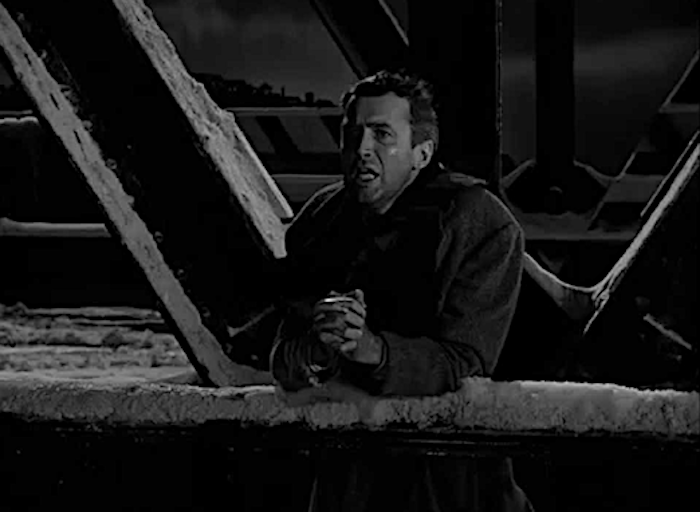
“Here is the world. Beautiful and terrible things will happen. Don’t be afraid. I am with you. Nothing can ever separate us.”
As many of you may know, I have a background in the academic study of theology, a B.A. in religious studies from the University of Virginia and a Masters of Divinity degree from Yale. So it is only natural I bring that perspective to how I view and understand movies and screenwriting.
Let me be clear, when I say theological, I mean it — in this context — in a secular way. How does that make sense?
The word “theology” is a combination of two Greek words: “theos” which means God and “logos” which means word. So theology is words about God. What if for this series we think of God as a metaphor for an explanation for the big questions of life? Thus, theology as words about the meaning of life. Broadly speaking that is one dynamic movies hit on consistently, characters forced to confront their values, behaviors, and world views related to who they are and how they should act.
In this respect, movies and theology wade in very much the same thematic waters. As Andrew Stanton noted about Lawrence of Arabia in this TED Talk, how the central theme of that story is the question asked of the Protagonist “who are you,” that issue exists at the core of perhaps every movie, an existential exploration of a character or characters’ self-identity. So, too, with theology.
Also, movies tend to be about characters at critical junctures in their lives, facing a journey from the Old World into a New World where through a series of challenges and lessons they undergo a significant metamorphosis. Sounds an awful lot like a conversion experience to me.
Thus, it is only natural there will be a lot of crossover of theological themes in movies. But while a theological theme in a movie may have a religious or spiritual connotation, I am more interested in exploring such themes metaphorically to find the widest value possible for screenwriters at large.
By working with this non-religious take on the concept, we can avail ourselves of numerous powerful theological themes in screenwriting regardless of whether our stories are secular or non-secular.
Today: Grace.
My first two years at Yale, I lived on the Sterling Quadrangle:

As a night owl, I would study until 2, 3, even 4AM. And often I would take a walk onto the Quad. Stare at the stars. Contemplate big questions like… why am I here?
On the Quad directly below Marquand Chapel [the tall building in the photo above], there was a spot where the sidewalks converged. On that spot was some stone work, a distinctive circle within a circle.

I visited it often in my late night wanderings. I called it The Navel of the Universe, feeling as if standing there, gazing up into the night sky, was an appropriate center point for all my existential questions.
Why am I here? What is my purpose in life? What is the meaning of existence?
One evening I was standing on The Navel, peering up into the heavens, pondering Big Issues when I heard a voice.
“Scott?”
Startled I shifted my gaze from the sky to see Don. I didn’t know Don all that well, so it was a bit awkward, him catching me outside in spiritual sojourn. Don was a Lutheran, studying for the ministry, a solid fellow on a clear path. I was a wanderer, scrambling both philosophically and theologically.
So we started to talk. About life. Existence. Faith.
At some point, Don asked me about the concept of grace. I don’t remember my response, but it must have been a pretty poor answer because with a smile, Don wagged his head at my words.
“Scott,” he said, “There is nothing we can do to merit God’s love. Nothing. Here’s how I look at grace: We are all fucked up. But God loves us anyway.”
This moment was — and is to this day — one of the most revelatory experiences in my life. Having been raised a Southern Baptist, then a Methodist, I had always assumed my status with God was dependent upon my actions, my worthiness. Don’s simple assertion, his interpretation of Martin Luther, blew my assumptions completely out of the water.
Here is what theologian Frederick Buechner has to say about grace:
Grace is something you can never get but only be given. There’s no way to earn it or deserve it or bring it about any more than you can deserve the taste of raspberries and cream or earn good looks or bring about your own birth.
The grace of God means something like this: Here is your life. You might never have been, but you are because the party wouldn’t have been complete without you. Here is the world. Beautiful and terrible things will happen. Don’t be afraid. I am with you. Nothing can ever separate us. It’s for you I created the universe. I love you.
There’s only one catch. Like any other gift, the gift of grace can be yours only if you’ll reach out and take it.
What if we look at grace metaphorically in relation to a Protagonist in our story universe. Think about these words where the “I” is you — the writer:
“Here is your life. Here is the world. Beautiful and terrible things will happen. Don’t be afraid. I am with you. Nothing can ever separate us. It’s for you I created the universe. I love you.”
Doesn’t that describe the relationship a writer can have with their story’s central character? The story universe we create with and around them? The beautiful and terrible things that can happen the events of the plot? Our love for them an expression of acceptance of who they are, no matter how flawed and broken they may be?
Now let’s pivot the point-of view and think about these words where the “I” is the Authentic Self of the Protagonist, their Core Essence which yearns to come into consciousness, their Inner Need.
“Here is your life. Here is the world. Beautiful and terrible things will happen. Don’t be afraid. I am with you. Nothing can ever separate us. It’s for you I created the universe. I love you.”
In other words, grace is tied to the Destiny of the Protagonist — to become who they are.
One of my favorite questions to ask about a Protagonist is this: Why does this story have to happen to this character at this time?
Because grace requires it. Grace engenders it. Grace creates it.
So when you write your next story and contemplate the Protagonist’s role in it, how they start out in a state of Disunity…
That’s them being “fucked up.”
And as they go through the trials and tribulations of the plot…
Those are the “beautiful and terrible things” that happen.
And when they end up in a state of Unity…
That is a sign that “God loves us anyway,” enabling their Authentic Self to break forth into the light of day, to become who they are.
Thus it is, we can look at everything George Bailey goes through during his journey in It’s a Wonderful Life — all the beautiful things including Mary, his children, and the community he has helped foster in Bedford Falls, plus, all the terrible things such as never getting a chance to see the world, his ongoing struggles with Mr. Potter, and that awful moment where he realizes that Uncle Billy has lost $8,000 — as the presence of grace in his life. He had to experience it all including his relationship with Clarence the angel who bestowed on George a “great gift”: the ability to see what it would mean if he’d never been born. It all leads up to this moment:
As characters, that is their gift of grace to us… providing a compelling journey to tell.
As writers, that is our gift of grace to them… crafting a story that enables them to complete that journey.
For more Theology of Cinema articles, go here.