The Theology of Cinema: Doubt
We cannot know Light without Dark. Nor can we know Good without Evil. Likewise, we can not truly understand Faith without Doubt.
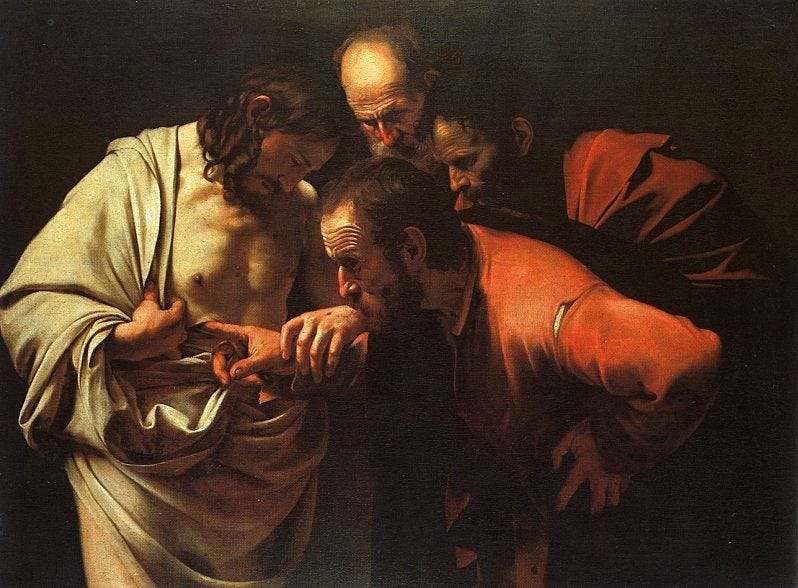
We cannot know Light without Dark. Nor can we know Good without Evil. Likewise, we can not truly understand Faith without Doubt.
As many of you may know, I have a background in the academic study of theology, a B.A. in religious studies from the University of Virginia and a Masters of Divinity degree from Yale. So it is only natural I bring that perspective to how I view and understand movies and screenwriting.
Let me be clear, when I say theological, I mean it — in this context — in a secular way. How does that make sense?
The word “theology” is a combination of two Greek words: “theos” which means God and “logos” which means word. So theology is words about God. What if for this series we think of God as a metaphor for an explanation for the big questions of life? Thus, theology as words about the meaning of life. Broadly speaking that is one dynamic movies hit on consistently, characters forced to confront their values, behaviors, and world views related to who they are and how they should act.
In this respect, movies and theology wade in very much the same thematic waters. As Andrew Stanton noted about Lawrence of Arabia in this TED Talk, how the central theme of that story is the question asked of the Protagonist “who are you,” that issue exists at the core of perhaps every movie, an existential exploration of a character or characters’ self-identity. So, too, with theology.
Also, movies tend to be about characters at critical junctures in their lives, facing a journey from the Old World into a New World where through a series of challenges and lessons they undergo a significant metamorphosis. Sounds an awful lot like a conversion experience to me.
Thus, it is only natural there will be a lot of crossover of theological themes in movies. But while a theological theme in a movie may have a religious or spiritual connotation, I am more interested in exploring such themes metaphorically to find the widest value possible for screenwriters at large.
By working with this non-religious take on the concept, we can avail ourselves of numerous powerful theological themes in screenwriting regardless of whether our stories are secular or non-secular.
Today: Doubt.
We can not know Light without Dark. Nor can we know Good without Evil. Likewise we can not truly understand Faith without Doubt.
We may tend to think of religious faith as being about certitude, an unbridled confidence in what we believe. Yet even a cursory reading of sacred texts including the Old and New Testaments convey a wholly different picture.
The saga of the Jews wandering in the wilderness for forty years after escaping slavery in Egypt is filled with episodes of doubt, physicalized most notably by the people crafting ‘graven images’ to worship in complete defiance of the clear edict from Yahweh: “You shall have no other gods before me” [Exodus 20:3].
The Psalms are filled with lamentations filled with questioning. For example: “My heart mused and my spirit inquired; Will Yahweh reject forever? Will He never show his favor again? Has His unfailing love vanished forever? Has His promise failed for all time? Has Elohim forgotten to be merciful? Has He in anger withheld his compassion?” [Psalm 77:6–9].
This calls to mind perhaps the most compelling moment of doubt in the Bible wherein Jesus hangs on the cross in his final moments of human life cries out, “My God, my God, why have you forsaken me?” [Matthew 27:46].
And yet in each of these cases, sorely tested as the believers are, they are vindicated in their faith.
Stripped of the religious overtones, we see this Doubt/Faith dialectic in movies constantly:
- The initial Call To Adventure is often one the Protagonist initially refuses to accept, doubting the veracity of the call, doubting the necessity of embarking on a journey, doubting their ability to survive let alone succeed. The moment requires a leap of faith.
- At the end of Act Two, there is an All Is Lost moment in which a major plot reversal causes the Protagonist to be filled with self-doubt.
- Even during the Final Struggle, there must be at least a sliver of doubt for there to be any sense of genuine drama as to whether the Protagonist will prevail or not.
Why is doubt such a powerful narrative dynamic?
First, it shows characters in conflict, subject to warring aspects of their psyche, then often translating into conflict with other characters. As we hear all the time, a story can not have drama without conflict.
Second, doubt is universal, an experience people have countless times in their lives, so the audience will naturally, even if unconsciously identify with movie characters who go through such experiences.
In other words, we can not participate fully in the a Protagonist’s success unless along the way there has been the possibility of failure and the expression of doubt.
A Protagonist’s resolve without doubt is flaccid and cheap. Faith in the face of doubt demonstrates the character’s growing empowerment as part of their metamorphosis.
The Coen brothers movie A Serious Man is one of the best movies dealing with the theme of Doubt. Here is an excellent analysis of that movie a Go Into The Story reader Bryan Colley:
The problem with storytelling is that it is inherently God-affirming. A story is constructed by an all-knowing writer, who predetermines the fate of the characters. There’s an assumption that everything happens for a reason, and that ultimately there is meaning to be drawn from the actions of the characters. This meaning is usually derived from the conclusion of the story; when the character is either heroic, redeemed, destroyed, or banished by their actions. This is the reason the Bible and other religious texts are full of stories. Stories imply there is a higher power that will judge you and determine your fate — the storyteller is God. It makes us judge real life in the same way — a series of actions and consequences that must therefore have some meaning because then it becomes a story.
A Serious Man features a character that questions his belief in God, but the question is never answered because none of the multiple storylines in A Serious Man have a resolve. From the opening scene to the act-of-God conclusion, everything is left hanging in a way that evades didactic finality. The movie refuses to give meaning to Larry Gopnik’s life and expresses doubt and uncertainty in the most profound way.
Of course, constructing a story that refuses to give conclusion has its own meaning — that the real truth or meaning is unknowable, and unknowable is also God-affirming, because God is unknowable. Many might argue the final shot is conclusive, because it brings God into the story. Without a solid conclusion, I remain in doubt.
It’s unlikely that any form of storytelling can be entirely secular. The whole purpose of telling a story is to give order to the world, and any imposed order implies a higher power. Some might say that man gives order to the world, but you could counter that man merely discovers the order in the world.
It’s ironic then that A Serious Man is based on the story of Job from the Bible, but it’s Job without the meaningful conclusion. It’s Job without God’s hand, a test of faith that Larry Gopnik will never know if he passes or fails, because that knowledge is only gained in stories, not real life.
At the very least, A Serious Man shows the Coen brothers masterful grasp of how stories work and how simply bending the rules of storytelling can make a profound statement. Is there a God? Will Larry Gopnik ever get his life in order? Does he die at the end? The movie doesn’t provide answers, only questions.
If you look at other Coen brothers films, you’ll find their reluctance to neatly conclude a story is one of their greatest weaknesses. Most of their films fumble in the final act — most arguably in No Country for Old Men and most obviously in Burn After Reading. It’s almost as if they’re avoiding giving their films too much meaning, lest they be mistaken for gods, but this is betrayed by their other noted weakness, a tendency to look down on their characters from a superior, God-like position. Like it or not, the storyteller is God.
In his argument with the Columbia House records employee over the phone, Larry Gopnik repeatedly rejects the album Abraxas by Santana. Abraxas is a Gnostic term for God, particularly a God who encompasses all things from Creator of the Universe to the Devil, and an etymological root for “abracadabra”. It is thus implied that Larry Gopnik is vehemently rejecting God and magic.
A Serious Man and Bryan’s analysis of it point out a different slant on the subject of Doubt and its relationship to Faith. Hollywood loves movies with happy endings to send the audience on its way with a smile on their faces, but that storytelling instinct could be a smokescreen for a deeper question: What if the universe is not benevolent? What if the Good Guy doesn’t always win?
The Coen brothers seem have a different kind of Faith: That if something can go wrong, it will go wrong. Witness this poem written by Ethan Coen: “The Drunken Driver Has The Right Of Way.”
The loudest have the final say,
The wanton win, the rash hold sway,
The realist’s rules of order say
The drunken driver has the right of way.
The Kubla Khan can butt in line;
The biggest brute can take what’s mine;
When heavyweights break wind, that’s fine;
No matter what a judge might say,
The drunken driver has the right of way.
The guiltiest feel free of guilt;
Who care not, bloom; who worry, wilt;
Plans better laid are rarely built
For forethought seldom wins the day;
The drunken driver has the right of way.
The most attentive and unfailing
Carefulness is unavailing
Wheresoever fools are flailing;
Wisdom there is held at bay,
The drunken driver has the right of way.
De jure is de facto’s slave;
The most foolhardy beat the brave;
Brass routs restraint; low lies high’s grave;
When conscience leads you, it’s astray;
The drunken driver has the right of way.
It’s only the naivest who’ll
Deny this, that the reckless rule;
When facing an oncoming fool
The practiced and sagacious say
Watch out — one side — look sharp — gang way.
However much you plan and pray,
Alas, alack, tant pis, oy vey,
Now — heretofore — til Judgment Day,
The drunken driver has the right of way.
In the Coen brothers’ narrative universe, characters should live their lives filled with Doubt because Fate is a Drunken Driver. Sometimes it misses you. Sometimes it hits you. In their movies, characters put their faith in schemes and dreams, only to see their plans blow up in their faces time and again.
As storytellers, what we are left with is a world of possibilities with respect to Doubt as a theme. We can write mainstream commercial stories in which a character’s Doubt is overcome by their psychological growth as they align themselves with their authentic nature. In the end, they put Faith in themselves and in so doing not only achieve their conscious goal, they also move psychologically toward Unity.
However, there are stories which explore Doubt in a more existential fashion, as the Coen brothers are inclined to do. Perhaps there is good reason, maybe even every reason to be suspicious about our existence for life itself is subject the whims of a capricious, drunken fate.
For more Theology of Cinema articles, go here.