The Theology of Cinema: Cross
“A six-pointed star, a crescent moon, a lotus — the symbols of other religions suggest beauty and light. The symbol of Christianity is an…
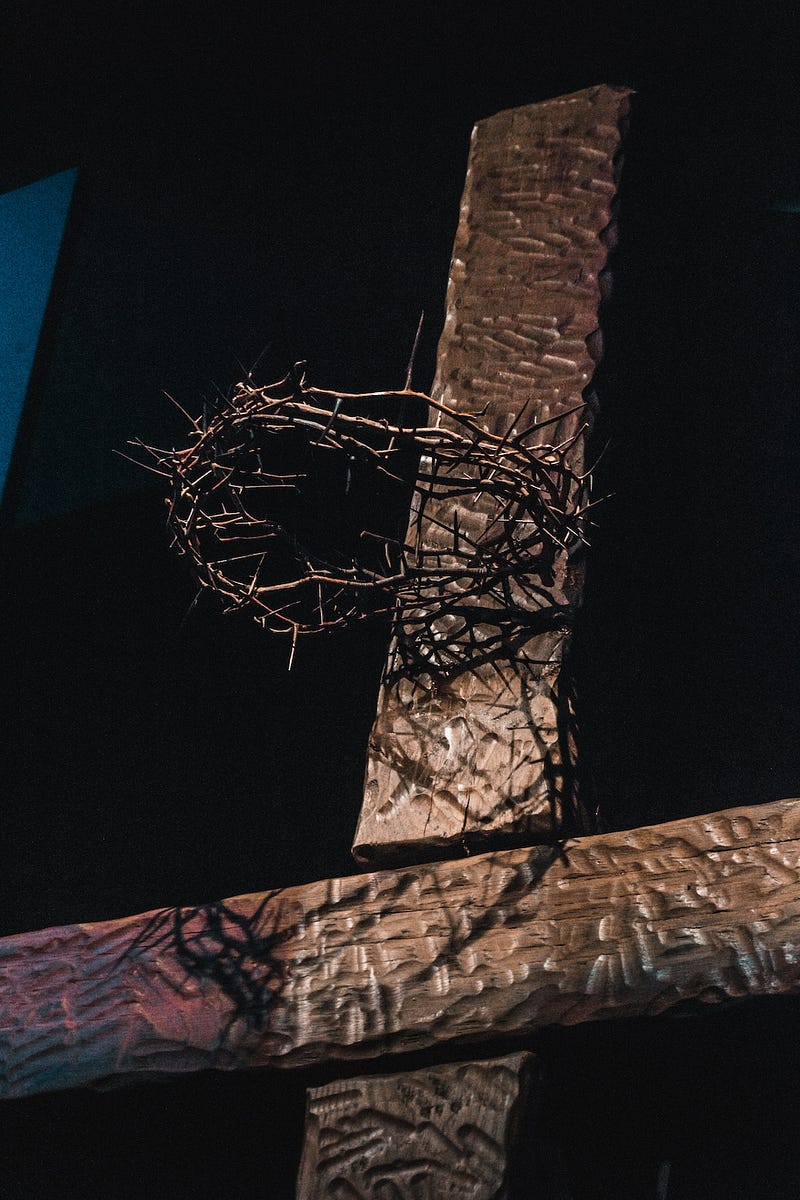
“A six-pointed star, a crescent moon, a lotus — the symbols of other religions suggest beauty and light. The symbol of Christianity is an instrument of death.”
As many of you may know, I have a background in the academic study of theology, a B.A. in religious studies from the University of Virginia and a Masters of Divinity degree from Yale. So it is only natural I bring that perspective to how I view and understand movies and screenwriting.
Let me be clear, when I say theological, I mean it — in this context — in a secular way. How does that make sense?
The word “theology” is a combination of two Greek words: “theos” which means God and “logos” which means word. So theology is words about God. What if for this series we think of God as a metaphor for an explanation for the big questions of life? Thus, theology as words about the meaning of life. Broadly speaking that is one dynamic movies hit on consistently, characters forced to confront their values, behaviors, and world views related to who they are and how they should act.
In this respect, movies and theology wade in very much the same thematic waters. As Andrew Stanton noted about Lawrence of Arabia in this TED Talk, how the central theme of that story is the question asked of the Protagonist “who are you,” that issue exists at the core of perhaps every movie, an existential exploration of a character or characters’ self-identity. So, too, with theology.
Also, movies tend to be about characters at critical junctures in their lives, facing a journey from the Old World into a New World where through a series of challenges and lessons they undergo a significant metamorphosis. Sounds an awful lot like a conversion experience to me.
Thus, it is only natural there will be a lot of crossover of theological themes in movies. But while a theological theme in a movie may have a religious or spiritual connotation, I am more interested in exploring such themes metaphorically to find the widest value possible for screenwriters at large.
By working with this non-religious take on the concept, we can avail ourselves of numerous powerful theological themes in screenwriting regardless of whether our stories are secular or non-secular.
Today: Cross.
“A six-pointed star, a crescent moon, a lotus — the symbols of other religions suggest beauty and light. The symbol of Christianity is an instrument of death.” — Frederick Buechner
Crucifixion was a particularly gruesome form of execution used by many ancient civilizations, but most notably by the Romans throughout their empire. Like many forms of capital punishment, crucifixions were public deaths intended as visual reminders to subjugated citizens not to defy the state.
Arguably the most famous crucifixion is that of Jesus which is why the Cross has become a central symbol of Christianity. But what does it mean?
As Buechner notes, it certainly signifies an “instrument of death,” the means by which Jesus’ life was ended. But there are plenty of other levels of meaning ranging from hope to despair, humanity to inhumanity, obedience to sacrifice. After all, the day of Jesus’ date with the Cross is known per the liturgical calendar as Good Friday.
Obviously with such a powerful symbol, through the years filmmakers have used the imagery to elicit emotional responses and enrich their story themes. For instance in Dracula lore, the cross is used as a physical object with talismanic powers.

In the 1995 movie Dead Man Walking, convicted murderer Matthew Poncelet is executed in front of his victims’ parents. In his final moments, he ask for forgiveness. “Mr. Delacroix, I don’t wanna leave this world with any hate in my heart. I ask your forgiveness for what I done. It was a terrible thing I done, taking your son away from you.”
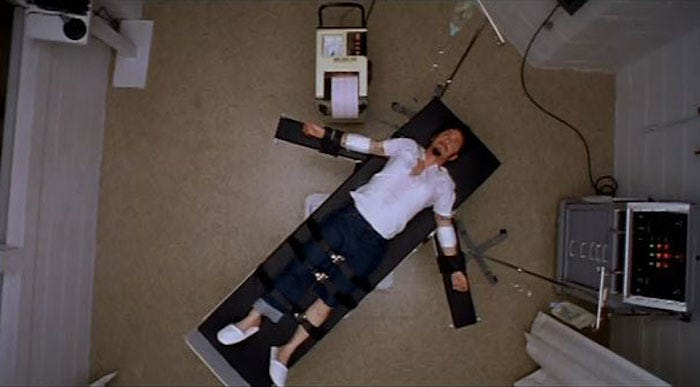
In the 1964 movie The Last Man on Earth, Dr. Robert Morgan’s death — in a church no less! — ends with him with arms outstretched in a crucifixion pose.
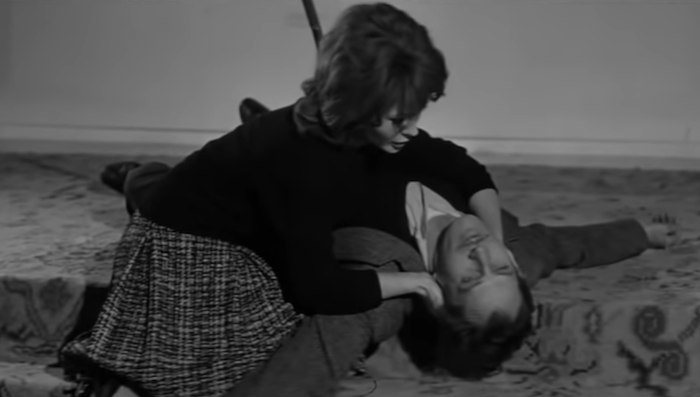
In the 1971 movie The Omega Man, Robert Neville is the last remaining human on Earth after biological warfare has wiped out most of the world’s population, leaving behind psychopathic zombies. Neville, a scientist, discovers a serum which can cure those affected by the zombie disease, but is killed in the final scene, dying in the pose of the cross, here intended in part for the purposes of irony, an homage to The Last Man on Earth.
There are other times when the image has been used in a positive way, such as the climactic moment when Andy Dufresne escapes prison in The Shawshank Redemption.
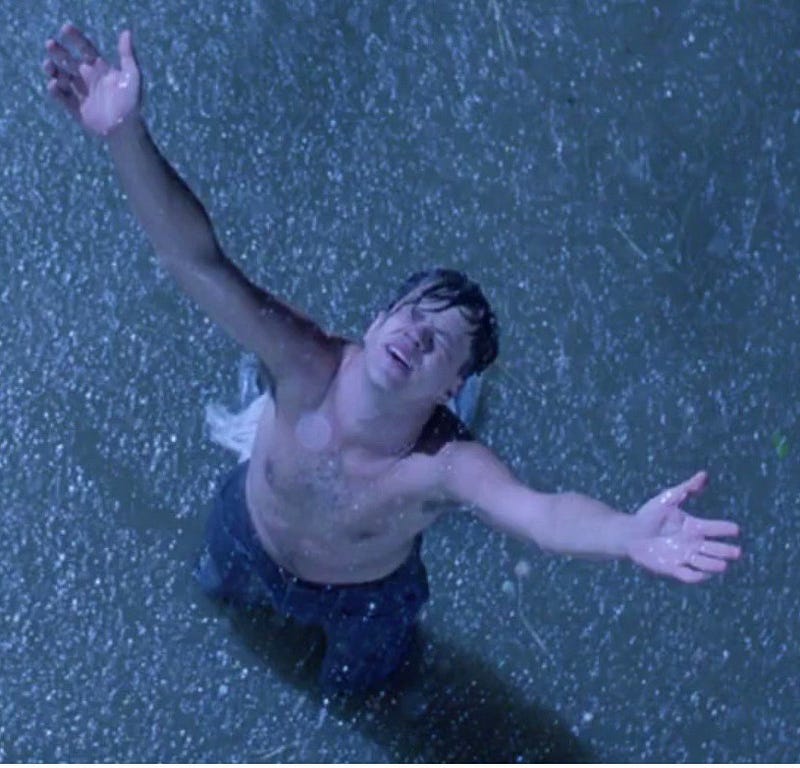
Cleansed in the river and by the rain — a form of ‘baptism’ — Andy’s crucifixion pose suggests the death of his tenure in prison, and much like the resurrection of Jesus, so, too, Andy emerges into a New Life of his own.
More generically, writers can take the notion — “cross to bear” — and use that as another way of thinking about a character’s key flaw or some experience from a character’s past that weighs upon them in the Present. See Clarice Starling (The Silence of the Lambs), Ellen Ripley (Aliens), Maximus (Gladiator), Charles Foster Kane (Citizen Kane), Bill Munny (Unforgiven), Ryan Stone (Gravity), Carl Fredericksen (Up) to name but a few.
The Cross is an image with a myriad of meanings. Buechner’s last line for the description above offers perhaps the most powerful one: “It suggests, at the very least, hope.”
Takeaway: Consider your Protagonist. What is their ‘cross’ to bear? If they sacrifice themselves for the greater good, consider the way in which they die. Is there some symbolism which you can use to imbue their death with more meaning and emotional resonance for the audience?
For more Theology of Cinema articles, go here.