The Protagonist’s Journey: Narrative Imperative
An excerpt from my book The Protagonist’s Journey: An Introduction to Character-Driven Screenwriting and Storytelling.
An excerpt from my book The Protagonist’s Journey: An Introduction to Character-Driven Screenwriting and Storytelling.
I devoted nearly two years writing The Protagonist’s Journey: An Introduction to Character-Driven Screenwriting and Storytelling. Twenty-one chapters. Three hundred movie and television references. One hundred thousand words. The book has been the most challenging writing project of my life. Published in March 2022 by Palgrave Macmillan, here is a taste of what you may expect when you read the book.
In Chapter One, I write about the concept of Narrative Imperative, that the journey the Protagonist takes is the journey then need to take. One of the examples I explore is the character Michael Corleone in The Godfather.
In The Godfather (1972) , Michael Corleone has been groomed to be a “civilian,” avoiding the criminal business of his father, Vito, a Mafia don. Yet as the story unfolds, it becomes clear that criminal life is the son’s fate, no matter his college education, years in the military, combat medals, or the express wishes of his father for Michael to avoid following in his footsteps. When Michael returns home after World War II, he finds himself inexorably pulled into the brewing battle between Mafia families.
This feud results in an assassination attempt on Don Corleone. While visiting his father in the hospital, Michael demonstrates his innate strategic instincts by ordering the nurse on duty to move Vito to a different room, staving off another hit attempt. This event seems to awaken something inside Michael. He convinces his older brother Sonny that because Michael is not perceived to be a part of the family business, he is in a position to cozy up to rival don Sollozzo and kill him, along with corrupt police chief McCluskey — which Michael does.
Exiled to Sicily for his own safekeeping, Michael falls in love with a local woman named Apollonia. They wed and it appears Michael may be able to skirt any further intersection with criminality. That turns out to be an illusion as fate intervenes in his bucolic existence. When his father’s enemies discover Michael’s whereabouts, they kill his young wife in a bombing intended for him.
With Sonny dead, middle brother Fredo incapable of a leadership role, and Vito incapacitated due to his declining medical state and eventual death, Michael returns home and takes charge. He orders the assassination of five rivals. The fact the murders happen during a baptism ceremony at which Michael appears in the role of the infant’s godfather is both ironic and profound: Through his ruthless leadership, Michael embraces his essential nature as a Mafia don. Vito had hoped Michael could lead a “legitimate” life and become a senator or governor, but it was not to be as his destiny existed in a nascent form from the start of his adulthood.
That sense of inevitability, what we may call Narrative Imperative, is a core dynamic of the Protagonist’s journey. Sometimes, as with characters like Michael Corleone, their fate may emerge in the writing process like some sort of metaphorical DNA, clearly marking their personal trajectory. Other characters have a more complex set of dynamics at work within them. In that case, a writer must consider the character’s psyche, the totality of their psychological being: memories, associations, emotions, passions, instincts, behaviors, beliefs, flaws, wounds, and the like. These are the base elements constituting a Protagonist’s initial state of disunity necessitating the journey upon which they are about to embark.
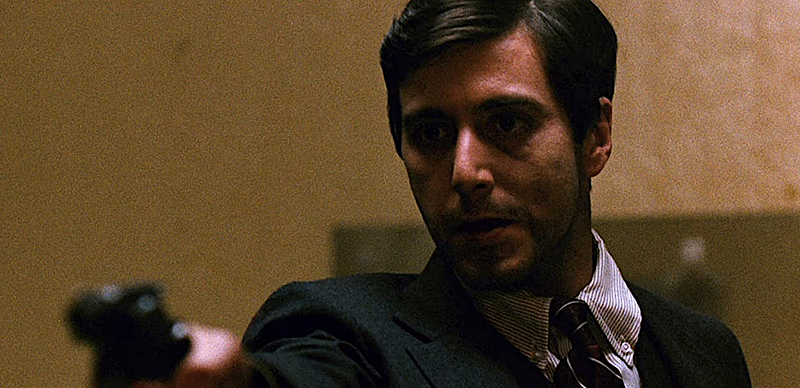
One of the most memorable scenes in film history is this one:
I contend that the seeds of who Michael Corleone manifests himself to be in this critical moment exist within the character at the beginning of the story.
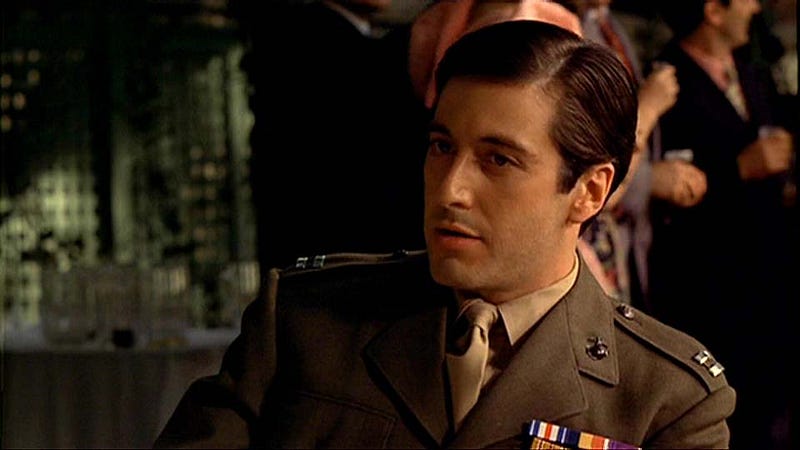
No matter what alternative path his father planned for him, at his very core of being, Michael Corleone is predestined to become the Godfather.
In The Protagonist’s Journey, I explore the relevance of the work of Carl Jung, the founder of analytical psychology, to the writer’s task of crafting a story. For with his theory of individuation, Jung asserts this:

When a writer asks of the Protagonist … What do they need … they zero in on the character’s unconscious goal … to become who they truly are.
It is the fundamental reason why the story exists.
It is tethered to every event that happens and every character the Protagonist intersects with.
TV writer-producer Javier Grillo-Marxuach (Lost, Medium, Blood and Treasure, Cowboy Bebop) tweeted this insightful observationa few years back:
“A great script creates an irresistible narrative flow that propels a reader to an inevitable dramatic conclusion.”
This speaks to the Narrative Imperative of the Protagonist.
The journey they go on is the journey they need to take.
It follows that if the seeds of the Protagonist’s journey exist within the character from the very moment of Fade In, then the best path for a writer to discover the story they are destined to write begins with the characters. As I write in the preface to my book:
Begin with character. End with character. Find the story in between.
Let the characters drive the story-crafting process. The Protagonist’s Journey not only makes a persuasive argument for writers to immerse themselves in the lives of their characters — and in particular the Protagonist — it also provides a practical, proven process how to start with characters and end with a scene-by-scene outline … a professional approach to breaking story.
You may go here to read 30+ endorsements for The Protagonist’s Journey by screenwriters, novelists, and academics.
You may go here to learn more about the content of The Protagonist’s Journey.
You may order the book here:
The book debuted as Amazon’s #1 Best Seller in Film and Television and retained that spot for nearly a year.
“Scott Myers’ analytical gifts deftly lay bare the narrative underpinnings of movies that we love. The Protagonist’s Journey is foundational for screenwriters, and even certain fiction writers. Myers illuminates a core principle of writing for the screen: All story rises from character. Bookstores have been too well-supplied with “paint-by-plot-point” screenwriting manuals that encourage schematic writing and single-trait characters. For me, it’s a keen pleasure to see Scott Myers’ fresh approach. He profoundly understands that the most essential thing in a performance-based art is our experience of the central character’s personal transformation, and what is gained and lost — inevitably — along the way. Myers draws from a broad grasp of classic, Aristotelian story-telling, as he expands our own understanding with deep insights that he has gleaned from masters of mythology and human psychology. What a resource this book is! I’m envious of the lucky writer who’s just starting out, with this book on their nightstand.”
— Robin Swicord, Little Women, Matilda, Memoirs of a Geisha, When They See Us
I look forward to sharing The Protagonist’s Journey with you.