The Pixar Process
Notes from a presentation by the Head of Story for new Pixar movie Onward.
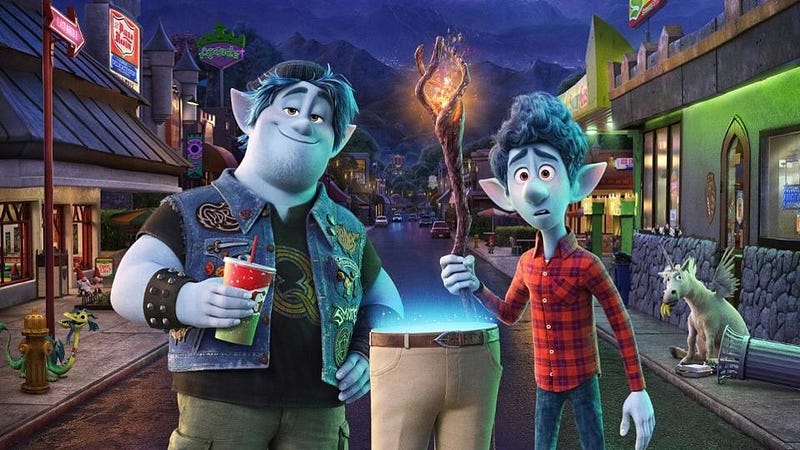
Notes from a presentation by the Head of Story for Pixar movie Onward.
Last Thursday, February 27th, the DePaul School of Cinematic Arts hosted Kelsey Mann. Some background:
Kelsey Mann first came to Pixar Animation Studios in 2009, and was the story supervisor on Disney•Pixar’s 2013 feature film “Monsters University.” In this capacity, he oversaw a team of 5–8 story artists through the process of storyboarding the film. Mann also contributed ancillary material during the production of the Academy Award®-winning feature “Toy Story 3.” Mann was soon tapped to direct the short “Party Central,” which was released theatrically in front of “Muppets Most Wanted.” Most recently, Mann worked as the story supervisor for The Good Dinosaur and is head of story on the new Pixar movie Onward.
As Onward debuts in North America this weekend — and as anyone familiar with Go Into The Story knows, I’m a huge Pixar fan — I attended and tapped out notes during Kelsey’s interesting and entertaining presentation in the hope we could all learn something about storytelling. Here are those notes followed by some thoughts about the Pixar process.
Story department
Onward co-writer / director Dan Scanlan
Worked on Monsters University
December 2013 — Day 1: That was the commencement of work on Onward.
We don’t settle for good, we want great.
Index Cards on the wall!
Dan always has a co-writer [Note: Jason Headley & Keith Bunin for Onward]
The fishbowl: Collaborative space.
Anyone invited in at any time
Other room: Story Room
Go over ideas and scripts
Is this scene working? Should we even do it?
Go through script page by page
Sequence by sequence
Script sequence handed off to artists
Want to look at as much of the movie at a time rather than one scene to see context and if there are problems
Handouts: Script sequences. Discuss pages, director reads through script and gives notes to artists. Lots of hidden directions in read through.
Then artists go off to start drawing.
There were 97,759 storyboards for Onward.
Once artist has done sequence, time for the pitch. Watch storyboards.
Always applaud after every single pitch. A performance.
Feel if it’s working or not.
Start off with what’s working, then individual notes.
Put the Protagonist in the drivers seat of their own story. Keep focus on the Protagonist. Feel like we’re going on the quest with him. Identify with them.
Workshop changes on screen.
Director: That was my last note. Does anyone have any suggestions?
Scratch: In-house voice acting. Scratch acting.
Dan Scanlan did scratch acting for Ian.
Once artist makes changes and record scratch, off to edit. Temporary music and SFX. Timing fixed.
Go to editorial bay. Review. Move through the movie sequence by sequence.
Sequences get approved for production.
Screen the movie every 3 months. Watch the movie all the way through. Typically 8 times. In a big movie theater filled with people. Trying to recreate the audience experience. Goal: Make the audience care about the main character and what their goal is.
Afterward, the team gets notes from Brain Trust (Docter, Stanton, et al). “They don’t tell us what to do.” Don’t want to blindly follow. Spirit of the note. Creative advisors.
Then everybody goes back to desks and send email suggestions. These can run to 100s of revision ideas.
Go back to story room. Three months for next screening. Then do it all over again.
Pete Docter’s three mandates:
- Tell entertaining stories, make people laugh.
- Heart. Have meaning. Be about something
- Do something unexpected.
For Onward, Dan was thinking about a character like him: to be able to spend one day with one’s dad. Everyone has experienced loss. Scanlan lost his father when he was six months old. The movie hits you with emotion at the end.
The last thing Kelsey did was he invited the students, most of whom are studying animation, to follow his lead in drawing the Barley Lightfoot character (voiced by Chris Pratt).
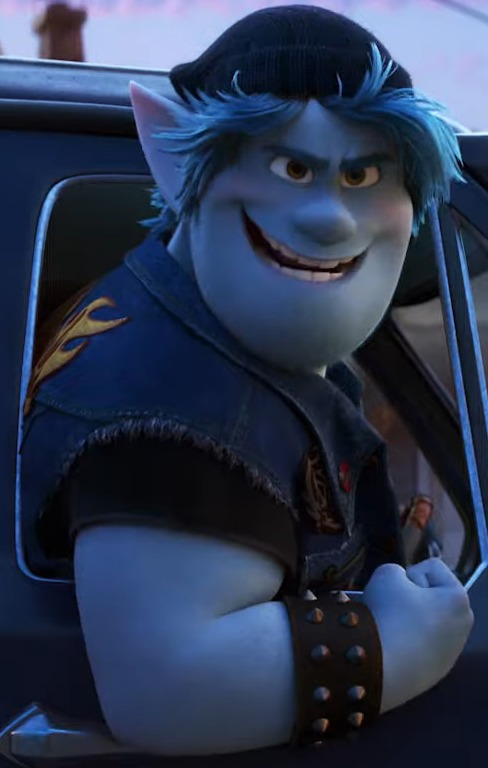
It was great seeing 100+ young people sketching away, then hold up their drawings. I was especially impressed because I have zero drawing skills!
I teach a class at DePaul called Pixar: Craft of Storytelling. I know Mary Coleman, part of the Pixar senior creative team, have interviewed her for Go Into The Story and at our university’s annual Courier 12 screenwriting conference.
I know several screenwriters who have worked on Pixar movies including Stephany Folsom (Toy Story 4). I have read numerous books and dozens of articles about Pixar’s approach to storytelling. Yet I did learn a few things from Kelsey’s presentation:
- I didn’t realize how collaborative their creative process is. The fact that anyone can enter the Fishbowl during work sessions and anyone can provide feedback on the eight movie screenings is pretty amazing. It’s all the more remarkable that whereas many Hollywood movies have a feel of too many cooks in the kitchen, somehow Pixar movies almost always keep their focus. I chalk that up to the fact ultimately a movie is the director’s thing. They generate the story concept and shepherd the project through the entire 5–6 year period of development and production.
- The critique process I have been using ever since I began teaching aligns closely with the Pixar approach: Acknowledge what works in the scene / pages in question; Point out what needs work; Offer suggestions and potential solutions. It’s a great way to work out story issues while creating a positive evaluative environment.
- Put the Protagonist in the drivers seat of their own story. Keep focus on the Protagonist. Feel like we’re going on the quest with him. Identify with them. That idea of audience identification is one of the most important concerns when crafting a Protagonist character. In an ideal world, the script reader or audience member lives vicariously through the Protagonist’s experience, so it’s key to shrink that distance. And the best way to do that is find points of emotional resonance between the reader and the character.
- Finally, you have to like this: Tell entertaining stories, make people laugh; Heart. Have meaning. Be about something; Do something unexpected. That’s the spirit of Pixar movies. Laughter. Heart. Surprise.
Here is a trailer for Onward: