The Nemesis as the Protagonist’s ‘Shadow’
“The Nemesis as a kind of mirror reflecting back the Protagonist’s shadow is a great way to think about their relationship.”

“The Nemesis as a kind of mirror reflecting back the Protagonist’s shadow is a great way to think about their relationship.”
I am currently teaching my Core III: Character one-week online course and today, we zeroed in on the Nemesis. Here is my response to a question posted by one of the writers in my class:
At a fundamental level, the most basic narrative function of a Nemesis figure is to provide opposition to the Protagonist. Why that works well in most stories is that way, the writer is working with clear, persistent conflict until the object of the pair’s pursuit is resolved.
One of the big takeaways from this class is to look for a psychological connection between the Protagonist and the Nemesis because it’s often present and quite specific. The idea of the Nemesis being the physicalization of the Protagonist’s shadow is one way to go about exploring that dynamic. Find out what the Protagonist fears the most, almost always associated with their shadow — fear of being swallowed up (psychologically) by their darker, base impulses — then have the Protagonist confront those fears, and if those fears are objectified in the form of the Nemesis… Voila! There’s your psychological connection!
The Nemesis as a kind of mirror reflecting back the Protagonist’s shadow is a great way to think about their relationship. Per Jung: “When an inner situation is not made conscious, it happens outside as fate.” The Protagonist is just making do, they need to change, even if they do not know or believe that. They are living in — my language — a state of Disunity. Bam! Something happens (Call to Adventure, or per my language, The Hook). If that plot event sets into motion a situation in which the Protagonist confronts a Nemesis who reflects back the Protagonist’s shadow. that makes for great psycho-drama.
One of the advantages a Nemesis has is they are self-actualized. They know what they want and who they are. The Protagonist may think they know what they want and who they are, but their role in a story is all about transformation which almost invariably implies their self-understanding goes through a big change. Often what’s going on is their Need (Subconscious Goal) transforms or even replaces their Want.
Movie examples:
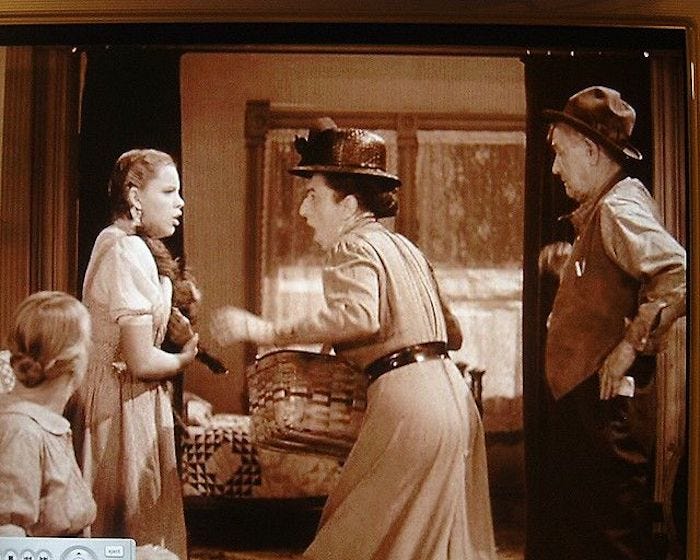
- In The Wizard of Oz, Dorothy’s Nemesis is Miss Gulch / Wicked Witch. Imagine if Dorothy had not been swept up to Oz. Imagine if that dissatisfaction with living on that farm in Kansas and her wanderlust to go “somewhere over the rainbow” was never met. It’s quite possible Dorothy would grow up to become her own version of Miss Gulch, a lonely, unhappy spinster.
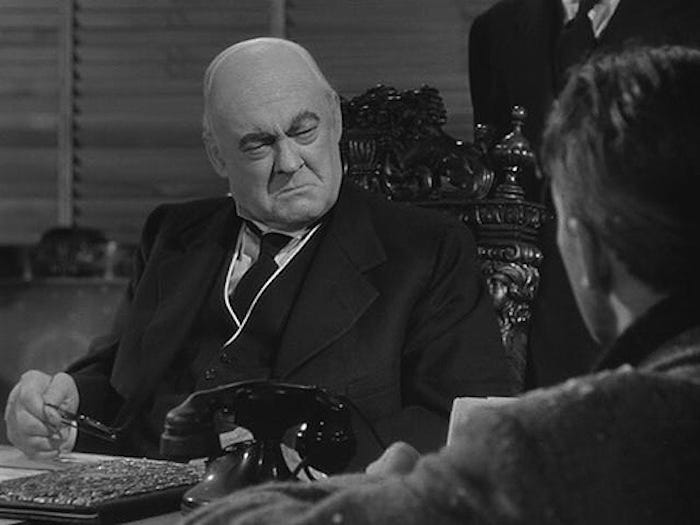
- We see this exact storyline playing out in It’s a Wonderful Life in which young, innocent George Bailey also wants to leave home and see the world, but consistently loses out on opportunities to do that. So before he has his own Oz experience, i.e., seeing what the world would be like if he’d never been born, he is, in the words of Mr. Potter, “A warped, frustrated young man.” In George’s case, Mr. Potter — his Nemesis — represents who George is becoming. He needs to change. Bam! Here comes Clarence: Angel 2nd Class to the rescue.
- In The Dark Knight, Bruce Wayne as Batman is so much about control. He needs to control his own rage, tied to the murder of his parents. He projects that need onto his desire to control crime in Gotham City. Who is his Nemesis? The Joker. What does Joker represent? Chaos. Loss of control. What Bruce Wayne fears.

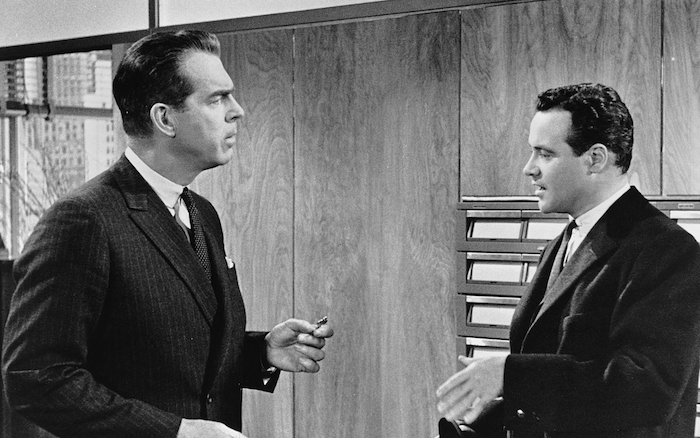
- In The Apartment, Baxter’s Want is to climb up the corporate latter. Who is his Nemesis? Mr. Sheldrake, the president of the company. He represents what Baxter could become if Baxter keeps going the way he’s going — allowing people to use his apartment for their extramarital affairs. In the words of the Bible, Baxter would “gain the kingdom, but lose his soul.” Just like Sheldrake has done. Fortunately — Bam! Fate comes along. Fran Kubilek (Baxter’s Attractor) attempts suicide in Baxter’s apartment, they spend quality time together, he falls in love, and listens to the advice of his Mentor (Dr. Dreyfuss) — “Be a mensch… a human being.” So Baxter rejects corporate values. His Need — to get in touch with his Inner Mensch — replaces his Want and he rejects his shadow in the form of Sheldrake.
This kind of dynamic exists in movie after movie after movie.
The main takeaway is for writers to look at the emerging set of characters as they develop their stories and see who / what is opposing the Protagonist. Then see if there is a psychological connection between them. Chances are, there is, and chances are, the Nemesis is in some way the physicalization of the Protagonist’s shadow.