The Low-Down on High Concept
“In defining ‘high concept,’ we need to be specific: It’s a story idea which can be summed up in 1–2 lines.”
“In defining ‘high concept,’ we need to be specific: It’s a story idea which can be summed up in 1–2 lines.”
Here is an excerpt from Lecture 1 for my online course Core II: Concept:
Most people in Hollywood would probably define ‘high concept’ this way: A story that can be summed up in 1–2 lines. However just because you can summarize a story in a few lines does not necessarily mean it’s a high concept. For example the description, “A manipulative woman and a roguish man carry on a turbulent love affair in the American South during the Civil War and Reconstruction” does not make Gone With The Wind a high concept movie. It isn’t. In fact the film is in some ways the antithesis of high concept because it is a sprawling epoch featuring dozens of characters, numerous semi-independent subplots, and a multitude of themes. It’s also proof a movie does not have to be a high concept to be both great and successful.
No, in defining ‘high concept,’ we need to be more specific: A story idea that can be summed up in 1–2 lines. A high concept movie must have a clean, simple, and basic idea.
We can even go more granular by talking about the idea of a story-conceit, which we would define as the “central premise of the story.” With the movie K-9, it was the premise of a human cop teamed up with a dog cop. With Inception, it’s the premise that people can enter into other people’s dream states. With Groundhog Day, it’s the premise that someone has to relive a day over and over again.
One of the course’s participating writers came across another definition which he posted:
“High Concepts catch the eye of both the buyer and the audience. While smaller character-driven scripts can showcase the plights of characters dealing with loss, addiction, love, and other aspects of real life, High Concepts deal with those intriguing ideas that the audience wants to see take form because such concepts are at another level of reality that people don’t generally get to experience — or one that is impossible in the reality that we do know. A higher reality, if you will — as in High Concept.”
My response:
It’s funny that a description of high concept takes such a roundabout way of making its point, which is completely the opposite of what high concept is about: you see it, you get it, boom! Moreover, the description does something which I’ve never liked: making a distinction between high concept and more character-oriented stories. There is a perception — wrong-headed in my view — that if you work with a high concept story, it by definition means you are dealing with less complex, more simple characters. That’s just not true. Examples:
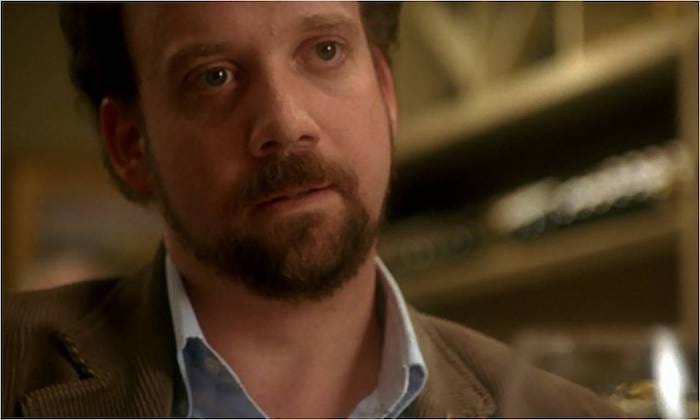
Sideways: Two men reaching middle age with not much to show but disappointment embark on a week-long road trip through California’s wine country.
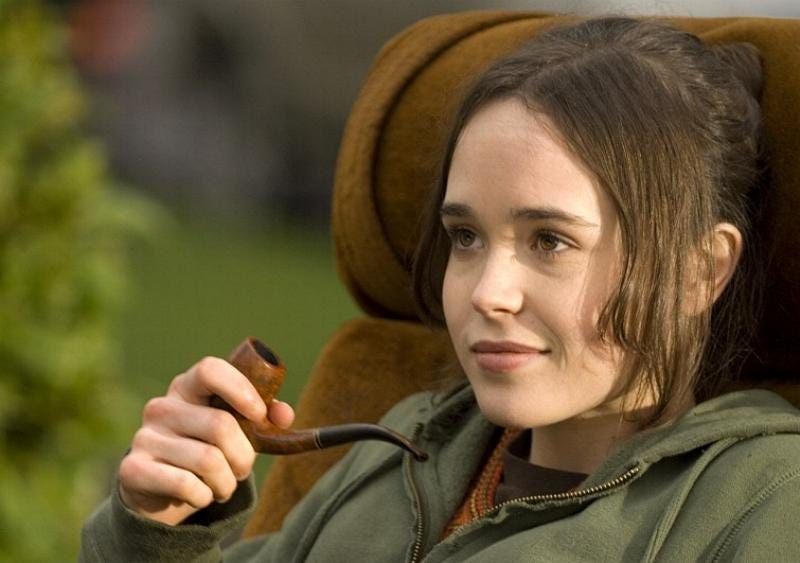
Juno: Faced with an unplanned pregnancy, an offbeat young woman decides to have the baby — and give it up for adoption to a yuppie couple.
I prefer my take on high concept: A story idea that can be summed up in 1–2 lines.
What is the central conceit of the story, the single narrative element which stands out and hooks a reader’s attention?
That’s a simple, clean way of thinking about the subject, and it opens the door to stories with multilayered characters.
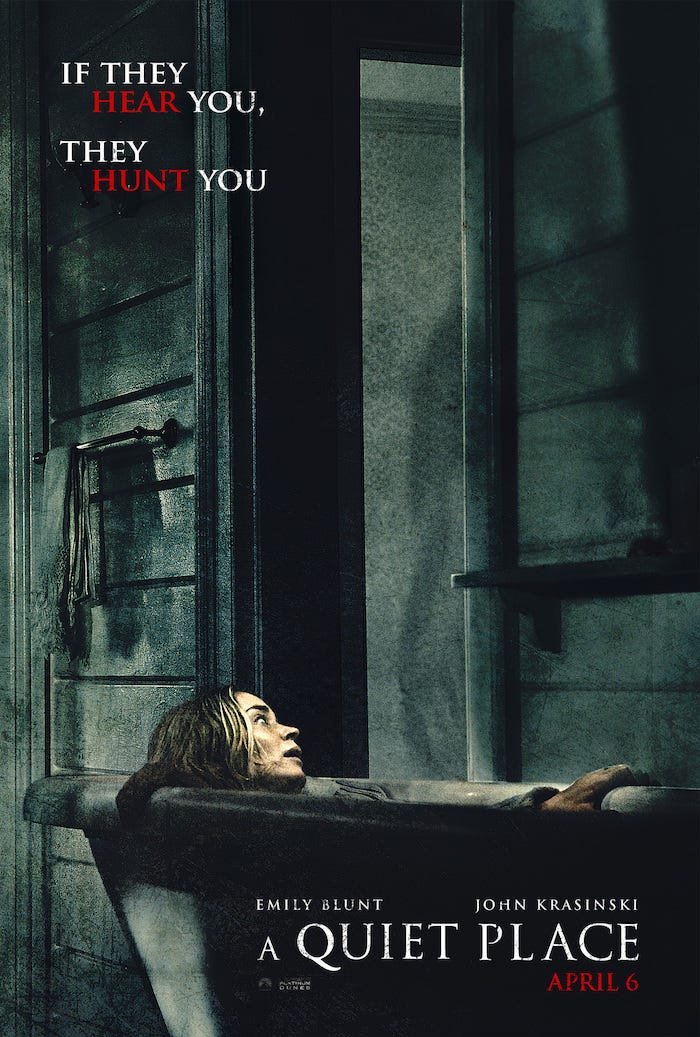
In my view, high concept may have waned in influence during the first 15 years of the 21st century, but nowadays as challenging as it is for writers to set up original stories, it’s critical to write a script with a strong story concept. And one key to doing that: Zero in on a unique conceit like this: Make a noise, you die. That is the central conceit of A Quiet Place.
Good luck generating compelling story concepts!