The Importance of Subplots
An in-depth exploration of the value of these mini-stories.
An in-depth exploration of the value of these mini-stories.
The other night, I watched Rear Window (1954) for the first time in many years. I was struck by a number of impressions this time around and one of them was how many subplots the movie has. In fact, each one of those ‘window’ dramas that James Stewart’s character observed — Miss Lonelyheart, The Songwriter, Miss Torso, Sculpting Neighbor With Hearing Aid, The Newlyweds — is its own subplot, related to the Plotline: Tracking what Lars Thorwald (Raymond Burr) did with his invalid wife.

Views in the movie Rear Window. Characters in many of the windows represent individual subplots.
And so I thought it might be of some value to talk about subplots.
Straight off: Subplots are your friends. Yes, it’s true. These wonderful little mini-plots contribute to a screenplay in many marvelous ways:
- Subplots dimensionalize your story’s primary characters
- Subplots provide a rich array of secondary characters
- Subplots expand the meaning of the story’s theme
- Subplots vary the pace of the narrative
- Subplots provide multiple points-of-view
Subplots can make comedy more comedic, thrills more thrilling, drama more dramatic, and action… well, more active.
Besides if you write a screenplay with only one plot, you will end up with a boring, one-note script, sixty pages long… if you’re lucky.
So… what’s a subplot?
A subplot is just what it sounds like: A mini-story which plays a secondary, but related role to the Plotline.
Here are some characteristics of subplots:
- A subplot must have at least 3 narrative beats (scenes or moments within scenes), but can have many more beats
- A subplot must have a Beginning, Middle, and End
- A subplot typically has a specific point or points of intersection with the Plotline
- Even if a subplot does not intersect directly with the Plotline, it must have some bearing on the Plotline.
- A subplot ought to have some connection with the story’s Themeline; if not, it is either weakly conceived and written, or unnecessary altogether.
Many of the most memorable cinematic storylines of all time have been subplots:
- Obi-Wan Kenobi teaching Luke Skywalker the ways of the Force
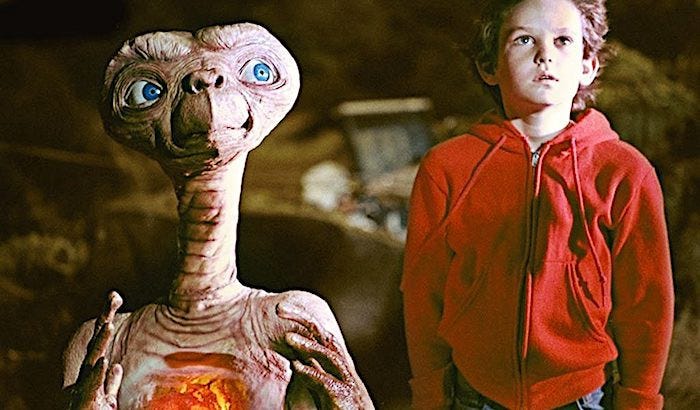
- Elliot’s friendship with ET
- Simba learning the joys of hakuna matata from Timon and Pumba
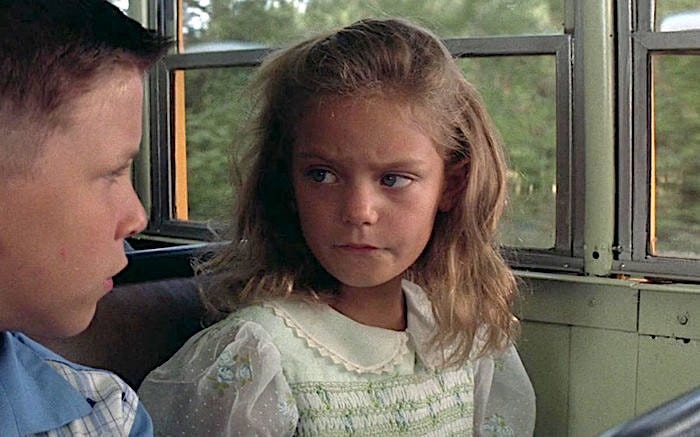
- Forrest Gump’s lifelong, bittersweet romance with Jenny
Each of these is not the Plotline, but functions as a subplot, enhancing the overall story. Plus, note this: Each subplot is a mini-story involving characters…which leads me to this principle:
Subplot = Relationship
Elliot and ET. Obi-Wan and Luke Skywalker. Forrest Gump and Jenny. Simba and Timon and Pumba. Each of those is a relationship.
This is not only a hand way to think of subplot, it’s also helpful: Whereas the terms subplot has a rather cold, formal feel to it, relationship does not. It evokes the sense of connection, communication, even kinship. When working with a story’s various subplots, instead of going about the process in a kind of analytical and calculating way, approaching the subject at a distance, if we think about each subplot as a relationship, we ground our work in the characters — who they are, how they are with each other, what they mean or don’t mean to each other, what the potential arc of the ‘couple’ may be.
In other words, we personalize the process of working with our characters and shrink the distance between us and them.
It’s a subplot, yes. But more meaningfully, it’s a relationship.
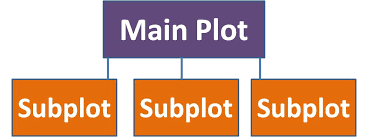
Let’s look at three notable movies — Casablanca, Die Hard, and The Shawshank Redemption — and take note of the primary subplots in each.
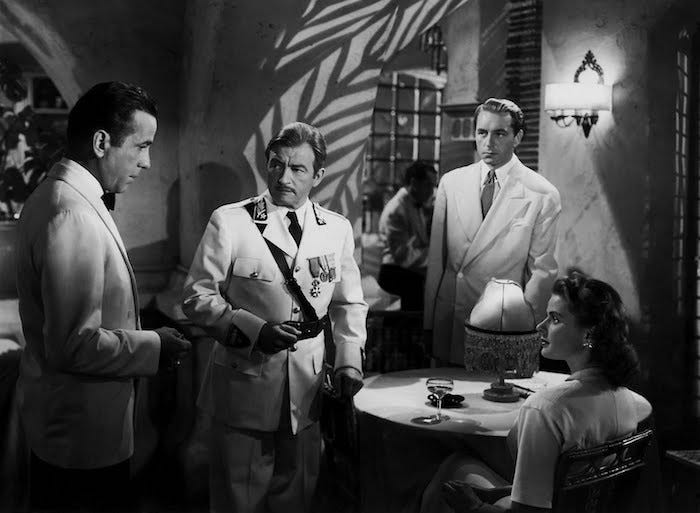
CASABLANCA
Plotline: Rick gains possession of the stolen letters of transit: The Germans want the letters back, while others want them to escape
Subplots:
Rick’s relationship with Ilsa (Attractor)
Rick’s relationship with Laszlo (Mentor)
Rick’s relationship with Renault (Trickster)
Renault and Strasser (Nemesis)
German authorities and Laszlo
Rick and Sam
DIE HARD
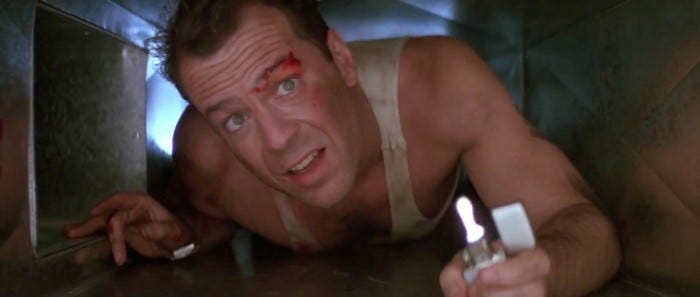
Plotline: John McClane versus bad guys who have taken over the skyscraper and are holding hostages
Subplots:
McClane’s relationship with Holly (Attractor)
McClane’s relationship with Sgt. Powell (Mentor)
McClane’s relationship with FBI (Trickster)
McClane versus Han and his minions (Nemesis)
Hans and FBI guys (Trickster)
Ticking clock: Hans’ guy, Theo, cracks safe codes
THE SHAWSHANK REDEMPTION
Plotline: Falsely sent to prison for life, Andy Dufresne plans and executes his escape
Subplots:
Andy’s relationship with Warden Norton (Nemesis)
Andy’s relationship with Red (Mentor)
Andy’s relationship with Tommy (Attractor)
Andy’s relationship with prison guard Hadley (Trickster)
Andy’s relationship with The Sisters (Nemesis)
Andy as financial adviser
Red and Brooks (Negative Mentor)
Red and Andy (Attractor)
Red and Institutionalization (Nemesis)
Red and Freedom (Trickster)

Notice how many subplots each movie has? And these lists are not comprehensive: What about Rick helping out the poor Romanian couple? Hans’ relationship with Holly? Andy’s letter-writing campaign soliciting books, then building up the prison library? All these sub-stories which relate to, intersect with, and build upon the Plotline.
To demonstrate how much impact a subplot can have, consider the role of Brooks in The Shawshank Redemption. In my view, Brooks functions as Red’s ‘dark wisdom’ character, charting one potential course post-prison. In effect, Brooks undergoes a negative transformation, leading to dissolution (suicide). He is a Negative Mentor character because Red follows every single step that Brooks trod outside prison — same job, same room, same park, same troubled thoughts. Brooks is the physicalization of the impact of institutionalization and, thus, because Red follows so closely in Brooks’ footsteps, it seems almost certain Red will continue on that path toward self-destruction.
Prison, while it may be a dehumanizing place, at least provides walls — a context, if you will — within which a person can construct a definable existence. Freedom in the real world is, for an ex-con especially, a whole other experience, one about openness, possibilities, and, as Andy argues, hope. But how to define oneself is there is no ‘context?’ Hence, Freedom = Trickster, turning from Ally to Enemy. Fortunately for Red, Andy provided a possibility hope — in Mexico. Plus, some keys words of advice:
“Get busy living, or get busy dying.”
Look at it this way: Without Andy as a friend and example, how would Red have fared in the ‘free’ world? It’s quite possible, even likely that he would have followed Brooks’ path.
These subplots… these relationships of Andy, Red, Brooks, and others in Shawshank, just as the relationships between Rick and Ilsa, Laszlo, and Renault in Casablanca, and McClane and Holly, Powell, and Hans in Die Hard are critical in the playing out of each story.
I hear you thinking: “Okay, so it’s bad enough I gotta figure out the main plot, now I gotta come up with all these other plots? That’s just gonna make my job harder.”
Wrong! In fact, subplots make the writing task easier.
So how to use subplots? Here are three steps.
Step 1: Imagine each subplot
This is not as difficult as you think. Generally, what this is about is taking the cast of characters you have brainstormed and sorting out their specific story functions (i.e., Is this character a Mentor, Attractor, etc). Determining a character’s story function will point out a narrative direction for their respective subplots and inform the nature of their relationship.
Step 2: Track each subplot’s ‘plot’
Each subplot is a mini-story with its own Beginning, Middle, and End. Figure out where each subplot starts and where it ends, then brainstorm how you will get from one point to the next. To make this real easy, imagine your subplot’s ‘plot’ as four beats — Beginning, Middle I, Middle II, and Ending.
Step 3: Place subplot beats in appropriate narrative ‘spots’
Create four ‘piles’: Beginning, Middle I, Middle II, End. Take each subplot beat and put it into the correct pile. Suddenly, you realize you have all this great story stuff available to you — not only your main Plotline, but also these subplots which allow you to cut away from one character to the next, work interesting transitions to vary the pace, shift from one scene type to another, etc. Also, if the subplot in question is tied directly to the Protagonist, then you have an even more focused way to approach each subplot beat, using the model of the traditional Protagonist metamorphosis:
Beginning (Disunity) Act I
Middle I (Deconstruction) Act IIA
Middle II (Reconstruction) Act IIB
Ending (Unity) Act III
Each of the subplot beats will almost naturally have a narrative pull which ties it to the Protagonist’s metamorphosis.
As mentioned previously, subplots may consist of as few as three beats as well as many more. However, if you look at them in light of four major beats as outlined above, you will find them incredibly helpful in fleshing out your script.

Back to the Future, written by Robert Zemeckis & Bob Gale, is a script which makes great use of subplots. The Plotline: Marty McFly accidentally travels back in time, then desperately tries to get back home. The subplots include:
MARTY’S FATHER (GEORGE): Man with no backbone.
MARTY’S MOTHER (LORRAINE): Sexually repressed woman — supposedly.
GEORGE AND LORRAINE’S ROMANCE: How Marty’s parents hooked up.
MARTY’S FADING FAMILY: The fate of Marty and his siblings.
DR. BROWN AND THE LIBYAN TERRORISTS: The fate of Dr. Brown.
Let’s examine each of these subplots, looking for specific examples of the four-beat pattern.
MARTY’S FATHER (GEORGE)
Beginning: George doesn’t stand up to the bull, BIFF, when Biff has wrecked George’s car (“Son, I know it’s hard for you to understand, but the fact is, I’m just not a fighter.”
Middle I: George bullied by Biff (in the past)
Middle II: When George tries to ask Lorraine out for a date, Biff humiliates George by extorting money from him
Ending: George saves Lorraine from Biff by knocking him out
MARTY’S MOTHER (LORRAINE)
Beginning: Lorraine weighs in on contemporary social values (“I think it’s terrible, girls chasing boys. I never chased a boy when I was your age.”)
Middle I: Young Lorraine excited by Marty (“I’ve never seen red underwear before.”)
Middle II: Lorraine asks Marty out to the “Enchantment Under the Sea” dance
Ending: Smoking cigarettes and knocking back booze, Lorraine puts the moves on Marty
THE ROMANCE OF GEORGE AND LORRAINE
Beginning: Lorraine tells the kids (for the millionth time) how she and George met (he was struck by Lorraine’s father’s car), and their ensuing romance (“Your father kissed me for the very first time on the dance floor… and that was when I realized I was going to spend the rest of my life with him.” — At the Enchantment Under the Sea” school dance)
Middle I: Marty knocks George out of the way of Lorraine’s father’s car, disrupting the past
Middle II: Marty agrees to be Lorraine’s date to the dance, but only to set up a scenario in which George will act like a hero and win Lorraine’s affection
Ending: At the dance, George shoves a rival into the punch bowl, grabs Lorraine, and kisses her
MARTY’S FADING FAMILY
Beginning: Marty’s siblings, Dave and Linda, introduced
Middle I: Dave’s photo fading, letting Marty and Brown know that Marty’s siblings are being “erased from existence” — if Marty can’t orchestrate Lorraine and George together, his siblings and Marty will never come to be
Middle II: Dave is gone from the photo, and now Linda’s image starts to fade
Ending: Marty’s photo starts to fade as well, but when George and Lorraine end up dancing together, his image, along with his brother’s and sister’s, returns to normal
DR. BROWN AND THE LIBYAN TERRORISTS
Beginning: As Brown is about to do his time travel test, the Libyans appear and gun down the scientist
Middle I: Marty stops short telling Brown about how he was killed by Libyan terrorists
Middle II: Marty writes a letter to Brown, letting him know that he must take precautions to avoid getting shot by the terrorists in the future
Ending: Although shot by the terrorists, it turns out Brown read Marty’s letter and wore a bullet proof vest to survive the attack
Each of these subplots has at least three beats…
Each of them has a Beginning, Middle, and End…
Each of them intersects with the Plotline…
Each of the subplots tie into the Themeline.
And important to note: Each of the subplots involves character relationships.
There are others: Marty and Biff, Marty and Jennifer, Mary and his musical aspirations, Goldie the Mayor, etc.
In sum, they all serve and dimensionalize the story, making it more fun, dramatic, and full of action.
Let’s consider the subplots in the Pixar movie Up.
Carl — Ellie
Carl — Russell
Carl — Kevin
Carl — Doug
Carl — Muntz
Carl — Real Estate Developer
Muntz — Kevin
Russell — His Father
Russell — Kevin
Kevin — Her Babies
Doug — Alpha and the Other Dogs

The Plotline: Carl getting the house up to Paradise Falls. All the above relationships represent subplots that tie into and impact the Plotline. For example:
- Carl — Ellie: Carl would not have a Want [Conscious Goal] to get the house to Paradise Falls were it not for his promise to Ellie, and of course the love and affection he has for his late wife, as well as the shadow of guilt about never having fulfilled this shared dream.
- Carl — Real Estate Developer: Carl acts on his goal when the Real Estate Developer manages to get Carl set to move into an old folks home, relinquishing the rights to his house and the valuable land on which it sits.
- Carl — Russell: Once airborne, the surprise appearance of Russell enables Carl to get the house to Paradise Falls [Russell steers the house there while Carl is knocked out], but then the boy’s presence creates disruptions in Carl’s plan.
- Russell — Kevin: The first disruption occurs when Russell finds and befriends Kevin, who then follows the pair until he becomes an ad hoc member of the expedition.
- Carl — Kevin: Kevin creates a secondary goal of getting the bird to her babies.
- Carl — Doug: Doug intersects with Carl, Russell and Kevin because he is searching for the bird, then he joins the traveling troop.
- Doug — Alpha [and the Other Dogs]: Alpha intersects with Carl and company because Doug is with Carl and company.
- Carl — Muntz: Carl intersects with Muntz because of all the previously noted connections.
Note how the subplots in Up create a seamless path from Carl’s home in the city to Carl being chased by Muntz, one group [Carl, Russell, Kevin, Doug] vs. the other [Muntz, Alpha, Other Dogs]. So at one level, that is their character function — to create that narrative path.
But there is much more to the function of characters and their relationships as they help take us from the Plotline into the Themeline and the soul of the story. And that leads us to a fascinating way to view the Plotline and subplots: Look at them through the lens of Character Archetypes.
Here is my take on the character archetypes in Up:
Protagonist — Carl
Nemesis — Muntz, Alpha and the Other Dogs, Real Estate Developer
Attractor — Russell, Ellie
Mentor — Doug
Trickster — Kevin
For a deeper analysis of these archetypes, you can go here to a previous Go Into The Story post.
With regard to reading and analyzing a screenplay, the point is this: Another tool at your disposal is to identify and break down the story’s subplots:
- Subplots can be intimately connected to the Plotline.
- Subplots are generally tied to individual characters who have unique relationships with the Protagonist and sometimes with each other.
- Subplots are typically shaped the way they are by virtue of their character’s narrative function.
- Subplots can be explored in terms of primary character archetypes.
- Subplots provide sub-themes that amplify and widen the meaning of the story’s central theme.
In sum, subplots open doorways into the soul of a story, a presence that is intimately connected with a dynamic Joseph Campbell said lies at the center of The Hero’s Journey: Metamorphosis.