The Hollywood Strike Forces A Reckoning For The Trades
“What purpose do the trades serve if, at the end of all of this, actors and writers don’t trust them? And if they aren’t useful propaganda…
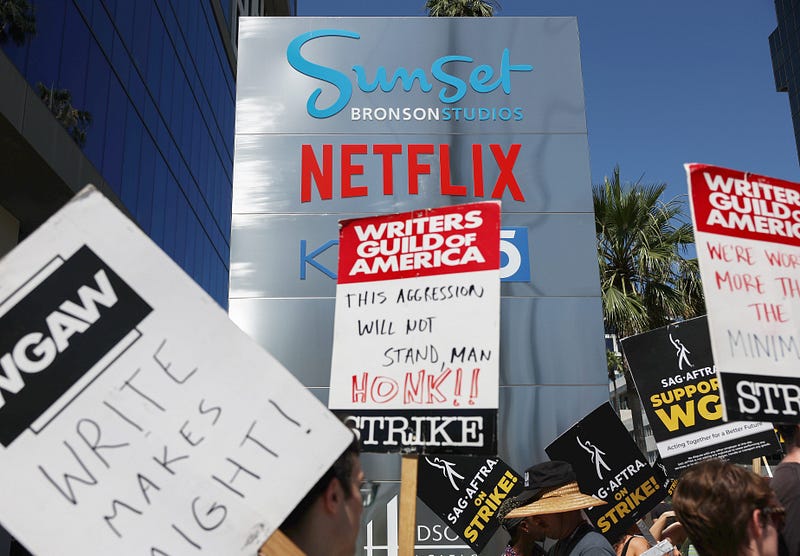
“What purpose do the trades serve if, at the end of all of this, actors and writers don’t trust them? And if they aren’t useful propaganda for the studios, what’s left for them?”
This is an excellent article in Defector. Written by Katherine Trendacosta, it takes on a phenomenon I’ve covered here throughout the strike: How the AMPTP uses the trades (The Hollywood Reporter, Variety, Deadline) to disseminate its propaganda in an effort to sway public opinion and foment dissent among striking writers. Some key excerpts:
Under normal circumstances the work that Variety, The Hollywood Reporter, and Deadline — and at this point in our late-stage capitalism hell, it is worth noting all three are owned by the same company, Penske Media Corporation — does is a form of access journalism that can seem harmless. Think fluffy profiles, actors interviewing actors, breathless awards speculation or hyping casting announcements and release dates.
The problem for the trades is all of that depends on being in the good books of the studios. Because they are industry papers, the assumption is that everyone in the industry reads them. That’s why the trades make so much money off of “for your consideration” ads, designed to get fellow insiders to vote for certain movies and actors in awards season. Not only is it de rigueur for studios to pay for those ads, actors placing their own is seen as declasse. So the most direct route to the trades has always been through the studios, and the studios likewise saw the trades as the best route to the rest of the industry.
— —
I want to stress again that all three of these publications are owned by the same company. And they’re making the same mistakes over and over, burning credibility with the WGA and SAG-AFTRA. At the end of the day, without outright stating it, by printing these stories they are effectively taking the side of management in a labor dispute. That’s a bad look for anyone, it’s frankly a weird look when one of the groups striking is the writers. Because you’d think if anyone would fully understand the situation of the WGA, it would be other writers suffering from the same squeeze as the ones who work for TV and film. The way media has consolidated, fallen victim to vulture capital and Silicon Valley, and finally been replaced by AI, is everything the WGA is fighting. So while giant companies siding with giant companies wouldn’t really be a surprise, it is a problem when the company at issue is a media one.
Using the trades to spread AMPTP lies is dumb all around. In an age where writers can use social media to communicate with each other easily and immediately, their psyops strategies don’t work. As PR, it makes the companies look tone deaf and malevolent. And as the article notes, reporters doing the bidding of the companies are staring into a future where AI will replace them, so … how’s that working for ya, folks?
Here’s yet more proof the WGA is not going to be fooled or fucked around with this time around. Words of inspiration from Tony Gilroy.
Ah, the irony. Deadline hosting this video. Sometimes they actually do make an attempt at “fair and balanced” reporting.
For the rest of the Defector article, go here.
Katharine Trendacosta writes about tech policy, the entertainment industry, pop culture, and where those things intersect. In her day job, she’s the Associate Director of Policy and Activism for the digital civil liberties nonprofit the Electronic Frontier Foundation. In her spare time, she writes things like this.
#WGAStrong
For the latest updates on the strike and news resources, go here.
Please consider contributing to the Entertainment Community Fund.