The Disunity to Unity Arc
Reflections on The Lion King and Simba’s physical and psychological journey.

Reflections on The Lion King and Simba’s physical and psychological journey.
An interesting discussion as one of my online screenwriting class members had an “aha!” moment.
I’ve revisited your Narrative Throughline a few times since I took “Scenewriting” with you. For some reason, it just wasn’t completely clicking. Like I was reading it in a foreign language, I could make out words but the meaning was evasive. Of course, the more I read it like that — the more intimidated I was by it. Vicious cycle. I’m sure personal stresses at the time didn’t help (part of the reason I found digging into certain characters difficult).
So, tonight I picked up your lecture again for the third time since starting this class — again expecting most of it to go over my head. Then, on page four was my lightbulb moment!
What you describe is Military Basic Training! Why I hadn’t seen it before, I don’t know (okay, so I know).
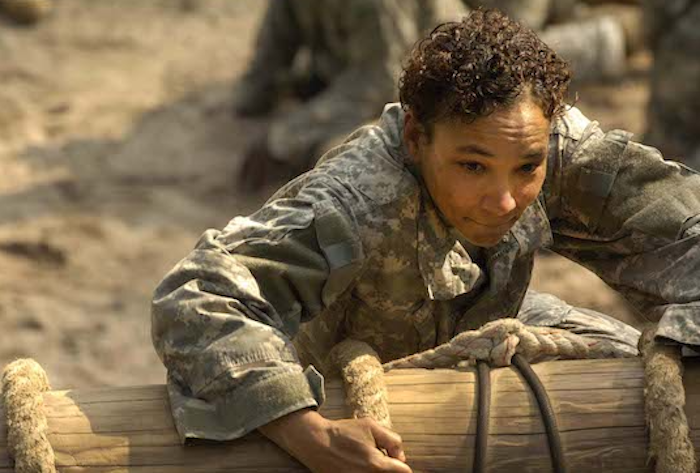
The plotline is leaving home and entering a strange world where you’re yelled at and everything you do is wrong. Slowly, through trial and error, you learn to fold your tee-shirts into a 6" square and make your bed so you can bounce a quarter off it…and you’re rewarded.
The themeline is they purposely take away everything you know about who you are, or thought you were, until you are a blank slate. Then they rebuild you into what they want you to be — what you always knew you could be but never had the discipline to attain.
It may not make sense this way to anyone else, but I’m sure glad I could finally read it in English :-)
My response: Works for me! This is why I’m a proponent of people reading and listening and watching everything they can about the craft — because you never know when some phrase, lingo, or metaphor will click with you.
A key thing to remember: The foundation for the Reconstructed psyche is in a preexisting state within the Protagonist character (or whoever else may be going through a transformation). That’s almost always part of their Disunity condition: They’ve been living on the surface, ignoring or suppressing their Need (Unconscious Goal). The Deconstruction allows that Need to emerge. Since that Need is a constituent part of the character’s Authentic Self, once it’s tapped into, it provides more power, vision, and strength than they ever generated in their Disunity state. The narrative’s build toward the Final Struggle pits the Reconstructed character in a big test to see if the transformation process took or not.
In The Lion King, when Mufasa dies, Scar convinces Simba that he is responsible for his father’s death. Caught up in shame and guilt, Simba runs away from the Pride Land into a far off desert. Befriended by Timon and Pumba (Tricksters) who convince Simba to put the past behind him (“Hakuna Mutata”), settles into a comfortable life.
Note: Simba is so far disconnected from who he is, he has adopted the ways of a vegetarian.
Fate intervenes: His old friend Nala (Attractor) shows up. Revealing to Simba about how Scar has let the Pride Lands lapse into deprivation, she tells him he has to go back to rescue the citizens, it’s his responsibility. Simba refuses.
Fate intervenes again when Rafiki (Mentor) arrives leading to this pivotal scene in which he tells Simba his father is still alive.
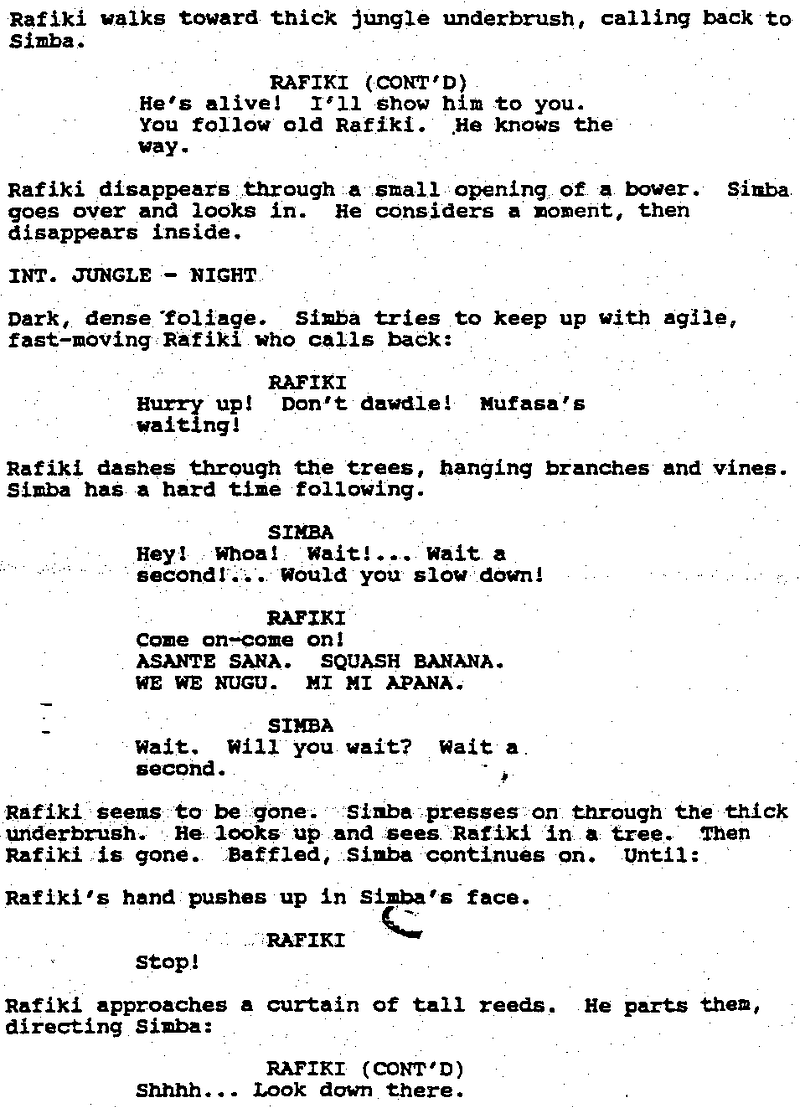
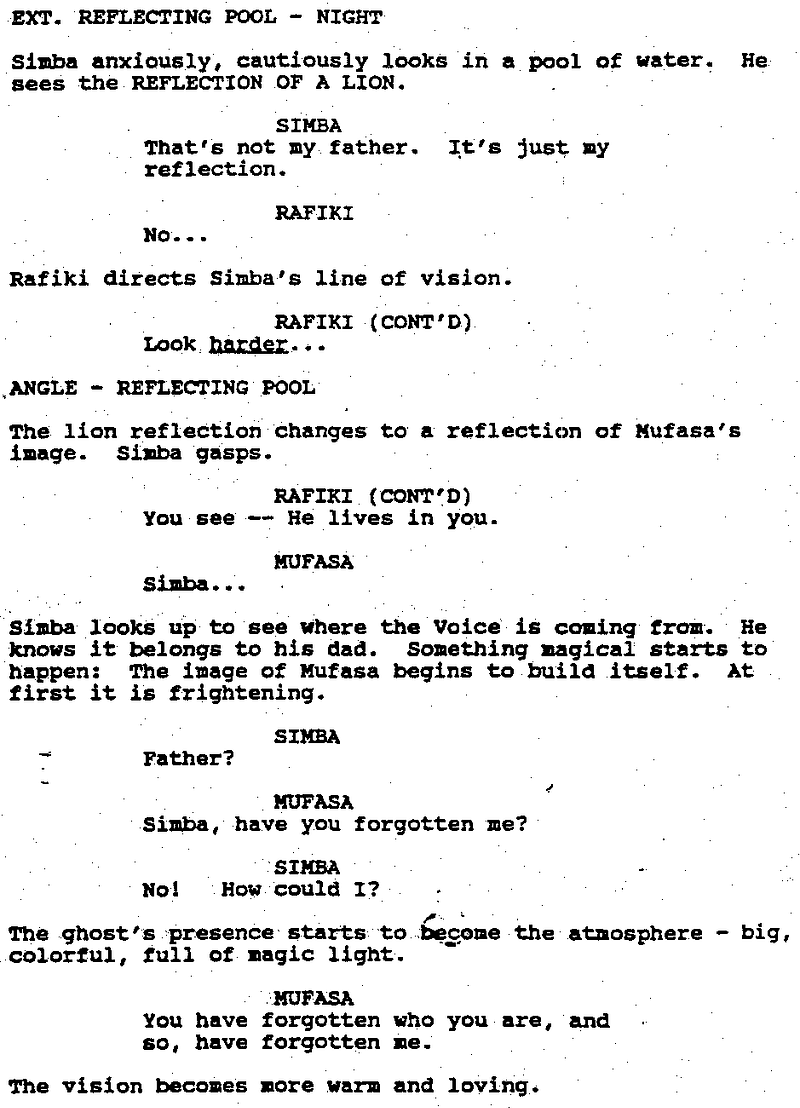
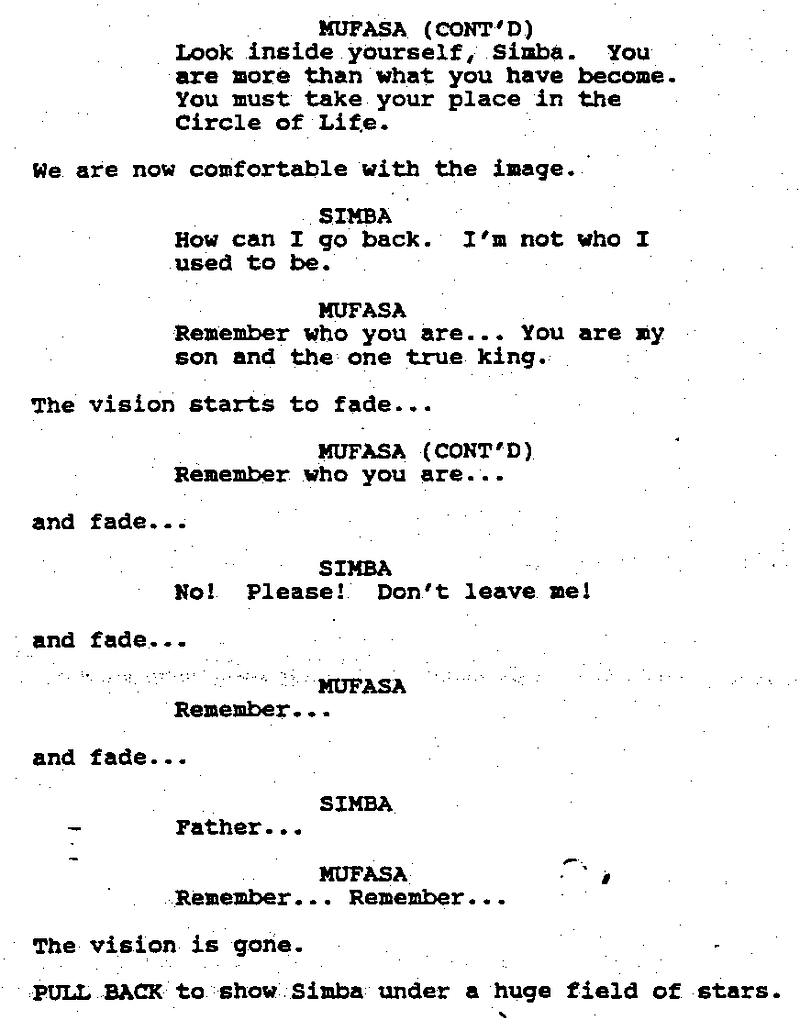
In adopting a lifestyle trying to forget the past, Simba has forgotten who he is. Look inside yourself, Simba. You are more than who you have become. Remember who you are. This experience marks a transition in which Simba moves out of Deconstruction — trying not to be the son of Mufasa — into Reconstruction in which he becomes who he is: A king and thereby achieve a state of Unity.
Another way of looking at this process of Unity-Deconstruction-Reconstruction-Unity is through the lens of Dabrowski’s theory of “positive disintegration.” Dabrowski believed that in order to advance beyond “primary integration,” what we may call Disunity, a person has to go through a process of “disintegration” (Deconstruction — Reconstruction) in order to achieve “secondary integration” (Unity). That is a huge oversimplification of Dabrowski’s theory, but for purposes of this discussion basically works. The main thing is that what we would typically perceive as being a ‘negative’ experience — disintegration which can cause anxiety and emotional stress — is actually a positive in terms of the individual’s development. And I think that this is a thematic point that lives within every movie or story in which a Protagonist goes through an ascending transformation arc (from Disunity to Unity), that all the sh*t they go through in Act Two is worth it: “Look, see! They survived the Final Struggle, ‘defeated’ their Nemesis, achieved their Goal, and now with the Denouement, we get a taste of their wonderful Unity Life.”
Jung preached a similar thing with his Mind, Body, Spirit, Soul aspects of the human psyche, and how the individual has to engage with each one in order to move toward “union.”
Not every movie has a transformation story at its core, but most do. Some transformations are small, others large. Some are obvious, others subtle. But it’s probably fair to say that most of these transformations echo the above versions of that Disunity to Unity arc, the middle of which is occupied by some sort of deconstruction to reconstruction dynamic. It’s not formulaic, it’s the very nature of change. Whether it’s the words of Dabrowski, Jung, or a military drill sergeant, it’s a pretty universal phenomenon.
For more information on Kasimierz Dabrowski, you can go here.
Part I of my book The Protagonist’s Journey goes into depth on the Unity arc. An Amazon #1 Best Seller in Film and Television, the book is endorsed by over thirty professional screenwriters, novelists, and academics. You may purchase it here.