The Business of Screenwriting: The Crazed Life of a Studio Executive
There is nothing laid-back about movie execs who live life in the fast lane and this impacts you — the writer.
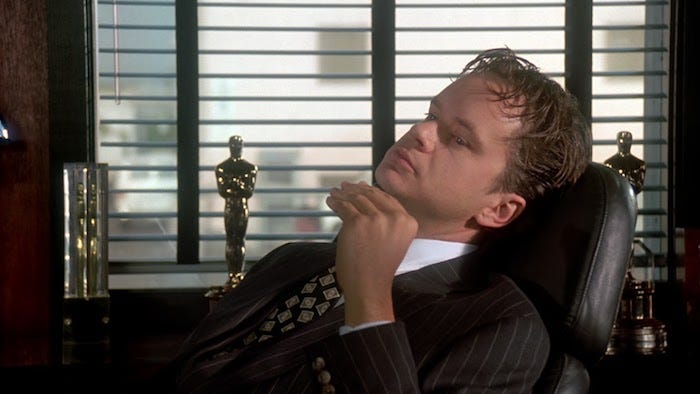
There is nothing laid-back about movie execs who live life in the fast lane and this impacts you — the writer.
Here’s one thing you have to realize about movie studio executives: Their lives are crazed. Hectic, pressurized, nonstop. Those of you who live outside L.A. may have an image of it as a laid-back town. Not true. People in Hollywood work their asses off, perhaps nobody more so than studio execs.
Two anecdotes to illustrate the point, each told to me by executive assistants:
Story #1: Assistant, who has worked all weekend reading scripts, turns in coverage to exec on Monday morning. Exec is just about to go to a meeting to review the weekend read. He’s frantically pawing coverage trying to get a sense of one particular script. Unable to grasp the plot and with no time to spare, he finally blurts out to the assistant, “Can you cover the coverage?”
Story #2: Harried exec fulminating about all the “shit on my plate” starts to fling scripts around on his desk. “I mean what the hell is all this stuff,” he asks scooping up a random script. The assistant takes the script. “That’s one of your projects.” Exec blankly stares at the offensive item. “It is?”
The thing is both of these execs are really smart, one as I recall Ivy League educated. It’s not the execs per se. It’s the effect of their jobs.
As a studio exec, your day begins early. Let’s say, at the gym and even there while working out, you’re networking, handling emails, texts, and so on.
There are breakfast meetings, lunch meetings, dinner meetings, and meetings for drinks.
There is a succession of meetings in your office during the day — pitches, talent, production, script notes.
In between you roll calls, dozens of 1–2 minute high-speed conversations — schmooze, get to the point, then “later” and onto your next call.
You are involved overseeing multiple movie projects, each in a different stage of development, pre-production, production or post, each requiring your attention, a blizzard of responsibilities.
There are screenings and premieres. You think these would be fun. Try having to do these week after week where — again — you network, handle texts, phone calls.
There is the never-ending reading of the tea leaves at your company — who’s up, who’s down in the daily power play — amidst a corporate attitude that if you don’t go into work on Sunday, don’t bother coming in on Saturday. Even if you’re not working your ass off, you have to give the appearance you are.
And always the pursuit of the next hot project, great script, new writer in a town where everybody else is competing with you to find the next hot project, great script, new writer…
Finally, when you roll home at night about midnight, there it is — your stack of scripts to read.

Set aside whether you can sympathize with studio execs or not. Yes, they may make a lot of money. They may chill with celebs and power players. They may work in the movie business, fer cryin’ out loud. You may very well think, “How bad can it be?”
That is entirely beside the point. For a screenwriter, the only point of this post is to bring you to that moment when the exec slumps into their place and lays their bloodshot eyes on that stack of scripts.
Imagine this: What are they feeling when they see those scripts? You think after their frenetic day, they’re excited to sit down and read a screenplay?
Uh, no.
In fact, you can pretty much assume reading a script is the very last thing they want to do.
And that, my friend, is the awareness you need to keep in mind with every last word you write. Because when that exec flops into a chair or at their desk or onto their bed, then opens up your script to read, your words need to pull them out of their normative state of exhausted cynicism and into your story universe.
For these people who can literally change your life with the utterance of one word — “Yes!” — you better damn well make sure your story sings, that your plot, your dialogue, your characters make them forget their weariness and remember one of the reasons why they got into the business in the first place…
To read a great story.
The Business of Screenwriting is a weekly series of Go Into The Story articles based upon my experiences as a complete Hollywood outsider who sold a spec script for a lot of money, parlayed that into a screenwriting career during which time I’ve made some good choices, some okay decisions, and some really stupid ones. Hopefully, you’ll be the wiser for what you learn here.
To read more articles in the Business of Screenwriting series, go here.