The Business of Screenwriting: The Birth, Life, and Death of a Movie
It’s 1997. My writing partner and I are seated in a screening room on the Paramount lot. We are there with a handful of studio execs…
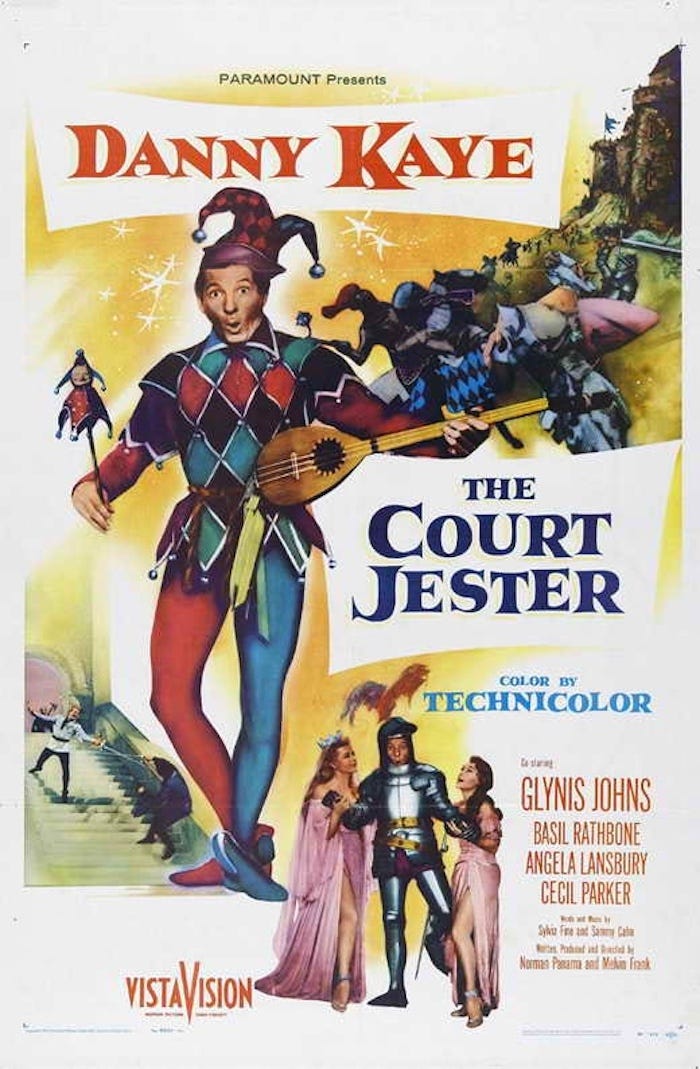
It’s 1997. My writing partner and I are seated in a screening room on the Paramount lot. We are there with a handful of studio execs watching a movie: The 1955 comedy The Court Jester starring Danny Kaye.
In an earlier meeting, we have pitched the studios a basic take on a remake of The Court Jester. Now as we watch the movie unspool, we are cackling along with Kaye and co-stars Glynis Johns and Basil Rathbone as they circumnavigate a fun plot written by Melvin Frank and Norman Panama, who also acted as co-directors. Here is just one of the classic bits from the movie:
Great stuff, right? How fun to take the basic story and provide a contemporary spin on it. As the movie flashes “The End” and the lights come up, the Paramount execs seem to be wholeheartedly in agreement. We toss around ideas right there in the screening room, each one topping the other. Perhaps the single best meeting I’ve ever taken in Hollywood.
Sure enough, within a few days, we get a call from CAA: “We are good to go on The Court Jester”. The studio has agreed to our deal and they’ve kicked contract details to business affairs. Meanwhile pumped up to have the opportunity to adapt one of our favorite comedies, we leap into brainstorming, exploring ways to expand the story while honoring the fast-paced wit of the original.
Things are going along swimmingly. Indeed, I’m thinking to myself, sometimes life as a Hollywood screenwriter is a wondrous thing.
Then another phone call from CAA.
Agents: Uh, guys. Bad news. When business affairs dug into it, turns out… [dramatic pause]… Paramount doesn’t own the rights to the movie.
What?! One of the very first images in the movie is the Paramount logo. We have a copy of the original script. Same thing: Paramount Pictures. Look at the poster. Right up top, it says, “Paramount Presents”.
Agents: Sorry. They don’t own it. [click]
You know how sometimes, a dial tone can be a really irritating sound? This is one of those times.
As I stand in my kitchen, mouth agape, the current soundtrack of my life the annoying ‘errrgggh’ of my phone, bastard deliverer of bad news that it is, one question seeps into my consciousness and across my lips.
“If Paramount doesn’t own the movie rights to The Court Jester… who the hell does?”
Which leads to the improbable meeting between the screenwriting team of which I am a part and John Williams. No, not this John Williams.
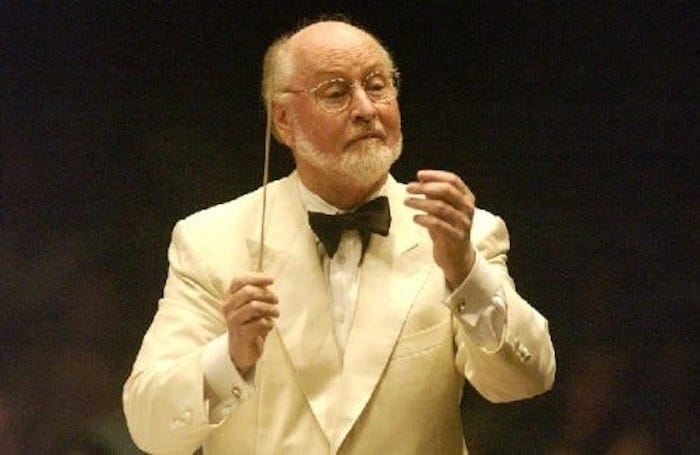
This John Williams, a movie producer and founder of Vanguard Films/Vanguard Animation. Later he went on to produce a little movie franchise you may have heard of:
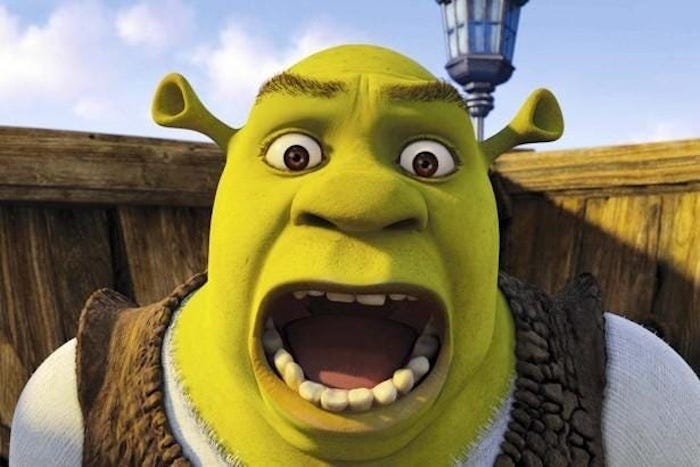
As we sit with John in a sprawling house in the Hollywood hills, he explains to us how he discovered the rights to The Court Jester were owned by the estate of Danny Kaye, who had starred in the original. Furthermore, he had secured those rights, then struck a deal with MGM to make the movie.
In essence, we are here to do a pseudo-pitch, not the story per se, but our take on how we would adapt The Court Jester. So we chit and we chat, we swap ideas and share some laughs. All in all, a mellow affair.
John kept making a point: “We must respect the original.” In other words, we could come up with new material and update the humor, but not stray much from the tone and spirit of the original. Fine by us because that was our intent as well.
As we depart the premises, I fully expect we’ll have to go in to pitch MGM, so imagine my surprise when out of the blue, I get a call from CAA: “We’re a go at MGM!” Evidently, whatever magic John had in relation to The Court Jester extends not only to the Danny Kaye family, but also to a Hollywood studio.
So off we go to write the script, which we do in short order, having already broken the story when we were ostensibly under hire by Paramount.
We submit the draft. John Williams loves it. MGM loves it. Our agents love it. My bank account loves it. Some weeks roll by when one morning, I crack open Variety to read: “Mike Myers Attached to ‘Court Jester’ Remake at MGM.” Yes, that Mike Myers, coming off the huge success of Wayne’s World, Wayne’s World 2, and the recently released Austin Powers: International Man of Mystery.
I can’t find the article in Variety online, but I did locate an L.A. Times article online dated October 25, 1997 that has this snippet:
MGM is remaking Billy Wilder’s biting 1966 comedy “The Fortune Cookie,” substituting Candice Bergen and Bette Midler for the original stars, Jack Lemmon and Walter Matthau. The studio also is developing a remake of “The Court Jester” for comedian Mike Myers [emphasis added].
See, I’m not making this up. I remember the article quotes Myers [no relation] as saying that The Court Jester was his father’s second favorite movie so it was a thrill to be involved in the project.
Incredible news, right? From a go project… to a no project… to a go project: the sequel… to a commitment from one of the hottest comedy stars at the time.
All is well in the universe! Huzzah, huzzah, huzzah!
Then I read this line from the Variety article: “Myers and his writing partner are going to take a quick pass at the script before shooting the movie.”
And now comes the death part.
How did the project expire? Let’s go back in time, shall we, to relive that obituarial moment in the present tense.
I am in my home office, grinding away on another project. Frankly, I haven’t even been thinking of The Court Jester all that much, simply basking the warm background glow of a go project with an A-list movie star who has publicly declared the movie to be his father’s second favorite film.
I mean, this is one movie that is destined to get produced, right?
Rrrrring.
Hello?
It’s CAA calling.
Uh, so… Jester? It’s dead. Again.
What? Why?
The studio read the new draft… and they didn’t connect with it.
“Didn’t connect with it” is Hollywood-speak for “hated it”.
Evidently, Mike and his guy took the story in a whole other direction. They passed on his take. So he walked. Project goes from A-list actor to zero attachments like that.
Why don’t they just go back to our draft?
Scott, you know how it is…
Indeed I do. When a PLAYER walks away from a project, no matter the reason, the heat the project previously had immediately vanishes, replaced by a big black cloud perpetually hanging over it. It’s hard to get any movie made. When a project has negative associations… virtually impossible.
Hence… Death. The Court Jester just one more slain project, the script a PDF corpse piled upon a tower of other felled projects reaching toward the heavens… or perhaps more aptly, down toward Development Hell.
What’s a writer’s takeaway from this story of woe? Two things.
First, you can never expect a go project to actually go. You get a green light, that means absolutely nothing until the first day of principal photography.
Second, this kind of shit happens all the time. If you cannot handle extremes highs and lows arising from a business where the decision-makers desperately want to say No to save their ass from potential failure, but sometimes have to say Yes… to create product… to generate revenue… to pay the bills, do yourself a favor: Become a novelist.
Then there’s the salt in the wound. You have to figure that Mike Myers intersected with producer John Williams on The Court Jester project. Remember how Williams owned the rights to Shrek? When my partner and I met with him, he was just beginning to develop the project. Isn’t it ironic that Mike Myers went from The Court Jester to this?
Soooo … The Court Jester with Mike Myers dies … then Shrek with Mike Myers lives. Like I said … salt in the wound.
[Heavy sigh]
Look, if you love movies and TV with a kind of mad obsession, fine. But be forewarned: Someday you will have a project that is born, lives, and dies before a single frame of film gets shot. Many more movie projects don’t get produced than do get made.
As Bruce Hornsby wrote, “That’s just the way it is.”
The Business of Screenwriting is a weekly Go Into The Story series based upon my experiences as a complete Hollywood outsider who sold a spec script for a lot of money, parlayed that into a screenwriting career during which time I’ve made some good choices, some okay decisions, and some really stupid ones. Hopefully, you’ll be the wiser for what you learn here.