The Business of Screenwriting: Sometimes you’re just going to get it wrong
In which I got it completely and utterly wrong about a movie project which went on to win six Oscars.
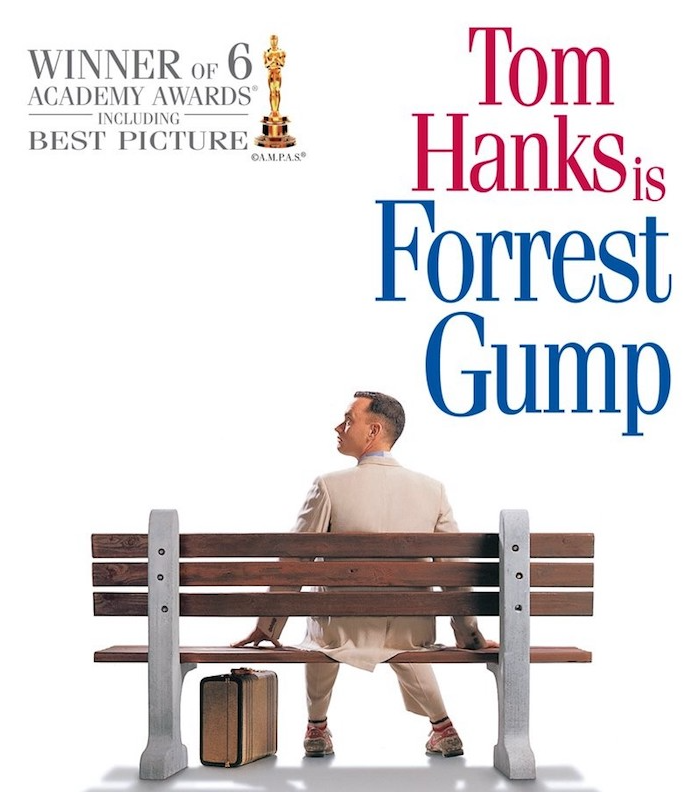
In which I got it completely and utterly wrong about a movie project which went on to win six Oscars.
In Hollywood, actors are often called “the talent.” And although it’s less frequent in this era of belt-tightening, if the talent gets big enough, they can, if they wish get a studio production deal. Which is how it comes to pass that in 1993, we are sitting in the production office of Tom Hanks with his “people,” in this case the head of his production company. She has read a script we have written, likes it quite a lot, and asks to meet with us to discuss possible projects.
This is Tom Hanks before Philadelphia, more known at the time for his roles in comedies like Bachelor Party, The Money Pit, and Dragnet.
“You may think of Tom as just a funny guy,” our host says, “but he’s really smart, reads tons of books, and has broad interests.”
She proceeds to tell us how Tom loves NASA and the space program, and has a passion for history (“He’s looking to do a World War II story”). She runs through a number of projects they have in development and some of them are quite surprising in terms of the subject matter. But there’s one that surprises me more than the rest, the project Hanks is currently filming:
“It’s a period piece about a boy who’s born… let’s just say he’s kind of slow. You know, in the head. Also he’s got polio, so they fit him with these leg braces. Some bullies chase him and he starts running, then the braces fall off, and guess what? He can run like the wind. He gets recruited to play football for the University of Alabama, which is why he’s there when the school gets desegregated… you know that famous photograph when Governor George Wallace is standing in front of the entrance to block the way of those first African-American students? This guy — his name is Forrest — is there in that scene. Anyway, Forrest gets drafted and goes to Vietnam and meets a guy named Bubba who is like really into shrimp, only Bubba dies, and so Forrest comes back to the United States to start a shrimping business. Wait, I forgot about the ping pong. He goes to China to play ping pong. Oh, I also forgot that he wins a medal and goes to meet President Johnson and shows him the wound he got in Vietnam on his butt. Anyway he takes up jogging and that becomes all the rage. And he discovers the Watergate break-in and basically becomes like this really famous person who pops in and out of like really important moments in history, kind of a Zelig kind of thing. What do you think?”
In my defense, it truly was a disjointed pitch and told so fast, it felt like she did it in one breath.
Still, as I walk out of that meeting, I turn to my writing partner, and these are the exact words that come out of my mouth:
“That is the stupidest idea I’ve ever heard of.”
The next year, Forrest Gump is released and wins 6 Academy Awards.
Which just goes to show that sometimes you’re just going to get it wrong. You can work up a pitch. Write a spec script. Go in with your take for an open writing assignment. Turn in a draft. And yes, sit in a meeting determining how you feel about an idea. Sometimes you get it right. But sometimes, you take a swing, and you flat-out miss.
I confess that I did feel pretty sheepish about having gotten Forrest Gump so utterly wrong. However, my intersection with the project didn’t end there.
A few years later, we’re sitting in yet another office, one of the producers of Forrest Gump, and she tells us a rather remarkable story.
“You know it took four writers to nail that story,” she says. “Three writers turned in drafts, one after the other, but it just wasn’t clicking. Then we brought in Eric Roth. He read the book, went through the other drafts, then came in for a meeting. He said, ‘I know what the problem is. There’s no love story.’”
“Wait,” I say, “You mean the other scripts…”
“No love story. Can you imagine Forrest Gump without that?”
Of course not. The Forrest-Jenny subplot provides the emotional spine of the story, without it, everything that happens to Forrest would be reduced to a series of meaningless events. A love story seems so obvious, right?
And yet three other writers, each of them apparently at the top of their game, took a crack at adapting the book into a screenplay, and never once thought about adding an overarching love story for Forrest.
So the next time you flub something in one of your scripts, just remember: Sometimes you’re just going to get it wrong. Even professional writers do. It may not make the problems with your script go away. But at least you’ll know you have company.
The Business of Screenwriting is a Go Into The Story series based upon my experiences as a complete Hollywood outsider who sold a spec script for a lot of money, parlayed that into a screenwriting career during which time I’ve made some good choices, some okay decisions, and some really stupid ones. Hopefully you’ll be the wiser for what you learn here.
For more Business of Screenwriting articles, go here.