The Business of Screenwriting: Premieres!
It’s one of the perks of working in the business: Attending movie premieres.
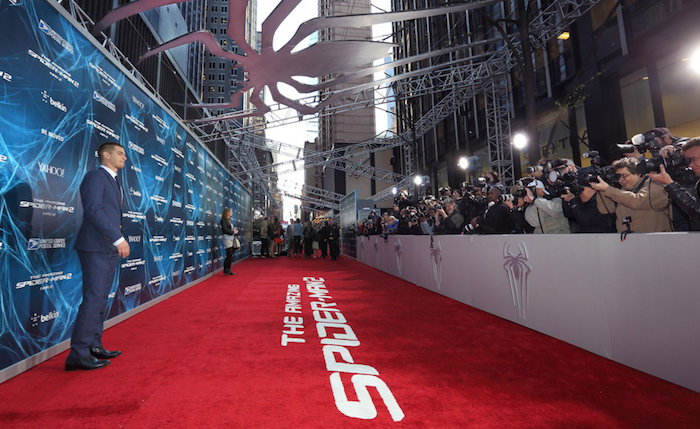
It’s one of the perks of working in the business: Attending movie premieres.
Presumed Innocent, The Shawhank Redemption, Waterworld, Raising Arizona, In the Line of Fire — these are just a few of the movie premieres I’ve attended throughout the years. And I must confess no matter how jaded a screenwriter may get about the business from time to time, there’s nothing like a big brassy premiere to suck you back into the potential magic of moviemaking.
Even industry screenings, which lack the overblown trappings of premieres, can provide a jolt to a writer’s creativity. There’s the pre-screening buzz, the movie itself, the chatter afterward with business connections, some famous faces… plus free booze!
When you break into the business as a screenwriter, you will definitely want to do what you can to go to these type of events. You not only get a jump on a movie before it’s released to the public — that in and of itself tends to reinforce your sense of belonging in Hollywood, taking just a bit of the edge off a screenwriter’s always precarious position in the business — you also get to see and be seen, which translates into great networking opportunities.
To prepare how to handle Hollywood premieres, here are a few tips:
- The first thing is to figure out how to get on The List. By The List, I mean where your name needs to show up to allow you to get the appropriate credentials to gain entrance to the event. The inner workings of The List per any premiere or industry screening is always something of a mystery. What I learned is two things: (1) Ask your agents or managers about this event or that, and more than likely they’ll be happy to get their assistant on it. In general they want you to be out in public and circulating among producers, studio execs, and even talent. You never know when a conversation may lead to a meeting. And a meeting to a deal. (2) Whatever studio where you happen to be working at the time, if they have an upcoming screening of one of their new movies, there’s no shame in dropping hints to your project’s exec that you’d just love to see the film in question. I think execs actually enjoy being able to pull those particular strings — again via their assistant — offering a bone as a sign of good will to a writer. It’s a freebie for them and they come off looking good. Note: If it’s a really big premiere event, when you work this angle, use your best big puppy eyes. Pathos works!
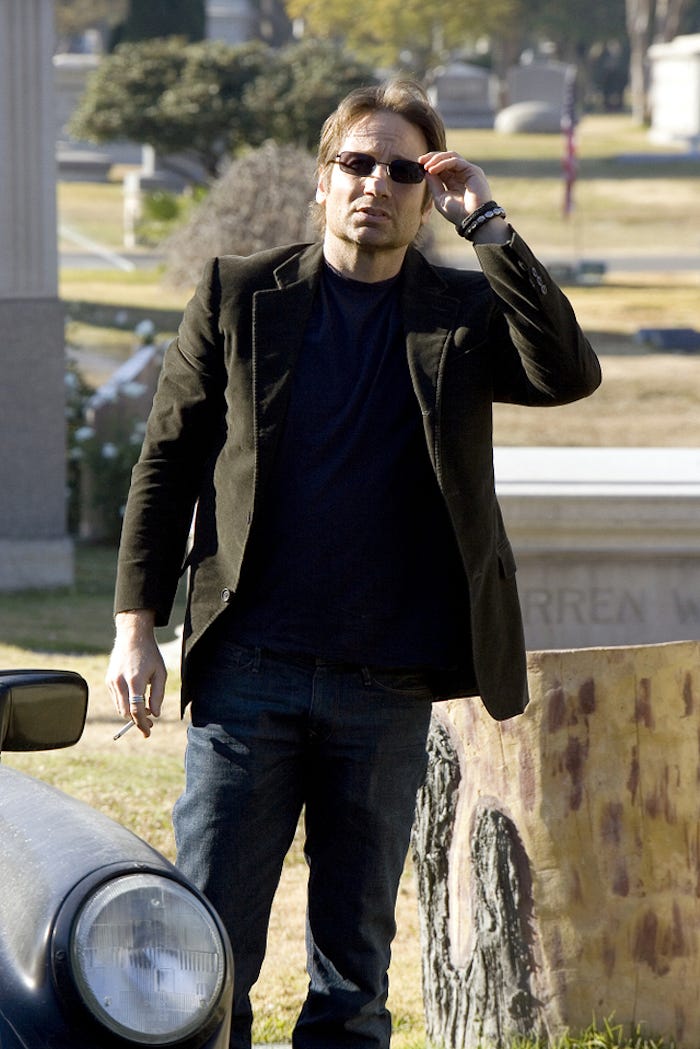
- What to wear: This is where being a screenwriter has its benefits because in my experience, you rarely have to go beyond industry casual: blue jeans, nice shirt (typically untucked), sports coat. Shoes are critical. I’m down with Keanes as they’re comfortable, cool, and politically correct. If you need a visual reference, go for the Hank Moody look:
- The Red Carpet experience: This is really quite fun, but not for the reasons you may think. Behind the temporary barricades are all these fans and paparazzi. And 100 times out of 100, they could give a rat’s ass about you. They’re there to ogle / gets shots of the actors, director, producers, and so on. The fun thing is this: If you time your entrance between the stars, you get a unique experience — the clatter of cameras clicking as the famous actor in front of you sashays down the carpet, then utter silence as you make your way forward, followed by another cacophonous round of camera clicks for the star behind you. For whatever reason, that always gives me a good laugh and serves as a visceral reminder where screenwriters exist in Hollywood’s totem pole: At the very bottom staring up at everyone else’s posterior.
- Speaking of stars, don’t bug them. Do you have opportunities to mingle? Sure, if you know someone who’s got them cornered, that’s a clean chance to greet them, and verbally salivate over their performance in the movie. But don’t you dare talk about anything you have going on. A movie premiere is their night. Well, actually every night is their night, so you basically have two choices: silence or suck up. Note: This is the safe approach. If, on the other hand, you are carving out a public persona as the ‘outlandish screenwriter who knows no bounds,’ then by all means, get drunk and do your best Joe Eszterhas circa 1990 imitation.
- Be aware of the fact that some movie stars tend to show up late, so they can avoid having to press the flesh and slip in relatively unnoticed just as the opening credits roll. So if you’re waiting around to catch a glimpse of Scarlett Johansson or Ryan Reynolds, chances are (A) you won’t see them and (B) you’ll end up with a crappy seat for the movie.
- In terms of seating: Let me assume you are a serious fan of cinema and therefore when you go to a movie, you plant yourself two-thirds of the way back in the center to align your viewing experience with the optimum focus of the screen. Fact: Unless you are the writer-director of the movie or you’re dating the producer, you will never get anywhere near that seating arrangement. So before you attend a premiere, mentally prepare yourself to have to sit in the very front row. Sure, it sucks and you’ll drop a wad later for your chiropractor to work the kinks out of your neck. But remember: free booze!
- Credits: You must be mindful of the movie’s credits, especially at an industry screening which typically has many of the film’s crew in attendance. The tradition is to applaud people you know or appreciate as their name scrolls by. And even when the house lights go dark and the credits roll, assume people will be noting your behavior. So be sure to applaud the director, writer, actor, producers, basically anybody who can positively influence your career. For below-the-line credits: Clap at your discretion.
- The screening itself: Don’t fall asleep.
- What to do if you hate the movie: Again this is where being a screenwriter is a benefit. You know words. Now is the time to use them. If the movie makes Porky’s 11: Chicks & Dicks look like an art piece by comparison, find one thing, any thing from the film in question and frame your reaction around that. “Man, the ending was really… I mean it just really went there, didn’t it?” “That action sequence with the guy, the schnauzer and the nuns… such a cutting edge combination of narrative elements, almost surrealist in nature, don’t you think?” “The dialogue was just so… uh… so…” [grab a drink, guzzle, and smile].
- Rubberneck: On the other hand, you may be caught up in the moment — and free booze — so that you’re inclined to opine honestly about the movie. If so, this is where your neck muscles can save your arse. Swivel that orb atop your shoulders from side to side as you talk, making sure no one involved in the production of the abysmal film you just endured is around to hear your pontifications. That could lead to a time-consuming online flame war. On the other hand, if you liked the movie — or can at least summon up a generous, witty, and/or thoughtful insight — your rotating head can spot the film’s players allowing your Keane-adorned feet to scoot nearby for a ‘spontaneous’ utterance which they hopefully will hear, and lead to an evening of doing drugs and an eventual deal to write a movie for them.
- Don’t close down the party. Nothing more embarrassing to be one of the last invitees hanging around a nearly empty room, drawing nasty glances from the wait-staff as you suck down yet another raw shrimp. Not that I have any personal experience on this front…
- What to do if you’re squeezing through a crowd after the screening and you accidentally goose Faye Dunaway: Look the hell away as fast as you can as if the offending thumb must have had a mind of its own. Again not that I have any personal experience with this…
These are just a few tips for when you attend premieres or industry screenings for movies you did not write. When it’s a premiere of your own movie, there’s only one rule:
Don’t throw up on anybody.
The Business of Screenwriting is a Go Into The Story series of articles based upon my experiences as a complete Hollywood outsider who sold a spec script for a lot of money, parlayed that into a screenwriting career during which time I’ve made some good choices, some okay decisions, and some really stupid ones. Hopefully you’ll be the wiser for what you learn here.
For more Business of Screenwriting articles, go here.