The Business of Screenwriting: Everything You Wanted to Know About Specs
Part 15: Bidding War

Part 15: Bidding War
“This is it: A screenwriter’s fantasy. You write a spec script. Your reps send it out. Then more than one buyer compete against each other to acquire the script, jacking up the purchase price. That, my friends, is a bidding war.”
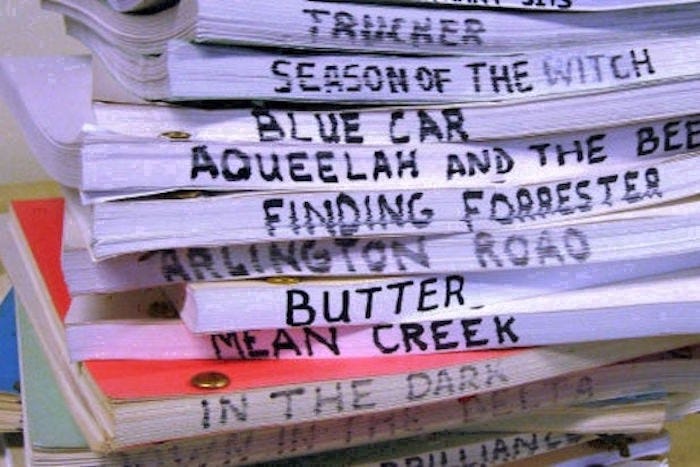
I’m guessing that perhaps 90% of the people who follow this blog at some point in their lives will write a spec script. And the other 10% are involved in buying and selling them. In light of that fact, last year I interviewed a top manager and some Hollywood screenwriters about the ins and outs of what is involved in bringing a spec script to market. I’ve been waiting for the right opportunity to do something with that inside information, so a few years back when Vanity Fair came out with this article — When the Spec Script was King — a decent piece, but pretty surface level, I figured it was a good time to dig into the subject in a comprehensive fashion.
Note: Original posts updated to reflect current market.
In Part 1, we looked at the genesis of the spec script in Hollywood from 1900–1942.
In Part 2, we covered the emergence of the spec script market from 1942–1990.
In Part 3: Boom, Bust, Back Again, But Now…?[1990–2019]
In Part 4, we surveyed the buyers, both major studios and financiers.
In Part 5, we examined the screenwriter-rep relationship in terms of developing a spec script.
In Part 6, we explored rolling out a new writer’s spec script.
In Part 7, we delved into the subject of attaching producers.
In Part 8, we considered the value of attaching talent.
In Part 9, we learned about reps wanting to “own all the tickets.”
In Part 10, we dug into how reps generate buzz for a spec script.
In Part 11, we looked at the practice of slipping a script to someone.
In Part 12, we acknowledged the role that serendipity can play in the process.
In Part 13, we discussed the strategy of targeting specific buyers.
In Part 14, we drilled down into the strategy of going wide.
Part 15: Bidding War
This is it: A screenwriter’s fantasy. You write a spec script. Your reps send it out. Then more than one buyer compete against each other to acquire the script, jacking up the purchase price. That, my friends, is a bidding war.
Some notable examples:
“White House Down” [James Vanderbilt]: “In what amounts to the biggest spec deal of the year, Sony Pictures has closed a $3 million deal to acquire “White House Down,” an action spec from “Amazing Spider-Man” scribe James Vanderbilt that had studios buzzing this week. Heated bidding came down to Sony and Paramount.” — March 29, 2012
“El Tigre” [Aaron Buchsbaum & Teddy Riley]: “The project is an action comedy about a family vacation gone wrong when the father is mistaken for Mexico’s most ruthless drug lord, El Tigre… A bidding war broke out between multiple suitors, including Sony, Paramount and MGM. The sale price was in the mid-six figures, according to sources.” — April 27, 2012
“Glimmer” [Carter Blanchard]: “The logline is unknown but is described as Amblin-esque… The bidding came out down to DreamWorks and Paramount, with DreamWorks closing a deal a progress to production term.” — June 6, 2012
I got a behind-the-scenes look at the “Glimmer” deal when I interviewed its screenwriter Carter Blanchard:
Scott: Let’s jump to June 2012. Your script ends up in a bidding war between DreamWorks and I think Paramount was involved?
Carter: Yeah.
Scott: Could you maybe walk us through a little bit of the chronology of how that deal happened and what that experience was for you?
Carter: Well, I was thinking about going back to Boston and teaching before it happened. My buddy teaches at BU now. That was a compelling option. I was out of money, drawing off my IRA. I had a good feeling about “Glimmer,” but you never know. It went to producers first and by the end of that day, I was getting an email from Adam saying, “This is blowing up all over town. Sit tight. Stay positive.” It felt like good news, but because he added, “Stay positive” I got worried, because I’m used to someone saying “stay positive” as a sign that things are not going well.
The next morning, my phone rang at 8:30. It was my lawyer, my agent, and my manager. They said, “Okay, DreamWorks made an offer.” I was jumping up and down saying, “Great, take it!” They said, “No dude, this is only the first studio to respond.” We talked about some details and then they said, “Go back to doing your thing. Don’t worry about it. Just always have your phone ready.”
I was meeting a friend for lunch when I got another call from the team saying Paramount and DreamWorks both wanted it and I had to make a decision on the spot. Paramount was offering a little more up front, but DreamWorks’ was a progress-to-production deal, meaning they had to start shooting in 12 months or I got the script back free and clear. Then Boxerbaum [agent] said, “You’re also going to meet Steven Spielberg tomorrow if you go with them.” So then it’s not even a question anymore. DreamWorks! [laughs]
My favorite movie of all times is “Jaws.” Hands down. That movie is ultimately why I went into the movie business, if you go back to the real origins of what inspired me. So this whole situation was so great. It was just an amazing thing. The deal closed in the middle of lunch and my friend was like, “You’re buying.”
The next day I went in and met Mr. Spielberg. He was incredibly nice and really complimentary about the script. I kept thinking maybe he wasn’t really there and I was talking to a hologram because it was so surreal. I had another meeting five days later and then I was commenced on the rewrite. It was the fastest I’ve ever been commenced after a spec sale before. Usually it takes months. And DreamWorks’ notes have been excellent. The script has improved enormously under their watch.
This brings up another point: If your scripts creates a bidding war, it’s not just the purchase price that’s in play. It’s everything. You can try to get a producing credit. A progress-to-production deal. Even a meeting with Steven Spielberg himself!
There are very few times when a screenwriter finds him/herself in a power position. One of them is when they have multiple buyers vying over their spec script. It’s like this little corner of the universe — the Hollywood acquisition and development community — casts a lion’s share of its focus on your 100 pages or so of written content. It’s an experience that can completely transform your life… as well as your checking account!
UPDATE: The spec script market has changed over the years and one notable difference is the decline of big, splashy spec script deals. In fact as recently as 2019, there were only two spec scripts which generated a bidding war:
Title: Assisted Living Logline: A thief on the run from her old crew hides out in a retirement home. Writer: Kay Oyegun Genre: Comedy Agency: ICM Partners Management: Underground Management Buyer: Paramount Pictures Date: 3/9/2019 Notes: Bidding war. High-six against seven figures.
Title: Don’t Worry Darling Logline: An unhappy 1950s housewife comes to believe she is actually living in a simulation in which her husband’s desire is to live in a past where women are subservient to their husbands. Writers: Shane Van Dyke, Carey Van Dyke Genre: Psychological Thriller Management: Kaplan/Perrone Entertainment Buyer: New Line Cinema Date: 8/12/2019. Notes: 18 bidders. Kate Silberman already attached to rewrite. Olivia Wilde to star, produce, and direct.
There are many contributing factors to the decrease in bidding wars, the first being that the spec script market as a whole has been in a state of decline the last two years. Another factor: The major Hollywood movie studios and even to a certain degree financiers are addicted to preexisting content, e.g., sequels, prequels, reboots, remakes, book adaptations, and tend to look at original spec material as ‘untested’. Then, of course, there was the battle being waged between the WGA and the ATA which definitely impacted spec script deals.
That said, even if a spec script doesn’t sell in a bidding war or even at all, it can still help launch a career serving as a writing sample to get representation, take general meetings, and go up for Open Writing Assignments.
Next week, something akin to a bidding war: Preemptive purchase.
The Business of Screenwriting is a weekly series of Go Into The Story posts based upon my experiences as a complete Hollywood outsider who sold a spec script for a lot of money, parlayed that into a screenwriting career during which time I’ve made some good choices, some okay decisions, and some really stupid ones. Hopefully you’ll be the wiser for what you learn here.
For more articles in The Business of Screenwriting series, go here.