The Business of Screenwriting: Everything You Wanted to Know About Specs
Part 14: Going wide.
Part 14: Going wide.
“The advantage of going wide is that, if you get multiple buyers interested, you can have them bid against one another and end up getting a lot more money for selling the same thing. The disadvantage of going wide is that you basically get one shot at it; if everyone passes on the first attempt, the script gets taken out behind the shed and shot.”
I’m guessing that perhaps 90% of the people who follow this blog at some point in their lives will write a spec script. And the other 10% are involved in buying and selling them. In light of that fact, last year I interviewed a top manager and some Hollywood screenwriters about the ins and outs of what is involved in bringing a spec script to market. I’ve been waiting for the right opportunity to do something with that inside information, so a few years back when Vanity Fair came out with this article — When the Spec Script was King — a decent piece, but pretty surface level, I figured it was a good time to dig into the subject in a comprehensive fashion.
Note: Original posts updated to reflect current market.
In Part 1, we looked at the genesis of the spec script in Hollywood from 1900–1942.
In Part 2, we covered the emergence of the spec script market from 1942–1990.
In Part 3: Boom, Bust, Back Again, But Now…?[1990–2019]
In Part 4, we surveyed the buyers, both major studios and financiers.
In Part 5, we examined the screenwriter-rep relationship in terms of developing a spec script.
In Part 6, we explored rolling out a new writer’s spec script.
In Part 7, we delved into the subject of attaching producers.
In Part 8, we considered the value of attaching talent.
In Part 9, we learned about reps wanting to “own all the tickets.”
In Part 10, we dug into how reps generate buzz for a spec script.
In Part 11, we looked at the practice of slipping a script to someone.
In Part 12, we acknowledged the role that serendipity can play in the process.
In Part 13, we discussed the strategy of targeting specific buyers.
Part 14: Going Wide

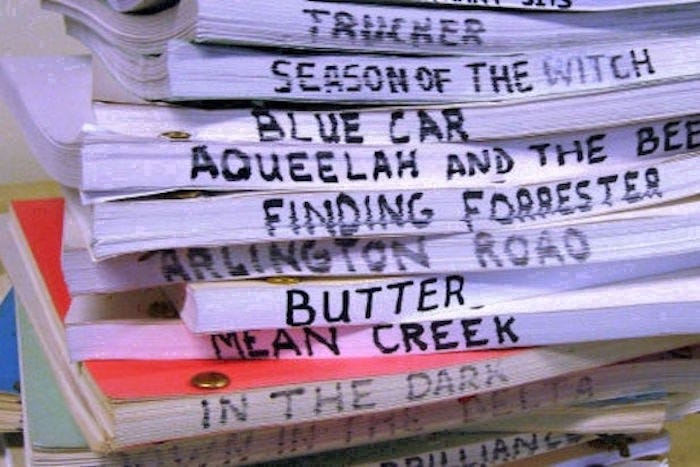
When most people think of a spec script, their image of what transpires as it goes to market is this: Going wide. Sending the script out to multiple producers who then take the script into multiple buyers. Why? Screenwriter Justin Rhodes explains:
The advantage of going wide is that, if you get multiple buyers interested, you can have them bid against one another and end up getting a lot more money for selling the same thing. The disadvantage of going wide is that you basically get one shot at it; if everyone passes on the first attempt, the script gets taken out behind the shed and shot (although it’s really sad, and the script looks you in the eye, and kind of makes you cry, but you have to kill it anyway, on account of what it did to the Ellis boy.) So, like gambling, going wide is big risk/big reward.
All you need to know about this strategy is the last two words of Justin’s explanation: Big reward.
First off, this approach gets the script in front of a maximum amount of eyeballs. Even if the script doesn’t sell, that can be a win because — assuming producers and studio execs like the script, even if not enough to acquire it — that can lead to a round of meet-and-greets. And there is no telling what any one [or more] of those meetings can lead to, all part of the magical mystery networking phenomenon that is such a crucial part of a screenwriter’s life.
Of course, there is the “big risk” possibility as well by going wide. The script goes out. Everyone passes. Crickets chirp. If a screenwriter can be perceived as a hot commodity, they can also easily lose that heat and become cold. And going wide with a spec that lands with a thud can turn down a writer’s heat in a hurry.
But there is a rep’s wet dream: To get more than one potential buyer vying for a script. And that is simply the most awesome thing in a writer’s life [and their reps] where for a holy rolling moment in time, the entire focus of the Hollywood movie development community is on your script.
Not to mention six, even seven figure deals.
It’s called a bidding war. And that’s the subject of next week’s The Business of Screenwriting post.
The Business of Screenwriting is a weekly series of Go Into The Story posts based upon my experiences as a complete Hollywood outsider who sold a spec script for a lot of money, parlayed that into a screenwriting career during which time I’ve made some good choices, some okay decisions, and some really stupid ones. Hopefully you’ll be the wiser for what you learn here.
For more articles in The Business of Screenwriting series, go here.