Sundays with Stephen King’s “On Writing”
A series featuring reflections on writing from the famed author’s memoir.
A series featuring reflections on writing from the famed author’s memoir.
I had not read Stephen King’s memoir On Writing for several years when it occurred to me to do so again. While at it, why not share reflections from the renowned writer in a weekly Sunday series at Go Into The Story?
King is a prolific author. Fair to say that is an understatement. One need only glance at a roster of his written works to determine that. If any contemporary writer has earned the right to reflect on the craft, it would be King. However, that is not the motivation he had in writing his memoir. This excerpt from the ‘First Foreword’ of On Writing explains the genesis of the book, a fateful exchange with Amy Tan, fellow writer and member of an authors’ charity rock music group The Remainders.
One night while we were eating Chinese before a gig in Miami Beach, I asked Amy if there was any one question she was never asked during the Q-and-A that follows almost every writer’s talk — that question you never get to answer when you’re standing in front of a group of author-struck fans and pretending you don’t put your pants on one leg at a time like everyone else. Amy paused, thinking it over very carefully, and miss said: “No one ever asks about the language.”
I owe an immediate debt of gratitude to her for saying that. I had been playing with the idea of writing a little book about writing for a year or more at that time, but had held back because I didn’t trust my own motivations — why did I want to write about writing? What made me think I had anything worth saying?
The easy answer is that someone who has sold as many books of fiction as I have must have something worthwhile to say about writing it, but the easy answer isn’t always the truth. Colonel Sanders sold a hell of a lot of fried chicken, but I’m not sure anyone wants to know how he made it. If I was going to be presumptuous enough to tell people how to write, I felt there had to be a better reason than my popular success. Put another way, I didn’t want to write a book, even a short one like this, that would leave me feeling like a literary gasbag or a transcendental asshole. There are enough of those books — and those writers — on the market already, thanks.
But Amy was right: nobody ever asks about the language. They ask the DeLillos and the Updikes and the Styrons, but they don’t ask popular novelists. Yet many of us proles also care about the language, in our humble way, and care passionately about the art and craft of telling stories on paper. What follows is an attempt to put down, briefly and simply, how I came to the craft, what I know about it now, and how it’s done. It’s about the day job; it’s about the language.
My intention is similar to the Sundays with Ray Bradbury series: Each week as I re-read King’s memoir, print notable excerpts at Go Into The Story to inspire our creativity and conversation about the craft.
Today: From the twenty-fifth anniversary edition of On Writing, an excerpt from pp. 77–78. This follows up on last week’s post in which King revealed he had thrown away the first few pages of Carrie, only to have it rescued by his wife Tabby who said, “You’ve got something here.”
I never got to like Carrie White and I never trusted Sue Snell’s motives in sending her boyfriend to the prom with her, but I did have something there. Like a whole career. Tabby somehow knew it, and by the time I had piled up fifty single-spaced pages, I knew it, too. For one thing, I didn't think any of the characters who went to Carrie White's prom would ever forget it. Those few who lived through it, that was.
I had written three other novels before Carrie — Rage, The Long Walk, and The Running Man were late published. Rage is the most troubling of them. The Long Walk may be the best of them. But none of them taught me the things I learned from Carrie White. The most important is that the writer’s original perception of a character or characters may be as erroneous as the reader’s. Running a close second was the realization that stopping a piece of work just because it's hard, either emotionally or imaginatively, is a bad idea. Sometimes you have to go on when you don't feel like it, and sometimes you're doing good work when it feels like all you're managing is to shovel shit from a sitting position.
Let’s look at these lessons King learned in writing Carrie:
- The most important is that the writer’s original perception of a character or characters may be as erroneous as the reader’s: What interests me about this comment is whether a writer’s perception of a character changes based on their own understanding of the character or if the character evolves in the writing process. If the latter, perhaps the change is more about the character revealing more of their true self. Ultimately, this observation suggests that characters are malleable figures with their own unique personality, backstory, and fate, and writers need to be open to them.
- Running a close second was the realization that stopping a piece of work just because it’s hard, either emotionally or imaginatively, is a bad idea: This is familiar territory on the blog. I don’t believe in writing rules, but there is one and it pertains to a first draft: Get the damn thing done! You don’t really know what you’ve got until you reach The End. Indeed, you don’t really have anything until type those two critical words.
If you need more support on this point, here you go!
Dominick Dunne: “Finish your first draft. Only then, when you have a flawed whole, do you know what you have to fix.”
Peter Mayle: “Best advice on writing I’ve ever received: Finish.”
F. Scott Frazier: “A screenwriter’s currency is a finished script. Not an outline, a take, a beat sheet, a rough draft. A finished script.”
Chris Sparling: “Don’t be afraid to start. And more importantly, don’t be afraid to finish.”
Neil Gaiman: “Finish what you’re writing. Whatever you have to do to finish it, finish it.”
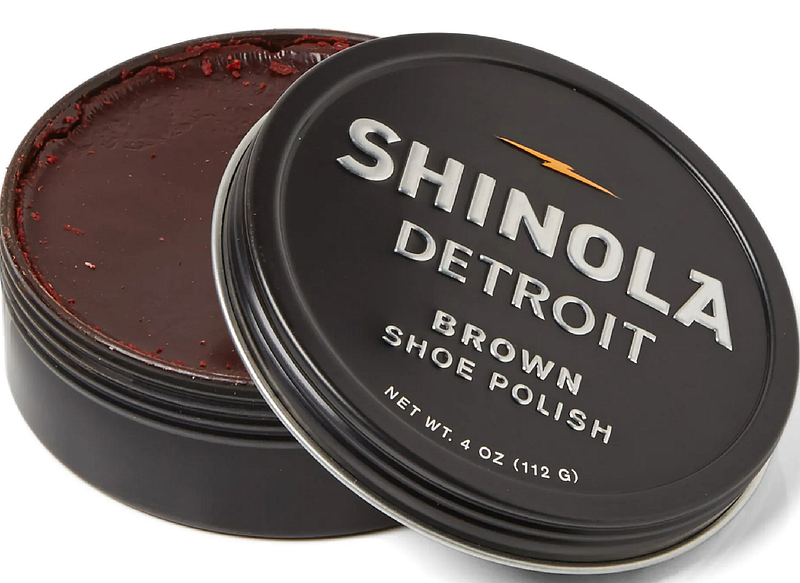
Yes, you may feel like all you are “managing is to shovel shit from a sitting position,” but if you continue to shovel shit, day after day, eventually it will become Shinola.
Come back next week and many weeks thereafter for more in the Sundays with Stephen King’s “On Writing” series.
Twitter: @StephenKing