Sundays with Stephen King’s “On Writing”
A series featuring reflections on writing from the famed author’s memoir.

A series featuring reflections on writing from the famed author’s memoir.
I had not read Stephen King’s memoir On Writing for several years when it occurred to me to do so again. While at it, why not share reflections from the renowned writer in a weekly Sunday series at Go Into The Story?
King is a prolific author. Fair to say that is an understatement. One need only glance at a roster of his written works to determine that. If any contemporary writer has earned the right to reflect on the craft, it would be King. However, that is not the motivation he had in writing his memoir. This excerpt from the ‘First Foreword’ of On Writing explains the genesis of the book, a fateful exchange with Amy Tan, fellow writer and member of an authors’ charity rock music group The Remainders.
One night while we were eating Chinese before a gig in Miami Beach, I asked Amy if there was any one question she was never asked during the Q-and-A that follows almost every writer’s talk — that question you never get to answer when you’re standing in front of a group of author-struck fans and pretending you don’t put your pants on one leg at a time like everyone else. Amy paused, thinking it over very carefully, and miss said: “No one ever asks about the language.”
I owe an immediate debt of gratitude to her for saying that. I had been playing with the idea of writing a little book about writing for a year or more at that time, but had held back because I didn’t trust my own motivations — why did I want to write about writing? What made me think I had anything worth saying?
The easy answer is that someone who has sold as many books of fiction as I have must have something worthwhile to say about writing it, but the easy answer isn’t always the truth. Colonel Sanders sold a hell of a lot of fried chicken, but I’m not sure anyone wants to know how he made it. If I was going to be presumptuous enough to tell people how to write, I felt there had to be a better reason than my popular success. Put another way, I didn’t want to write a book, even a short one like this, that would leave me feeling like a literary gasbag or a transcendental asshole. There are enough of those books — and those writers — on the market already, thanks.
But Amy was right: nobody ever asks about the language. They ask the DeLillos and the Updikes and the Styrons, but they don’t ask popular novelists. Yet many of us proles also care about the language, in our humble way, and care passionately about the art and craft of telling stories on paper. What follows is an attempt to put down, briefly and simply, how I came to the craft, what I know about it now, and how it’s done. It’s about the day job; it’s about the language.
My intention is similar to the Sundays with Ray Bradbury series: Each week as I re-read King’s memoir, print notable excerpts at Go Into The Story to inspire our creativity and conversation about the craft.
Today: From the twenty-fifth anniversary edition of On Writing, an excerpt from pp. 147–150 in which King continues his reflections on the importance of reading in the writer’s life.
Reading is the creative center of a writers life. I take a book with me everywhere I go, and find there are all sorts of opportunities to dip in. The trick is to teach yourself to read in small sips as well as in long swallows. Waiting rooms were made for books — of course! But so are theater lobbies before the show, long and boring checkout lines, and everyone's favorite, the john. You can even read while you're driving, thanks to the audiobook revolution. Of the books I read each year, anywhere from six to a dozen are on tape. As for all the wonderful radio you will be missing, come on — how many times can you listen to Deep Purple sing “Highway Star”?
— —
The real importance of reading is that it creates an ease and intimacy with the process of writing; one comes to the country of the writer with one's papers and identification pretty much in order. Constant reading will pull you into a place (a mind-set, if you like the phrase) where you can write eagerly and without self-consciousness. It also offers you a constantly growing knowledge of what has been done and what hasn't, what is trite and what is fresh, what works and what just lies there dying (or dead) on the page. The more you read, the less apt you are to make a fool of yourself with your pen or word processor.
King mentions actual physical books and audiobooks. Of course, now there are e-reader devices like Kindle. When King published On Writing in 2010, the e-reader phenomenon was in its infancy (Kindle was introduced in 2007), so it may not have entered into King’s orbit. I don’t know if he uses an e-reader nowadays. The romantic in me hopes not. I smile at the image of Stephen King reading a hard copy book.

While reading anything can feed a writer’s soul — poetry, short stories, long-form nonfiction, novels, plays — for someone intent on learning the craft of screenwriting, they must include screenplays on their To Read list. Some years back, I wrote a Go Into The Story article: Why read scripts? Here is an excerpt:
- Every script you read is a learning experience. If it’s a good script, you can break it down scene-by-scene to determine why it works. If it’s a bad script, you can see aspects of writing you do not want to emulate.
- By reading screenplays of great movies, you can see how the pages were translated onto the screen, thereby giving you insight into how to write cinematically.
- The more scripts you read, a kind of Gestalt learning happens. You start to develop an innate sense of how to write a good scene, how to handle transitions between scenes, how much / little scene description to include, how to write subtext, and so on.
- If you read Black List selected scripts or Nicholl winning scripts each year, you will be right on top of the most current style and story sensibilities in Hollywood. You will also read some whacking good stories.
- Reading other writers’ screenplays is a great way to expose you to different approaches, which will help inform and define your own unique style, your own distinct voice.
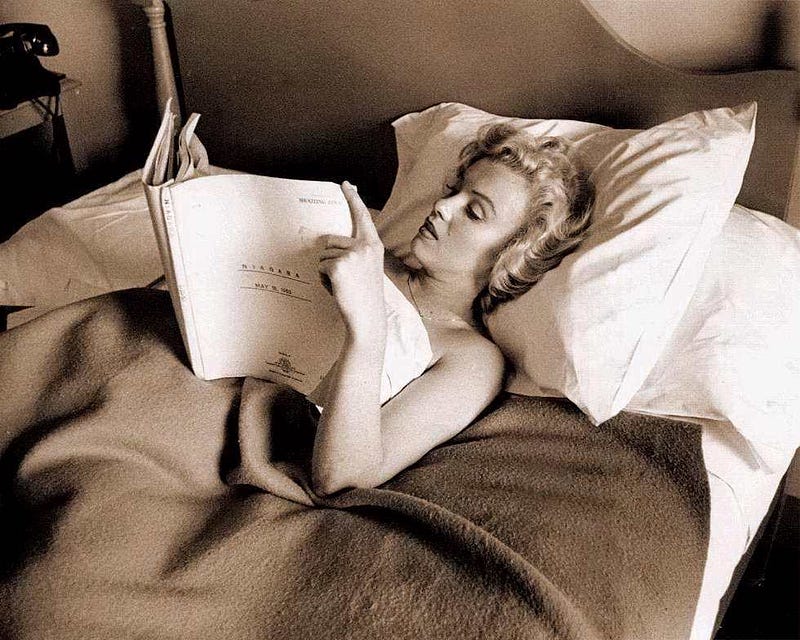
In today’s world, we are freed from the hassle of toting around a bag full of three-hole punch scripts. Instead, we have access to tens of thousands of them right there on a tablet or cell phone. Yes, screenplays as PDFs don’t have the magic of a printed copy, but words are words any way you read them.
As to how to access script PDFs, it’s simple. Get on Google. Type the name of the movie. Type “screenplay PDF.” Push Enter. Chances are, somebody somewhere has made that script available online. Of course, technically it’s illegal, so you may do what I do here on the blog: I wait until the late fall when studios and production companies make screenplays available for download as part of their For Your Consideration campaigns. In fact, each of these links below will enable you to download a movie script from web pages provided by the companies which own the rights to those scripts:
After The WeddingAll Is TrueAnimal KingdomAntelbellumAnthropoidBarb and Star Go to Vista Del MarBattle of the SexesBeginnersBooksmartBorat: Subsequent Movie FilmBrad’s StatusBreatheBrigsby BearCan You Ever Forgive Me?Captain FantasticCapernaumCherryThe ClimbColetteCrazy Rich AsiansDa 5 BloodsDanny CollinsDenialDisobedienceElizabeth BlueEmmaEye in the SkyThe FatherA Fantastic WomanThe FavouriteFilm Stars Don’t Die in LiverpoolFirst CowFoxtrotFrankieFrench ExitThe Front RunnerGet LowHappy EndHarrietThe Happy PrinceHerselfHustlersI Carry You With MeI Smile BackI, TonyaI’ll See You In My DreamsI’m Thinking of Ending ThingsI’m Your WomanInherent ViceThe InvitationJokerJojo RabbitJust MercyKajillionaireThe King Of Staten IslandKnives OutLandThe Last Black Man in San FranciscoLearning to DriveLeave No TraceLegendThe Leisure SeekerLet Him GoLoganLove Is StrangeLovelessLovingMa Rainey’s Black BottomMade in DagenhamMalcolm & MarieThe Man Who Invented ChristmasMan UpMark Felt: The Man Who Brought Down The White HouseMaudieThe MauritanianMiddle of NowhereMinariMother and ChildMotherless BrooklynMr. TurnerMy Week with MarilynNever Look AwayNever Rarely Sometimes AlwaysNews of the WorldNomadlandNorman: The Moderate Rise and Tragic Fall of a New York FixerNovitiateOld Man & The GunOn the Basis of SexOn the RocksOne Night In MiamiOnwardOver the MoonPain and GloryPalm SpringsPalmerThe PastPawn SacrificeThe Personal History of David CopperfieldPlease GivePromPromising Young WomanPuzzleRichard JewelThe RiderRocketmanRuben Brandt, CollectorSaint FrancesShirleyShort Term 12The Song of NamesSoulSound of MetalSpider-man: Into The Spider-VerseStan & OllieSteve JobsThe Trial of the Chicago 7TrumboThe United States vs Billie HolidayWar for the Planet of the ApesWhat They HadThe White TigerThe Wife
[Note: These links have a way of disappearing. My advice: Download the scripts while you can.]
Bottom line, if you want to be a screenwriter, you have no excuse. You must read screenplays. If Stephen King can read upward to seventy books per year, you should be able to read at least one hundred screenplays in that time. Why? Because a script typically clocks in at anywhere from 90–120 pages, much shorter than a novel.
As King says in his memoir: "Can I be blunt on the subject? If you don't have time to read, you don't have the time (or the tools) to write. Simple as that.”
Come back next week and many weeks thereafter for more in the Sundays with Stephen King’s “On Writing” series.
Twitter: @StephenKing