Sundays with Stephen King’s “On Writing”
A series featuring reflections on writing from the famed author’s memoir.
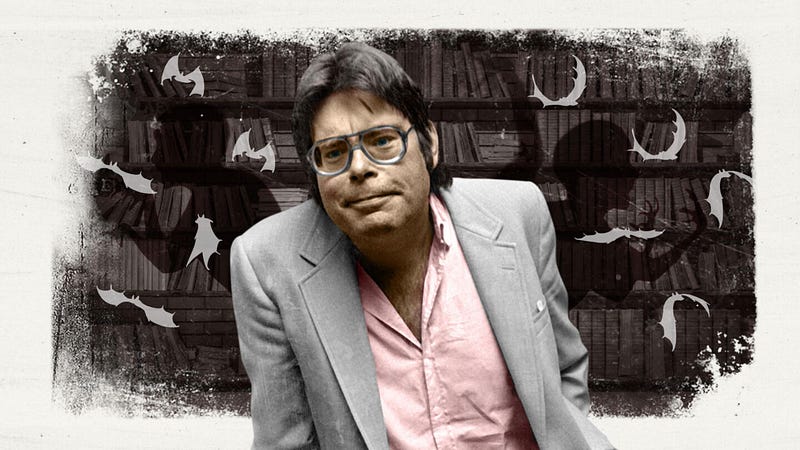
A series featuring reflections on writing from the famed author’s memoir.
I had not read Stephen King’s memoir On Writing for several years when it occurred to me to do so again. While at it, why not share reflections from the renowned writer in a weekly Sunday series at Go Into The Story?
King is a prolific author. Fair to say that is an understatement. One need only glance at a roster of his written works to determine that. If any contemporary writer has earned the right to reflect on the craft, it would be King. However, that is not the motivation he had in writing his memoir. This excerpt from the ‘First Foreword’ of On Writing explains the genesis of the book, a fateful exchange with Amy Tan, fellow writer and member of an authors’ charity rock music group The Remainders.
One night while we were eating Chinese before a gig in Miami Beach, I asked Amy if there was any one question she was never asked during the Q-and-A that follows almost every writer’s talk — that question you never get to answer when you’re standing in front of a group of author-struck fans and pretending you don’t put your pants on one leg at a time like everyone else. Amy paused, thinking it over very carefully, and miss said: “No one ever asks about the language.”
I owe an immediate debt of gratitude to her for saying that. I had been playing with the idea of writing a little book about writing for a year or more at that time, but had held back because I didn’t trust my own motivations — why did I want to write about writing? What made me think I had anything worth saying?
The easy answer is that someone who has sold as many books of fiction as I have must have something worthwhile to say about writing it, but the easy answer isn’t always the truth. Colonel Sanders sold a hell of a lot of fried chicken, but I’m not sure anyone wants to know how he made it. If I was going to be presumptuous enough to tell people how to write, I felt there had to be a better reason than my popular success. Put another way, I didn’t want to write a book, even a short one like this, that would leave me feeling like a literary gasbag or a transcendental asshole. There are enough of those books — and those writers — on the market already, thanks.
But Amy was right: nobody ever asks about the language. They ask the DeLillos and the Updikes and the Styrons, but they don’t ask popular novelists. Yet many of us proles also care about the language, in our humble way, and care passionately about the art and craft of telling stories on paper. What follows is an attempt to put down, briefly and simply, how I came to the craft, what I know about it now, and how it’s done. It’s about the day job; it’s about the language.
My intention is similar to the Sundays with Ray Bradbury series: Each week as I re-read King’s memoir, print notable excerpts at Go Into The Story to inspire our creativity and conversation about the craft.
Today: From the twenty-fifth anniversary edition of On Writing, an excerpt from pp. 155–157 which speaks to the basics on how to approach the actual practice of writing.
You can read anywhere, almost, but when it comes to writing, library carrel's, park benches, and rented flats should be courts of last resort… most of us do our best in a place of our own. Until you get one, you'll find your new resolution to write a lot hard to take seriously…
The space can be humble (probably should be, as I think I have already suggested), and it really needs only one thing: a door which you are willing to shut. The closed door is your way of telling the world and yourself that you mean business; you have made a serious commitment to write and intend to walk the walk as well as talk the talk.
By the time you step into your new writing space and close the door, you should have settled on a daily writing goal. As with physical exercise, it would be best to set this goal low at first, to avoid discouragement. I suggest a thousand words per day, and because I'm feeling magnanimous, I'll also suggest that you can take one day a week off, at least to begin with. No more; you'll lose the urgency and immediacy of your story if you do. With that goal set, resolve to yourself that the door stays closed until that goal is met. Get busy putting those thousand words on paper or on a floppy disk… the door closes the rest of the world out; it also serves to close you in and keep you focused on the job at hand…
I think we are actually talking about creative sleep. Like your bedroom, your writing room should be private, a place where you go to dream. Your schedule — in at about the same time every day, out when your thousand words are on paper or disk — exists in order to habituate yourself, to make yourself ready to dream just as you make yourself ready to sleep by going to bed at roughly the same time each night and following the same ritual as you go. In both writing and sleeping, we learn to be physically still at the same time we are encouraging our minds to unlock from the humdrum rational thinking of our daytime lives. And as your mind and body grow accustomed to a certain amount of sleep each night — six hours, seven, maybe the recommended eight — so can you train your waking mind to sleep creatively and work out the vividly imagined waking dreams which are successful works of fiction.
But you need the room, you need the door, and you need the determination to shut the door. You need a concrete goal, as well. The longer you keep to these basics, the easier the act of writing will become. Don't wait for the muse. As I've said, he's a hardheaded guy who's not susceptible to a lot of creative fluttering. This isn’t the Ouija board or the spirit-world we're talking about here, but just another job like laying pipe or driving long-haul trucks. Your job is to make sure the muse knows where you're going to be every day from nine till noon or seven till three. If he does know, I assure you that sooner or later he'll start showing up, chopping his cigar and making his magic.
In going through King’s book again, I keep hitting the same refrain over and over, one chapter to the next: Now THIS is the best advice.
Well, damn it, I really believe that this IS the best advice.
- Find your room. Your space. A place where what you do is write.
- Shut the door. Turn away from the “real” world and give yourself over to the “story” world.
- Do your job. Show up each day. Write. Hit your daily word or page count.
So much of the writer’s life is about depositing derriere on chair, putting fingers on the keyboard, and simply… writing. The words may be inspired. The words may feel like shit. No matter the quality of the writing, especially when pounding out a first draft, if you put words onto the page, you are making progress. The further you progress into the story universe and immerse yourself in the lives of its characters, the better your understanding of what the hell is going on. This can only help you as you craft the narrative.
But, as King suggests, in order to do that, you have to show up and do the work. Writing is a job. It requires discipline. And you must have the courage and strength of will to do one critical thing…
Shut the door.
Come back next week and many weeks thereafter for more in the Sundays with Stephen King’s “On Writing” series.
Twitter: @StephenKing