Sundays with Stephen King’s “On Writing”
A series featuring reflections on writing from the famed author’s memoir.
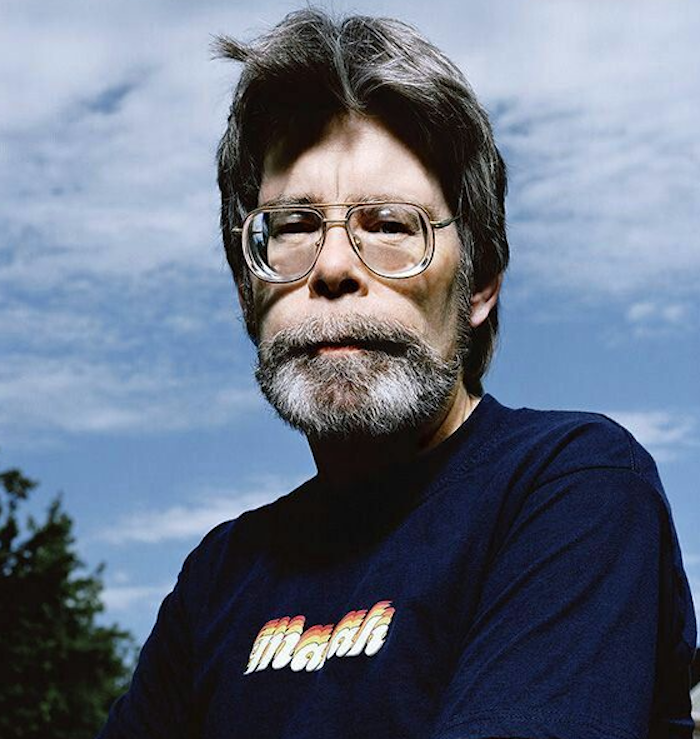
A series featuring reflections on writing from the famed author’s memoir.
I had not read Stephen King’s memoir On Writing for several years when it occurred to me to do so again. While at it, why not share reflections from the renowned writer in a weekly Sunday series at Go Into The Story?
King is a prolific author. Fair to say that is an understatement. One need only glance at a roster of his written works to determine that. If any contemporary writer has earned the right to reflect on the craft, it would be King. However, that is not the motivation he had in writing his memoir. This excerpt from the ‘First Foreword’ of On Writing explains the genesis of the book, a fateful exchange with Amy Tan, fellow writer and member of an authors’ charity rock music group The Remainders.
One night while we were eating Chinese before a gig in Miami Beach, I asked Amy if there was any one question she was never asked during the Q-and-A that follows almost every writer’s talk — that question you never get to answer when you’re standing in front of a group of author-struck fans and pretending you don’t put your pants on one leg at a time like everyone else. Amy paused, thinking it over very carefully, and miss said: “No one ever asks about the language.”
I owe an immediate debt of gratitude to her for saying that. I had been playing with the idea of writing a little book about writing for a year or more at that time, but had held back because I didn’t trust my own motivations — why did I want to write about writing? What made me think I had anything worth saying?
The easy answer is that someone who has sold as many books of fiction as I have must have something worthwhile to say about writing it, but the easy answer isn’t always the truth. Colonel Sanders sold a hell of a lot of fried chicken, but I’m not sure anyone wants to know how he made it. If I was going to be presumptuous enough to tell people how to write, I felt there had to be a better reason than my popular success. Put another way, I didn’t want to write a book, even a short one like this, that would leave me feeling like a literary gasbag or a transcendental asshole. There are enough of those books — and those writers — on the market already, thanks.
But Amy was right: nobody ever asks about the language. They ask the DeLillos and the Updikes and the Styrons, but they don’t ask popular novelists. Yet many of us proles also care about the language, in our humble way, and care passionately about the art and craft of telling stories on paper. What follows is an attempt to put down, briefly and simply, how I came to the craft, what I know about it now, and how it’s done. It’s about the day job; it’s about the language.
My intention is similar to the Sundays with Ray Bradbury series: Each week as I re-read King’s memoir, print notable excerpts at Go Into The Story to inspire our creativity and conversation about the craft.
Today: From the twenty-fifth anniversary edition of On Writing, an excerpt from pp. 49–50 in which King’s teacher Miss Hisler caught him at school selling copies of The Pit and the Pendulum, which he had adapted “blissfully unaware that I was in violation of every plagiarism and copyright statute in the history of the world.”
“What I don't understand, Stevie,” she said, “is why you'd write junk like this in the first place. You're talented. Why do you wanna waste your abilities?”
She waited for me to answer — to her credit, the question was not entirely rhetorical — but I had no answer to give. I was ashamed. I have spent a good many years since — too many, I think — being ashamed about what I write. I think I was forty before I realized that almost every writer of fiction and poetry who has ever published a line has been accused by someone of wasting his or her God-given talent. If you write (or paint or dance or sculpt or sing, I suppose), someone will try to make you feel lousy about it, that's all. I'm not editorializing, just trying to give you the facts as I see them.
Miss Hisler told me I would have to give everyone's money back. I did with no argument, even to those kids (and there were quite a few, I’m happy to say) who insisted on keeping their copies. I ended up losing money on the deal after all, but when summer vacation came I printed four dozen copies of a new story, an original called The Invasion of the Star-Creatures, and sold all but four or five. I guess that means I won in the end, at least in a financial sense. But in my heart I stayed ashamed. I kept hearing Miss Hisler asking why I wanted to waste my talent, why I wanted to waste my time, why I wanted to write junk.
Perhaps you have your very own Miss Hisler in your life, someone who when you were young pointedly questioned your desire to write. Myself, I may have had someone act in that dubious capacity, but I don’t remember anyone in particular. Then again, my childhood memories are nowhere near as precise as Stephen King.
Maybe your situation is even worse in that there is someone in your family or circle of acquaintances — I doubt you would call them a “friend” — who impugns your ambition to be a writer. If there is such an individual currently in your life, at least you have the opportunity to deliver a well-timed fist to their snoot, unlike the distant figure of a Miss Hisler who may show up at all hours, haunting you with her intimidating glare.
Whether you have or have not intersected with such a debilitating figure, I can virtually guarantee you do know VON: Voices Of Negativity. You know what I’m talking about.
Those pages you’re working on? They suck.
That sentence you just wrote? That sucks, too.
Hell, what is it with this writing nonsense anyway? The odds against success are ginormous, the process of writing is a pain in the arse, and chances are you will never see one dime of writing income.
THOSE voices.
What is utterly vexing is we can’t get rid of them. No matter what we do, they keep creeping into our consciousness.
How to deal with them? We can take a lesson from King himself. Despite Miss Hisler making him feel ashamed about his writing, well into his adult life, he kept writing. Not only that, he wrote the stories he wanted to write.
He adapted and learned to live with the judgmental specter of Miss Hisler. In fact, that sense of being ashamed may have spurred him on in his writing. Consider today’s excerpt: How did he respond to Miss Hisler?
He wrote another piece of “junk”: The Invasion of the Star-Creatures.
So there’s that as a coping mechanism in the face of your own Voices of Negativity: Use them as inspiration. Write to prove them wrong.
I have discovered another tactic.
Hold out your left hand. Imagine that within the palm of that hand stand all of your Voices Of Negativity. Every expression of doubt. Every contemptuous accusation. Every existential declaration. All right there in your hand.
Now extend your right hand. And in the palm of that hand is Logic. Here’s what it says:
No matter where you are in your writer’s quest, no matter how stiff the competition, there is always the possibility you will develop your talent, summon your creativity, find your voice and… make your mark.
There is always the possibility you will succeed. You simply cannot deny that fact. And neither can the Voices Of Negativity, no matter how loud a ruckus they create in your mind.
Whenever the Voices Of Negativity kick into gear and attempt to distract you from writing, hold out your left hand. Take a deep breath. Then hold out your right hand. Remind yourself that writing is precisely what you are supposed to be doing is, indeed, an actual possibility. By logic, that cannot be refuted.
That’s what I do. If Stephen King were given that scenario, I suspect he would have the right hand squash the left hand… or something more macabre!
Bottom line, we need to figure out ways to cope with our own Miss Hisler, our own VON. Use them as motivation. Just keep writing. Left hand, right hand. Whatever the solution, whatever you do, make sure those voices…
…don’t drown out your creative voice.
Come back next week and many weeks thereafter for more in the Sundays with Stephen King’s “On Writing” series.
Twitter: @StephenKing