Sundays with Stephen King’s “On Writing”
A series featuring reflections on writing from the famed author’s memoir.
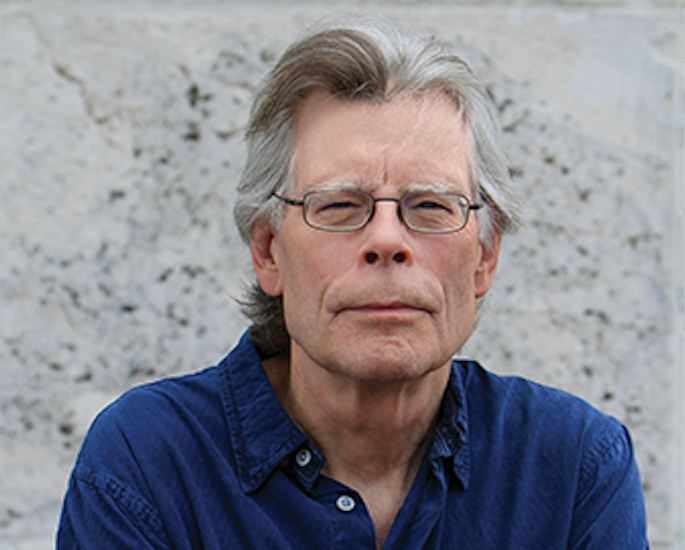
A series featuring reflections on writing from the famed author’s memoir.
I had not read Stephen King’s memoir On Writing for several years when it occurred to me to do so again. While at it, why not share reflections from the renowned writer in a weekly Sunday series at Go Into The Story?
King is a prolific author. Fair to say that is an understatement. One need only glance at a roster of his written works to determine that. If any contemporary writer has earned the right to reflect on the craft, it would be King. However, that is not the motivation he had in writing his memoir. This excerpt from the ‘First Foreword’ of On Writing explains the genesis of the book, a fateful exchange with Amy Tan, fellow writer and member of an authors’ charity rock music group The Remainders.
One night while we were eating Chinese before a gig in Miami Beach, I asked Amy if there was any one question she was never asked during the Q-and-A that follows almost every writer’s talk — that question you never get to answer when you’re standing in front of a group of author-struck fans and pretending you don’t put your pants on one leg at a time like everyone else. Amy paused, thinking it over very carefully, and miss said: “No one ever asks about the language.”
I owe an immediate debt of gratitude to her for saying that. I had been playing with the idea of writing a little book about writing for a year or more at that time, but had held back because I didn’t trust my own motivations — why did I want to write about writing? What made me think I had anything worth saying?
The easy answer is that someone who has sold as many books of fiction as I have must have something worthwhile to say about writing it, but the easy answer isn’t always the truth. Colonel Sanders sold a hell of a lot of fried chicken, but I’m not sure anyone wants to know how he made it. If I was going to be presumptuous enough to tell people how to write, I felt there had to be a better reason than my popular success. Put another way, I didn’t want to write a book, even a short one like this, that would leave me feeling like a literary gasbag or a transcendental asshole. There are enough of those books — and those writers — on the market already, thanks.
But Amy was right: nobody ever asks about the language. They ask the DeLillos and the Updikes and the Styrons, but they don’t ask popular novelists. Yet many of us proles also care about the language, in our humble way, and care passionately about the art and craft of telling stories on paper. What follows is an attempt to put down, briefly and simply, how I came to the craft, what I know about it now, and how it’s done. It’s about the day job; it’s about the language.
My intention is similar to the Sundays with Ray Bradbury series: Each week as I re-read King’s memoir, print notable excerpts at Go Into The Story to inspire our creativity and conversation about the craft.
Today: From the twenty-fifth anniversary edition of On Writing, an excerpt from pp. 63–66. King describes falling in love with a fellow college student named Tabitha Spruce in part due to her talent as a writer, specifically poetry.
The workshop group met once or twice a week in the living room of instructor Jim Bishop’s house, perhaps a dozen undergrads and three or four faculty members working in a marvellous atmosphere of equality. Poems were typed up and mimeographed in the English Department office on the day of each workshop. Poets read while the rest of us followed along on our copies. Here is one of Tabby's poems from that fall:
A GRADUAL CANTICLE FOR AUGUSTINE
The thinnest bear is awakened in the winter
by the sleep-laughter of locusts,
by the dream-blustering of bees,
by the honeyed scent of desert sands,
that the wind carries in her womb
into the distant hills, into the house of Cedar.
The bear has heard a sure promise.
Certain words are edible; they nourish
more than snow heaped upon silver plates
or ice overflowing golden bowls. Chips of ice
from the mouth of a lover are not always better,
Nor a desert dreaming always a mirage.
The rising bear sings a gradual canticle
woven of sand that conquers cities
by a slow cycle. His praise seduces
a passing wind, traveling to the sea
wherein a fish, caught in a careful net,
bears a bear song in the cool-scented snow.
There was silence when Tabby finished reading. No one knew exactly how to react. Cables seem to run through the poem, tightening the lines until they almost hummed. I found the combination of crafty diction and delirious imagery exciting and illuminating. Her poem also made me feel that I wasn't alone in my belief that good writing can be simultaneously intoxicating and idea-driven. If stone-sober people can fuck like they're out of their minds — can actually be out of their minds while caught in that throe — why shouldn't writers be able to go bonkers and still stay sane?
There was also a work-ethic in the poem that I liked, something that suggested writing poems (or stories, or essays) has as much in common with sweeping the floor as with mythy moments of revelation. There's a place in A Raisin in the Sun where a character cries out: “I want to fly! I want to touch the sun!” To which his wife replies, “First eat your eggs.”
In the discussion that followed Tab’s reading, it became clear to me that she understood her own poem. She knew exactly what she had meant to say, and had said most of it. Saint Augustine (A.D. 354–430) she knew both as a Catholic and as a history major. Augustine's mother (a saint herself) was a Christian, his father a pagan. Before his conversion, Augustine pursued both money and women. Following it he continued to struggle with his sexual impulses, and is known for the Libertine’s Prayer, which goes: “O Lord, make chaste … but not yet.” In his writing he focused on man's struggle to give up belief in self in favor of belief in God. And he sometimes likened himself to a bear. Tabby has a way of tilting her chin down when she smiles — it makes her look both wise and severely cute. She did that then, I remember, and said, “Besides, I like bears.”
The canticle is gradual perhaps because the bear’s awakening is gradual. The bear is powerful and sensual, although thin because he is out of his time. In a way, Tammy said when called upon to explicate, the bear can be seen as a symbol of mankind’s troubling and wonderful habit of dreaming the right dreams at the wrong time. Such dreams are difficult because they're inappropriate, but also wonderful in their promise. The poem also suggests that dreams are powerful — the bear’s is strong enough to seduce the wind into bringing his song to a fish caught in a net.
I won't try to argue that “A Gradual Canticle” is a great poem (although I think it's a pretty good one). The point is that it was a reasonable poem in a hysterical time, one sprung from a writing ethic that resonated all through my heart and soul.
Tabby was in one of Jim Bishop’s rocking chairs that night. I was sitting on the floor beside her. I put my hand on her calf as she spoke, cupping the curve of warm flesh through her stocking. She smiled at me. I smiled back. Sometimes these things are not accidents. I'm almost sure of it.
I chose to excerpt this part of King’s book for several reasons. The first is because I knew very little about Tabitha King. In doing some research, I discovered she went on to become a published poet, novelist, and short story writer. She and King were married on January 2, 1971 which means if I’ve got the math right, they will have celebrated their 50th wedding anniversary this year. Congratulations, Stephen and Tabby!
What really drew me to these pages is poetry, both Tabitha’s poem itself and the craft. For years, I avoided poems as much as I could having deduced that I just didn’t understand them. After much nagging by my good friend Kurt Brown, a poet in his own right, I finally dove in. Soon, I found I was hooked. In fact, I typically begin each day by reading a poem.
One thing I discovered is a remarkable synergy between poetry and screenwriting, a subject I explored here: The Poetry of Screenwriting.
Which brings me to Tabitha King’s poem: A Gradual Canticle for Augustine. I am quite struck by it in part because of its theological themes.
A canticle is a hymn or chant used in religious ceremonies. During my first year at Yale Divinity School, I was part of an octet which sang a cappella chants. Having been raised a Baptist, then Methodist, I had no previous knowledge of this liturgical element and found the experience quite moving. Here is an example of Christian canticles:
Then there is the reference to Augustine. Before I ventured West to pursue my dreams of becoming a musician (which ironically led me to screenwriting), my goal was to become an academic and professor. My area of interest: Early Church history, specifically what is known as “primitive Christianity” — that period of time from Jesus’ ministry and death, then the emergence of the earliest communities of faith — but I also was fascinated by later Christian apologists including St. Augustine.
As King notes in his memoir, even as a bishop, Augustine was challenged by his earthly desires and attempted to distance himself from the “body” as much as he could, both in practice and theology. (In his book The City of God, there is an odd explanation by Augustine how when Adam had intercourse with Eve, there was no pleasure involved, rather Adam rationally commanded his penis to become erect in order to engage in the act of procreation, an act of obedience to God: “be fruitful and multiply”).
Then there is the narrative of Tabitha King’s poem itself which is real point of attention in these pages. Whatever I do or do not understand about poetry, I know enough to see this: The poem has a beginning … middle … and end.
Beginning: The bear awakens and is hungry
Middle: The bear reflects on how to satisfy its hunger
End: The bear sings a canticle in the belief it will bring it food
Thus, it seems to me the poem is an homage to the power of WORDS.
The bear has heard a sure promise:
Certain words are edible.
As King describes, the bear’s canticle is “strong enough to seduce the wind into bringing his song to a fish caught in a net.”
Isn’t that our hope as writers? To write something “strong enough to seduce” readers to be drawn toward it … for publishers, editors, literary agents and managers, creative executives, actors, and/or directors to exclaim, “These words are edible” (read: We can make money off this and, thereby, put food on our table).
How to get there? One thing King points out is key: work-ethic. Each of us may want to “fly” as writers, but first, we need to eat our eggs.
Bottom line, take note of Tabitha and Stephen King, who fell in love while members of a weekly poetry workshop. Perhaps poetry can bring inspiration … and even love … into your life.
Kurt Brown died suddenly in June 2013. I featured one of his poems per day for a week to honor my good friend who turned me onto poetry and so many other joys in life.
You may learn more about Kurt by going here.
An obituary in the Aspen Daily News.
Come back next week and many weeks thereafter for more in the Sundays with Stephen King’s “On Writing” series.
Twitter: @StephenKing