Sundays with Stephen King’s “On Writing”
A series featuring reflections on writing from the famed writer’s memoir.
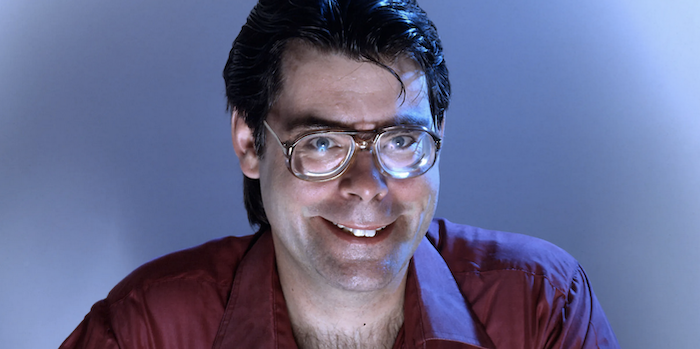
A series featuring reflections on writing from the famed writer’s memoir.
I had not read Stephen King’s memoir On Writing for several years when it occurred to me to do so again. While at it, why not share reflections from the renowned writer in a weekly Sunday series at Go Into The Story?
King is a prolific author. Fair to say that is an understatement. One need only glance at a roster of his written works to determine that. If any contemporary writer has earned the right to reflect on the craft, it would be King. However, that is not the motivation he had in writing his memoir. This excerpt from the ‘First Foreword’ of On Writing explains the genesis of the book, a fateful exchange with Amy Tan, fellow writer and member of an authors’ charity rock music group The Remainders.
One night while we were eating Chinese before a gig in Miami Beach, I asked Amy if there was any one question she was never asked during the Q-and-A that follows almost every writer’s talk — that question you never get to answer when you’re standing in front of a group of author-struck fans and pretending you don’t put your pants on one leg at a time like everyone else. Amy paused, thinking it over very carefully, and miss said: “No one ever asks about the language.”
I owe an immediate debt of gratitude to her for saying that. I had been playing with the idea of writing a little book about writing for a year or more at that time, but had held back because I didn’t trust my own motivations — why did I want to write about writing? What made me think I had anything worth saying?
The easy answer is that someone who has sold as many books of fiction as I have must have something worthwhile to say about writing it, but the easy answer isn’t always the truth. Colonel Sanders sold a hell of a lot of fried chicken, but I’m not sure anyone wants to know how he made it. If I was going to be presumptuous enough to tell people how to write, I felt there had to be a better reason than my popular success. Put another way, I didn’t want to write a book, even a short one like this, that would leave me feeling like a literary gasbag or a transcendental asshole. There are enough of those books — and those writers — on the market already, thanks.
But Amy was right: nobody ever asks about the language. They ask the DeLillos and the Updikes and the Styrons, but they don’t ask popular novelists. Yet many of us proles also care about the language, in our humble way, and care passionately about the art and craft of telling stories on paper. What follows is an attempt to put down, briefly and simply, how I came to the craft, what I know about it now, and how it’s done. It’s about the day job; it’s about the language.
My intention is similar to the Sundays with Ray Bradbury series: Each week as I re-read King’s memoir, print notable excerpts at Go Into The Story to inspire our creativity and conversation about the craft.
Today: From the twenty-fifth anniversary edition of On Writing, an excerpt from pp. 27–28. When he was six years old, King suffered through a series of painful medical conditions which necessitated him staying home from school for nine months (in fact, he was held back in first grade until the fall of the next school year). Here he describes how he spent much of this time: reading.
Most of that year I spent either in bed or housebound. I read my way through approximately six tons of comic books, progressed to Tom Swift and Dave Dawson (a heroic World War II pilot whose various planes were always “prop-clawing for altitude”), then moved onto Jack London's bloodcurdling animal tales. At some point I begin to write my own stories. Imitation preceded creation; I would copy Combat Casey comics word for word in my Blue Horse tablet, sometimes adding my own descriptions when they seemed appropriate. “They were camped in a big dratty farmhouse room,” I might write; it was another year or two before I discovered that drat and draft were different words…
Eventually I showed one of those copycat hybrids to my mother, and she was charmed — I remember her slightly amazed smile, as if she was unable to believe a kid of hers could be so smart — practically a damned prodigy, for God’s sake. I had never seen that look on her face before — not on my account, anyway — and I absolutely loved it.
She asked me if I had made the story up myself, and I was forced to admit that I had copied most of it out of a funny-book. She seemed disappointed, and that drained away much of my pleasure. At last she handed back my tablet. “Write one of your own, Stevie,” she said. “Those Combat Casey funny-books are just junk — he's always knocking someone's teeth out. I bet you could do better. Write one of your own.”
The personal anecdotes King details in his book often provide a window into his development as a writer. This one gives us several clues. The most obvious one is the ending when his mother says, “I bet you could do better. Write one of your own.” It’s quite possible this was one of the moments — perhaps the moment — when it struck the young boy: “Hey, I could be a writer!”
There are other clues into the emergence of Stephen King the author:
- Notice his reaction when his mother thought he had written the story he handed to her: I had never seen that look on her face before — not on my account, anyway — and I absolutely loved it. Right there, a heavy dose of positive reinforcement. What writer doesn’t want THAT!
- But then this reaction when his mother discovered he had basically copied the story from a “funny-book”: She seemed disappointed, and that drained away much of my pleasure. An equal dose of negative reinforcement. Ironically, that can motivate a writer, too, in an “I’ll show them!” way.
- Perhaps the biggest takeaway from this anecdote is right up front: I read my way through approximately six tons of… comic books, Tom Swift, Jack London.
It brings to mind quotes attributed to King, a variety of versions of the same point: “If you want to be a writer, you must do two things above all others: read a lot and write a lot… If you don’t have time to read, you don’t have the time (or the tools) to write.”
[You can bet those quotes or something like them are to be found in his memoir. You can also bet when I come across them in re-reading his book, I will be sure to highlight them.]
The bottom line King suggests: If you want to be a writer, you have to be a reader. I’ve not written a novel — yet — but I make this point all the time with my screenwriting students: Read. Scripts. Frankly, read anything! If it’s great, it can inspire you. If it sucks, that can teach you what not to do.
Whatever you’re reading, you can break it down and analyze structure… scene construction… transitions… dialogue… character arcs.
You can also just kick back and read for pleasure.
In either case, you’re not only learning at a conscious level, you’re also absorbing style, tone, pace, and the rest at a subconscious level. Together, they feed your evolving writing instincts.
Here’s a thought experiment for you: Reach into your memories and see if you can recall a moment in your youth when you wrote something… and you felt good about it. Perhaps you won an award for writing at school. Maybe you got a hug or pat on the back from a beloved family member or friend. Or it could be you felt a warm sense of self-satisfaction at what you had written.
If you can conjure up some sense of that feeling… try holding onto that. Capture it and bring it back to the forefront of where you are just now as a writer. We should all be so lucky to have a moment like King had with his mother: And I absolutely loved it!
Come back next week and many weeks thereafter for more in the Sundays with Stephen King’s “On Writing” series.
On Writing: A Memoir on the Craft by Stephen King
Twitter: @StephenKing