Sundays with Stephen King’s “On Writing”
A series featuring reflections on writing from the famed author’s memoir.
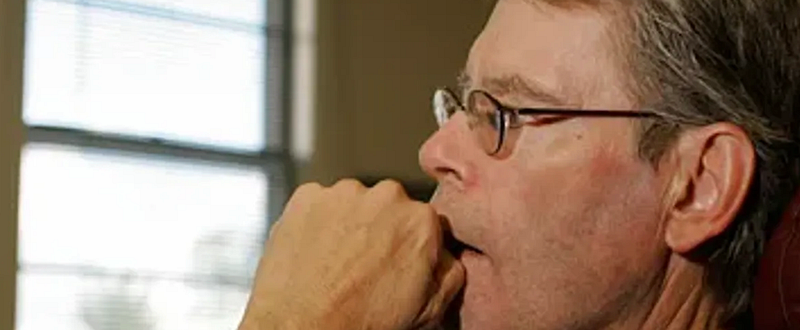
A series featuring reflections on writing from the famed author’s memoir.
I had not read Stephen King’s memoir On Writing for several years when it occurred to me to do so again. While at it, why not share reflections from the renowned writer in a weekly Sunday series at Go Into The Story?
King is a prolific author. Fair to say that is an understatement. One need only glance at a roster of his written works to determine that. If any contemporary writer has earned the right to reflect on the craft, it would be King. However, that is not the motivation he had in writing his memoir. This excerpt from the ‘First Foreword’ of On Writing explains the genesis of the book, a fateful exchange with Amy Tan, fellow writer and member of an authors’ charity rock music group The Remainders.
One night while we were eating Chinese before a gig in Miami Beach, I asked Amy if there was any one question she was never asked during the Q-and-A that follows almost every writer’s talk — that question you never get to answer when you’re standing in front of a group of author-struck fans and pretending you don’t put your pants on one leg at a time like everyone else. Amy paused, thinking it over very carefully, and miss said: “No one ever asks about the language.”
I owe an immediate debt of gratitude to her for saying that. I had been playing with the idea of writing a little book about writing for a year or more at that time, but had held back because I didn’t trust my own motivations — why did I want to write about writing? What made me think I had anything worth saying?
The easy answer is that someone who has sold as many books of fiction as I have must have something worthwhile to say about writing it, but the easy answer isn’t always the truth. Colonel Sanders sold a hell of a lot of fried chicken, but I’m not sure anyone wants to know how he made it. If I was going to be presumptuous enough to tell people how to write, I felt there had to be a better reason than my popular success. Put another way, I didn’t want to write a book, even a short one like this, that would leave me feeling like a literary gasbag or a transcendental asshole. There are enough of those books — and those writers — on the market already, thanks.
But Amy was right: nobody ever asks about the language. They ask the DeLillos and the Updikes and the Styrons, but they don’t ask popular novelists. Yet many of us proles also care about the language, in our humble way, and care passionately about the art and craft of telling stories on paper. What follows is an attempt to put down, briefly and simply, how I came to the craft, what I know about it now, and how it’s done. It’s about the day job; it’s about the language.
My intention is similar to the Sundays with Ray Bradbury series: Each week as I re-read King’s memoir, print notable excerpts at Go Into The Story to inspire our creativity and conversation about the craft.
Today: From the twenty-fifth anniversary edition of On Writing, excerpts from pp. 227, 230–231 on the subject of research.
We need to talk a bit about research, which is a specialized kind of back story. And please, if you do need to do research because parts of your story deal with things about which you know little or nothing, remember that word back. That's where research belongs: as far in the background and the back story as you can get it. You may be entranced with what you're learning about flesh eating bacteria, the sewer system of New York, or the I.Q. potential of collie pups, but your readers are probably going to care a lot more about your characters and your story.
— —
What I am looking for is nothing but a touch of verisimilitude, like the handful of spices you chuck into a good spaghetti sauce to really finish her off. That sense of reality is important in any work of fiction, but I think it is particularly important in a story dealing with the abnormal or paranormal… Just don't end up with the tail wagging the dog; remember that you are writing a novel, not a research paper. The story always comes first.
I love sharing that word with my students: verisimilitude. From the Latin: verum (truth) and similtudo (likeness). As fiction writers, we are not creating a documentary. Rather, we strive to create a sense of a story universe which feels similar to the truth.
That’s a great starting point when setting out on the research part of any writing project. Depending upon the nature of the project and the writer’s familiarity (or lack thereof) to the subject matter, the story may require extensive or minimal research, but as King states: The story always comes first.
In an interview I conducted with Aaron Guzikowski who wrote the screenplay for the movie Prisoners, I asked him about his approach to research. His response:
Research is a great deal of fun. I do like researching, but it can kind of just become a way of procrastinating. At the end of the day, unless it’s really integral to the story, I just try and tell the best story I can possibly tell and then go back and then research and figure out, “Oh, is this thing I’ve written is completely implausible or not?”
Guzikowski’s approach mimics King’s: write the story, then do the research. Flesh out the details. Do a plausibility check. Provide a “touch of versimilitude.” But Guzikowski brings up another point: how research can “become a way of procrastinating.”
One day, I was out and about in Los Angeles when I ran into an acquaintance, someone who had pretensions of becoming a screenwriter. When asked what he was currently doing, he told me about a story he was developing.
“I’m deep into research,” he said.
I didn’t see him again for six or maybe even more months. I inquired about the story he had been prepping to write.
“Oh, I’m still doing research.”
Research can become a trap. You think you’re doing work in service of your story, but it can easily slide into procrastination.
Takeaways:
- Do just enough research to give your story a sense of verisimilitude.
- Writing the story is more important than the research.
- Don’t let research become a form of procrastination.
Come back next week and many weeks thereafter for more in the Sundays with Stephen King’s “On Writing” series.
Twitter: @StephenKing