Sundays with Stephen King’s “On Writing”
A series featuring reflections on writing from the famed author’s memoir.
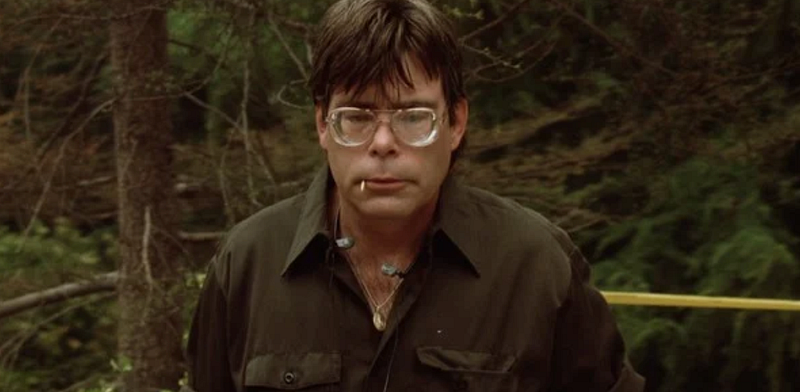
A series featuring reflections on writing from the famed author’s memoir.
I had not read Stephen King’s memoir On Writing for several years when it occurred to me to do so again. While at it, why not share reflections from the renowned writer in a weekly Sunday series at Go Into The Story?
King is a prolific author. Fair to say that is an understatement. One need only glance at a roster of his written works to determine that. If any contemporary writer has earned the right to reflect on the craft, it would be King. However, that is not the motivation he had in writing his memoir. This excerpt from the ‘First Foreword’ of On Writing explains the genesis of the book, a fateful exchange with Amy Tan, fellow writer and member of an authors’ charity rock music group The Remainders.
One night while we were eating Chinese before a gig in Miami Beach, I asked Amy if there was any one question she was never asked during the Q-and-A that follows almost every writer’s talk — that question you never get to answer when you’re standing in front of a group of author-struck fans and pretending you don’t put your pants on one leg at a time like everyone else. Amy paused, thinking it over very carefully, and miss said: “No one ever asks about the language.”
I owe an immediate debt of gratitude to her for saying that. I had been playing with the idea of writing a little book about writing for a year or more at that time, but had held back because I didn’t trust my own motivations — why did I want to write about writing? What made me think I had anything worth saying?
The easy answer is that someone who has sold as many books of fiction as I have must have something worthwhile to say about writing it, but the easy answer isn’t always the truth. Colonel Sanders sold a hell of a lot of fried chicken, but I’m not sure anyone wants to know how he made it. If I was going to be presumptuous enough to tell people how to write, I felt there had to be a better reason than my popular success. Put another way, I didn’t want to write a book, even a short one like this, that would leave me feeling like a literary gasbag or a transcendental asshole. There are enough of those books — and those writers — on the market already, thanks.
But Amy was right: nobody ever asks about the language. They ask the DeLillos and the Updikes and the Styrons, but they don’t ask popular novelists. Yet many of us proles also care about the language, in our humble way, and care passionately about the art and craft of telling stories on paper. What follows is an attempt to put down, briefly and simply, how I came to the craft, what I know about it now, and how it’s done. It’s about the day job; it’s about the language.
My intention is similar to the Sundays with Ray Bradbury series: Each week as I re-read King’s memoir, print notable excerpts at Go Into The Story to inspire our creativity and conversation about the craft.
Today: From the twenty-fifth anniversary edition of On Writing, an excerpt from pp. 86–87. This continues the saga of Carrie, King’s first big success. At this point, Doubleday had agreed to publish his book for what would amount to $30,000. To be sure, a nice hunk of change, especially for a young couple struggling to make ends meet with a family of four, but not an earth-changing event. What happens next… is.
One Sunday not long after that call, I got another one from Bill Thompson at Doubleday. I was alone in the apartment; Tabby had packed the kids off to her mother’s for a visit, and I was working on the new book, which I thought of as Vampires in Our Town.
“Are you sitting down?” Bill asked
“No,” I said. Our phone hung on the kitchen wall, and I was standing in the doorway between the kitchen and the living room. "Do I need to? "
"You might," he said. “The paperback rights to Carrie went to Signet Books for four hundred thousand dollars."
When I was a little kid, Daddy Guy and once said to my mother: “Why don't you shut that kid up, Ruth? When Stephen opens his mouth, all his guts fall out." It was true then, has been true all my life, but on that Mother's Day in May 1973 I was completely speechless. I stood there in the doorway, casting the same shadow as always, but I couldn't talk. Bill asked if I was still there, kind of laughing as he said it. He knew I was.
I hadn't heard him right. Couldn't have. The idea allowed me to find my voice again, at least. “Did you say it went for forty thousand dollars?”
“Four hundred thousand dollars,” he said. “Under the rules of the road” — meaning the contract I’d signed — “two hundred K of it’s yours. Congratulations, Steve.”
I was still standing in the doorway, looking across the living room toward our bedroom and the crib where Joe slept. Our place on Sanford Street rented for ninety dollars a month and this man I’d only met once face-to-face was telling me I’d just won the lottery. The strength ran out of my legs. I didn't fall, exactly, but I kind of whooshed down to a sitting position there in the doorway.
“Are you sure?” I asked Bill.
He said he was. I asked him to say the number again, very slowly and very clearly, so I could be sure I hadn't missed understood. He said the number was a four followed by five zeros. “After that a decimal point and two more zeros,” he added.
We talked for another half an hour, but I don't remember a single word of what we said. When the conversation was over, I tried to call Tabby at her mother’s. Her younger sister, Marcella, said Tab had already left. I walked back and forth through the apartment in my stocking feet, exploding with good news and without an ear to hear it. I was shaking all over. At last I pulled on my shoes and walked downtown. The only store that was open on Bangor’s Main Street was LaVerdiere’s Drug. I suddenly felt that I had to buy Tabby a Mother's Day present, something wild and extravagant. I tried, but here's one of life's true facts: there's nothing really wild and extravagant for sale at LaVerdiere’s. I did the best I could. I got her a hair-dryer.
When I got back home she was in the kitchen, unpacking the baby bags and singing along with the radio. I gave her the hair-dryer. She looked at it as if she's never seen one before. “What’s this for?” she asked.
I took her by the shoulders. I told her about the paperback sale. She didn't appear to understand. I told her again. Tabby looked over my shoulder at our shitty little four-room apartment, just as I had, and began to cry.
I have very little in common with Stephen King, certainly not his level of talent as a writer, however, I do have my own experience with: The Phone Call. Part Two of my own saga transpired about a week later. While sitting in producer Larry Gordon’s spacious office on the Twentieth Century Fox studio lot as he and our team of agents were fielding phone calls from several Hollywood movie studios interested in K-9, the spec script I had co-written, one of our agents (Dan Halsted) barged in and announced:
“Universal has made a preemptive offer. Three hundred thousand against seven hundred and fifty.”
Our agents stared at my writing partner and me. Larry Gordon did the same.
“Sound good?” he asked.
I turned to my writing partner. He nodded. I nodded. Larry slapped the palm of his hand onto the table, the thwack jolting me back to reality.
“Got a deal then!”
Let’s be honest. It is unwise for a writer to expect such a bonanza. Certainly don’t bank on it. The odds against achieving this type of financial success are long. Extremely long. And yet this type of life-altering moment can happen.
The challenge becomes how to face the odds. Here is something I wrote on the subject a few years back:
Writers come in all psychological shapes and sizes, but there are some areas we all have to deal with universally and facing the odds is one of them.
You have to develop an iron stomach and steel spine: The former to fend off nerves whenever you take a risk, the latter to keep you unbowed when confronting passes.
You have to find that balance point between rationality and irrationality: The former to help you assess what to write and where to put your energy, the latter to buck you up to leap again and again into the breach.
You have to keep your head in the clouds and your feet on the ground: The former to feed your creativity and fuel your hope, the latter to remind of reality and the daily challenge you face in overcoming the odds.
You have to be able to celebrate your victories and survive your defeats.
But here’s the crazy thing: In a business where the most apt description of how it works is screenwriter William Goldman’s assertion that “nobody knows anything,” this bit of wisdom turns things on their head. For the fact is screenwriters are not dealing with widgets, we are trafficking in magic. Stories are part-creativity, part-persistence, and all-ineffable bafflement at what works and what doesn’t, why this sells and that doesn’t. Those intangibles twist about the whole “numbers against” dynamic.
— —
In the end, there is only one way to succeed as a screenwriter: By acknowledging those long odds… telling them to screw off… then writing the best damn script you can.
Remember these observations from previous installments of this series reflecting how Stephen King handled this scenario:
Before he struck it big, King was nothing if not persistent. He kept at it even in the face of countless rejections. He relied on belief in himself and his talent as a writer, and when that flagged, he leaned into the support his wife Tabby provided for him. Eventually it paid off. Again… and again… and again. To date, his books have sold three-hundred and fifty millions copies.
There is nothing wrong with fantasizing about The Phone Call, yet while we allow our heads drift in the clouds, we need to keep our feet on the ground…
And just keep writing.
Come back next week and many weeks thereafter for more in the Sundays with Stephen King’s “On Writing” series.
Twitter: @StephenKing