Sundays with Stephen King’s “On Writing”
A series featuring reflections on writing from the famed writer’s memoir.
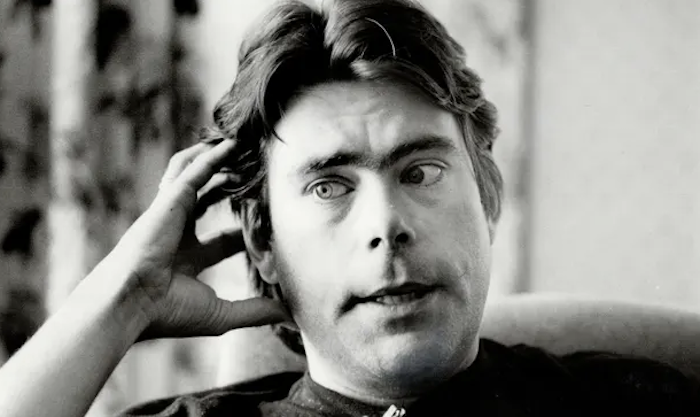
A series featuring reflections on writing from the famed writer’s memoir.
I had not read Stephen King’s memoir On Writing for several years when it occurred to me to do so again. While at it, why not share reflections from the renowned writer in a weekly Sunday series at Go Into The Story?
King is a prolific author. Fair to say that is an understatement. One need only glance at a roster of his written works to determine that. If any contemporary writer has earned the right to reflect on the craft, it would be King. However, that is not the motivation he had in writing his memoir. This excerpt from the ‘First Foreword’ of On Writing explains the genesis of the book, a fateful exchange with Amy Tan, fellow writer and member of an authors’ charity rock music group The Remainders.
One night while we were eating Chinese before a gig in Miami Beach, I asked Amy if there was any one question she was never asked during the Q-and-A that follows almost every writer’s talk — that question you never get to answer when you’re standing in front of a group of author-struck fans and pretending you don’t put your pants on one leg at a time like everyone else. Amy paused, thinking it over very carefully, and miss said: “No one ever asks about the language.”
I owe an immediate debt of gratitude to her for saying that. I had been playing with the idea of writing a little book about writing for a year or more at that time, but had held back because I didn’t trust my own motivations — why did I want to write about writing? What made me think I had anything worth saying?
The easy answer is that someone who has sold as many books of fiction as I have must have something worthwhile to say about writing it, but the easy answer isn’t always the truth. Colonel Sanders sold a hell of a lot of fried chicken, but I’m not sure anyone wants to know how he made it. If I was going to be presumptuous enough to tell people how to write, I felt there had to be a better reason than my popular success. Put another way, I didn’t want to write a book, even a short one like this, that would leave me feeling like a literary gasbag or a transcendental asshole. There are enough of those books — and those writers — on the market already, thanks.
But Amy was right: nobody ever asks about the language. They ask the DeLillos and the Updikes and the Styrons, but they don’t ask popular novelists. Yet many of us proles also care about the language, in our humble way, and care passionately about the art and craft of telling stories on paper. What follows is an attempt to put down, briefly and simply, how I came to the craft, what I know about it now, and how it’s done. It’s about the day job; it’s about the language.
My intention is similar to the Sundays with Ray Bradbury series: Each week as I re-read King’s memoir, print notable excerpts at Go Into The Story to inspire our creativity and conversation about the craft.
Today: From the twenty-fifth anniversary edition of On Writing, pp. 22–23.
When I was five or six, I asked my mother if she had ever seen anyone die. Yes, she said, she had seen one person die and had heard another one. I asked how you could hear a person die and she told me that it was a girl who a drowned off Prout’s Neck in the 1920s. She said the girl swam out past the rip, couldn't get back in, and began screaming for help. Several men tryied to reach her, but that day’s rip had developed a vicious undertow, and they were all forced back. In the end they could only stand around, tourists and townies, the teenager who became my mother among them, waiting for a rescue boat that never came and listening to that girl scream until her strength gave out and she went under. Her body washed up in New Hampshire, my mother said. I asked how old the girl was. Mom said she was fourteen, then read me a comic book and packed me off the bed. On some other day she told me about the one she saw — a sailor who jumped off the roof of the Graymore Hotel in Portland Maine, and landed in the street.
“He splattered,” my mother said in her most matter-of-fact tone. She paused, then added, “The stuff that came out of him was green. I have never forgotten it.”
That makes two of us, Mom.
When reading the memoir and King’s recollections of his earliest days as a youth, four years-old or so, it is intriguing how little he remembers. Moved to Wisconsin. Why? Doesn’t know. Lived next to an aunt and uncle. What were their names? Not sure. He and his brother David had a string of baby-sitters. Who were they? King only seems to remember a particularly odious caretaker who he calls “Eulah-Beulah” because he is unsure what her exact name was.
So much of his early childhood apparently exists in a hazy distant past. But his mother telling him about two people she had witnessed dying? King remembers those details vividly. Given the subject matter of most of his stories and the prominence of death in them, I guess we shouldn’t be surprised.
An interesting question to consider: Even at the age of five or six, did King already have an instinct for “dark” stories? After all, it was King who initiated the conversation with his mother, asking if she had ever seen anyone die. Why else would he ask a question about death if the subject didn’t interest him.
On the other hand, given how well he remembers what his mother told him in response to his inquiry, is it possible that these type of stories shared with him at such a young age influenced him toward death as a writing topic?
There’s no answer. Probably a combination of the two: King developed an interest in “death stories” and the more he discovered them, the more they influenced him as a writer.
For you and I as writers, one thing this excerpt from King’s memoir raises is the concept of selective memory. I do not have the time nor inclination to delve deeply into this subject, but suffice to say there is an interesting associated dynamic to consider: confirmation bias, the tendency to search for, interpret, favor, and recall information in a way that confirms one’s preexisting beliefs or hypotheses.
As a writing experiment, in your daily free-writing exercise — you do this, right? — focus for one month on your childhood. Write memories as they come to your mind. See if after thirty days there is a pattern to the memories you have written about. Perhaps there emerge common themes or subjects. That may not only represent your own selective memory at work impacted by your confirmation bias, it may also signal to you: These types of stories are important to me. These subjects are ingrained in my conscious and subconscious.
This writing experiment may reveal something about yourself which you may very well want to explore in your writing.
A final reflection about the first death King’s mother described. What an absolutely horrific tale. Imagine being that fourteen-year-old girl. Watching men leaping into the water to come save you. Her hope must have risen. Then seeing them turn back. All she can do is continue to struggle to stay afloat against the ever-present undertow. As she bobs in the waves, the clutch of bystanders on the beach, all eyes on her, nothing they can do. Her despair… her fear… her exhaustion…
Now switch perspective to King’s mother. A teenager watching someone her own age, flailing in the water, screaming above the noise of the waves. Imagine what is going through the mother’s mind: It could be me out there. What would that feel like?
Then… silence. The girl is gone. Her screams nothing but a memory now, swallowed by the sound of her watery grave. I’m willing to bet that for some of those onlookers, they consciously forgot those screams, the horror too much, their guilt at not having been able to save the girl too great.
But not King’s mother. She never could set aside those screams… the image of that girl… and the emptiness of the moment when she disappeared beneath the churning waves. Those memories stuck.
It’s a chilling story. Frankly, it sounds exactly like something from a King novel. A terrible, frightful death. But also… the stuff of great drama.
Come back next week and many weeks thereafter for more in the Sundays with Stephen King’s “On Writing” series.
On Writing: A Memoir on the Craft by Stephen King
Twitter: @StephenKing