Sundays with Sidney Lumet’s “Making Movies”
A weekly series featuring reflections on filmmaking by one of the truly great movie directors.
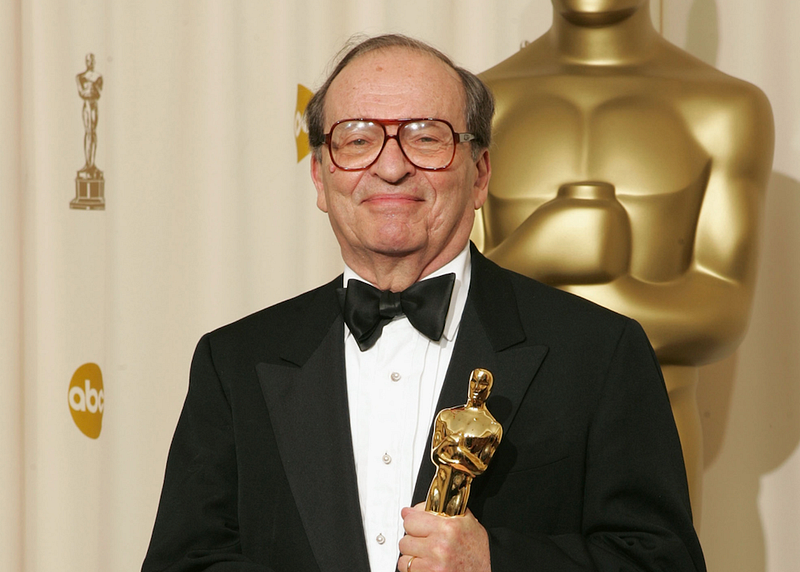
A weekly series featuring reflections on filmmaking by one of the truly great movie directors.
Roger Ebert said this about Making Movies: “It has more common sense in it about how movies are actually made than any other I have read.” That alone is enough reason to read this book authored by Sidney Lumet.
Known as an actor’s director, Lumet directed 17 different actors in Oscar-nominated performances: Katharine Hepburn, Rod Steiger, Al Pacino, Ingrid Bergman, Albert Finney, Chris Sarandon, Faye Dunaway, Peter Finch, Beatrice Straight, William Holden, Ned Beatty, Peter Firth, Richard Burton, Paul Newman, James Mason, Jane Fonda and River Phoenix. Bergman, Dunaway, Finch and Straight won Oscars for their performances in a Lumet movie.
Among his filmmaking credits are such stellar movies as 12 Angry Men, The Pawnbroker, Serpico, Dog Day Afternoon, Network, Equus, Prince of the City, The Verdict, and Running on Empty. He also has five screenwriting credits including Q&A and Night Falls on Manhattan.
As I’ve done with Sundays with Ray Bradbury and Sunday’s with Stephen King’s “On Writing,” I will work my way through Lumet’s book focusing on insights applicable to the craft of screenwriting.
Today: From “Making Movies,” Chapter 2: The Script: Are Writers Necessary?, pp. 31–32.
From a scene-by-scene breakdown, we move on to a line-by-line examination. Is the line of dialogue necessary? Revelatory? Is it saying it in the best possible way? In case of disagreement, I usually go along with the writer’s decision. After all, he wrote it. It’s also important that as a director I understand each and every line. There’s nothing more embarrassing than an actor asking the meaning of a line and the director not knowing the answer.
I encourage my students to feel their way through the first couple of drafts of a script, allowing themselves the freedom to meld with the emotional and psychological state of characters in every scene and write from that place. We may think of this process as receptive writing, where we are “receiving” action and dialogue directly from the characters in the moment. For those initial drafts, it is critical to give ourselves over to the characters and allow them to take the lead in the writing process. After all, it is their story. No one knows it better than they do because they are living it.
In subsequent drafts, however, there are times when we, as writers, must engage in executive writing. Here we examine each scene, each line, and as Lumet suggests, we ask: “Is the line of dialogue necessary? Revelatory? Is it saying it in the best possible way?” That is, we bring our critical writer’s perspective into the process.
I suspect Lumet would have approved of this exercise I have my writing students do as they revise and refine their script: The Three E’s of Scene-Writing. In the “line-by-line examination” Lumet recommends, my students ask of each line of dialogue or scene description:
Is it Essential? Is it Efficient? Is it Entertaining?
At one level, the goal of this exercise is to make sure each line not only belongs, but works. At a deeper level, the goal is for the writer to make sure they know what each line means. For when Lumet writes, “It’s also important that as a director I understand each and every line,” he implies that it is imperative for the writer to understand what’s going on at any given moment in the script.
I am reminded of an actor who told me this: “If the screenwriter doesn’t understand the story’s characters, how do you expect actors to?”
When Lumet talks about the importance of a director understanding each line, the subtext is that at some point, he will work with an actor who has the same goal: What does this mean? If the writer doesn’t know, then chances are neither the director nor the actor will understand either.
For a writer to understand what any moment in a script may mean, they will have to immerse themselves in the lives of the characters, identify as much as they can with the experience of the characters, then step back and reflect on deeper layers of psychological import.
And we have to do this with every scene… and every line.
For more on receptive and executive writing, go here.
Come back next Sunday for more of Lumet’s thoughts on story and working with screenwriters.
For previous installments, go here.
For more background on Sidney Lumet’s filmmaking career, go here.
To purchase my book The Protagonist’s Journey: An Introduction to Character-Driven Screenwriting and Storytelling, go here.