Sundays with Sidney Lumet’s “Making Movies”
A series featuring reflections on filmmaking by one of the truly great movie directors.
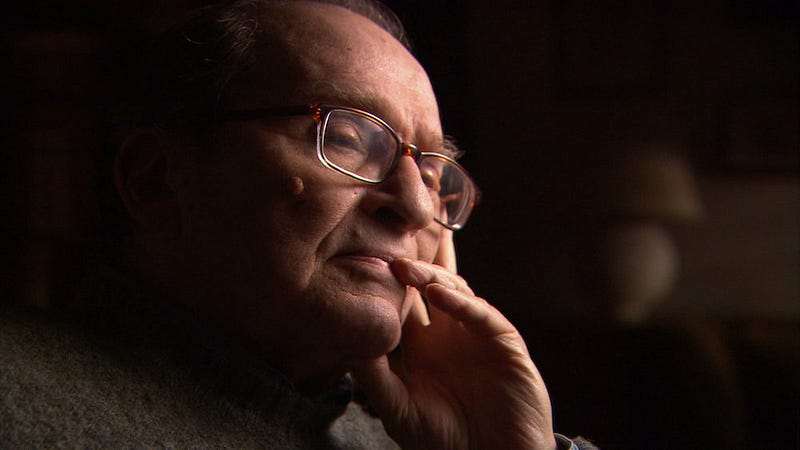
A series featuring reflections on filmmaking by one of the truly great movie directors.
Roger Ebert said this about Making Movies: “It has more common sense in it about how movies are actually made than any other I have read.” That alone is enough reason to read this book authored by Sidney Lumet.
Known as an actor’s director, Lumet directed 17 different actors in Oscar-nominated performances: Katharine Hepburn, Rod Steiger, Al Pacino, Ingrid Bergman, Albert Finney, Chris Sarandon, Faye Dunaway, Peter Finch, Beatrice Straight, William Holden, Ned Beatty, Peter Firth, Richard Burton, Paul Newman, James Mason, Jane Fonda and River Phoenix. Bergman, Dunaway, Finch and Straight won Oscars for their performances in a Lumet movie.
Among his filmmaking credits are such stellar movies as 12 Angry Men, The Pawnbroker, Serpico, Dog Day Afternoon, Network, Equus, Prince of the City, The Verdict, and Running on Empty. He also has five screenwriting credits including Q&A and Night Falls on Manhattan.
As I’ve done with Sundays with Ray Bradbury and Sunday’s with Stephen King’s “On Writing,” I will work my way through Lumet’s book focusing on insights applicable to the craft of screenwriting.
Today: From “Making Movies,” Chapter 8: Rushes, pp. 144–145.
I wrote earlier that there are times when a picture takes on a third meaning, a life of its own, which neither the director nor the writer knew was there. Generally, the sense of something special going on happens around the end of the second or the beginning of the third week of rushes. You arrive each evening with more and more anticipation. Slowly you give up any expectations of what you're going to see. You simply sit back with a kind of silent confidence, knowing that what you're going to see will be surprising but right. This feeling keeps growing over the first two weeks, and then you just give yourself over to it…
With this magic happens, the best thing you can do is get out of the way of the picture. Let it tell you how to do it from now on. I think it's quite clear by now that my movies proceed with great control and preplanning. But on those pictures when this feeling arose at rushes, I'd slowly jettison a lot of the ideas I had formed before shooting began. I’d trust my momentary impulses on the set and go with them. If I’d planned a dolly shot for such and such a scene, I would shoot it differently when the day came. I wouldn't do this arbitrarily. But if instinct told me to do the shot another way, I'd follow it, without doubts or fears. And the rushes would corroborate that the picture was taking on a new life.
What strikes me about this observation is what I tell my students when progressing from prep work (known as “breaking story”) and the page-writing part of the scripting process. No matter how thoroughly they may have worked out the story in advance of typing FADE IN, even to the point of a scene-by-scene outline, they must always be attuned to what transpires as they put fingers to keyboard.
Often, students will confide that this or that is not working once they put down a scene onto the page. The scene may feel lifeless. Too much exposition. Too little subtext. Too long. Unclear where it’s going. A rough transition into or out of the scene.
There are so many things that can be wrong about a scene. The key is to identify what doesn’t work … then problem-solve to make it work.
But then there are other occasions…
Student: It’s not working.
Me: How so?
Student: This character, the way I saw them in the scene, it’s just … wrong.
Me: Tell me more.
Student: It’s like they don’t want to say the lines or act the way I had it in the outline.
Me: Like they want to do something different? They want to take the scene and the action in another direction?
Student: Exactly. Like I said, it’s not working.
Me: And lucky for you!
This is generally when their furrowed brow of concern becomes even more intense. That’s when I deliver the zinger.
Me: I believe your character is trying to tell you what they want to do. You thought you understood them and how they should go about their business in this scene, but perhaps not. Maybe they’re trying to tell you, “Hey, follow me! I want to do something different!”
Student: What should I do?
Me: Why, follow them, of course.
I attempt to explain that what the student feels is something wrong with their story is actually a wonderful thing. Their characters are talking to them, reaching out to them. They have come alive.
I will suggest to the student: Write a version of the scene where they follow the lead of the character (or characters). See where that takes things. Maybe the exercise won’t lead anywhere. But more often than not, a bit of magic happens, as Lumet suggests the story “takes on a life its own.” Why? Because the characters are taking it there.
It’s an unnerving prospect for most students to depart from their carefully constructed outline. But if the characters resist living within the confines of what the writer has conceived for a given scene, don’t fear it. Embrace it! After all, it’s their story! The characters exist. The story universe exists. There’s a way in which the characters know the story better than we do.
Ultimately as writers, we want the story to lift up off the printed page and into the imagination of the person reading our script. What better way to do that than through the spontaneous, surprising, and vibrant actions and dialogue of characters leading the way.
This is especially true of the first draft. I tell my students all the time: A first draft is a journey of discovery. Feel free to follow the story where it leads … and in particular your characters.
Because that is where storytelling magic can happen.
Come back next Sunday for more of Lumet’s thoughts on story and working with screenwriters.
For previous installments, go here.
For more background on Sidney Lumet’s filmmaking career, go here.
My book The Protagonist’s Journey: An Introduction to Character-Driven Screenwriting and Storytelling is an Amazon #1 Best Seller in Film and Television. Endorsed by over thirty professional screenwriters, novelists, and academics, you may purchase it here.