Sundays with Sidney Lumet’s “Making Movies”
A series featuring reflections on filmmaking by one of the truly great movie directors.
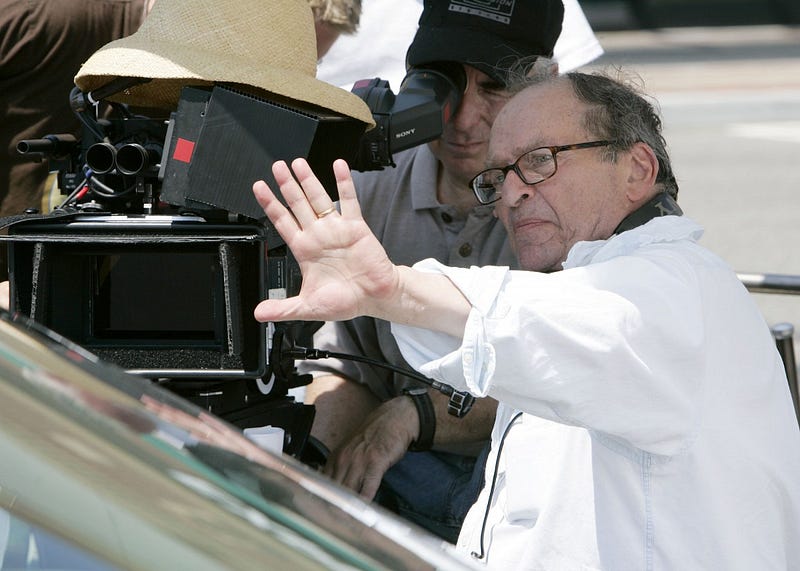
A series featuring reflections on filmmaking by one of the truly great movie directors.
Roger Ebert said this about Making Movies: “It has more common sense in it about how movies are actually made than any other I have read.” That alone is enough reason to read this book authored by Sidney Lumet.
Known as an actor’s director, Lumet directed 17 different actors in Oscar-nominated performances: Katharine Hepburn, Rod Steiger, Al Pacino, Ingrid Bergman, Albert Finney, Chris Sarandon, Faye Dunaway, Peter Finch, Beatrice Straight, William Holden, Ned Beatty, Peter Firth, Richard Burton, Paul Newman, James Mason, Jane Fonda and River Phoenix. Bergman, Dunaway, Finch and Straight won Oscars for their performances in a Lumet movie.
Among his filmmaking credits are such stellar movies as 12 Angry Men, The Pawnbroker, Serpico, Dog Day Afternoon, Network, Equus, Prince of the City, The Verdict, and Running on Empty. He also has five screenwriting credits including Q&A and Night Falls on Manhattan.
As I’ve done with Sundays with Ray Bradbury and Sunday’s with Stephen King’s “On Writing,” I will work my way through Lumet’s book focusing on insights applicable to the craft of screenwriting.
Today: From “Making Movies,” Chapter 5: The Camera: Your Best Friend, p. 76ff.
If my movie has two stars in it, I always know it really has three. The third star is the camera.
Lumet has a long list of what a camera can do ending with this: It can tell a story! Once again, Lumet emphasizes this fundamental fact of filmmaking.
After several pages in the chapter focusing on various cameras, lenses, and film stock, Lumet runs through a number of his movies and how the story influenced how he approached the cinematography.
12 Angry Men: “One of the most important dramatic elements for me was the sense of entrapment those men must have felt in that room. Immediately a ‘lens plot’ occurred to me. As the picture unfolded, I wanted the room to seem smaller and smaller.”
Network: “The movie was about corruption. So we corrupted the camera. We started with an almost naturalistic look… As the picture progressed, camera set up became more rigid, more formal. The lighting became more and more artificial.”
The Deadly Affair: “Thematically it was a film about life's disappointments. I wanted to desaturate the colors. I wanted to get that dreary, lifeless feeling London has in winter.”
Dog Day Afternoon: “The first obligation was to let the audience know that this event really happened. Therefore, the first decision made was that we use no artificial light. The bank was lit by fluorescence in the ceiling.”
Daniel: “Once again we start with the theme: who pays for the passions and commitments of the parents? The children… [we shot] all the scenes of the grown-up children without the 85. It gave everything a ghostly, cold, blue pallor, including flesh tones… The parents are, on the other hand, trapped in an idealized past, retreated in the amber glow of the 85s. It was added to their scenes, interior and exterior.”
Lumet sums up his attitude about cinematography on p. 93:
The overriding consideration for me is that the techniques come from the material. They should change as the material changes. Sometimes it's important not to do anything with the camera, they just “shoot it straight.” And equally important for me is that all this work stay hidden. Good camera work is not pretty pictures. It should augment and reveal the theme as fully as the actors and directors do.
Screenwriting takeaway: We should seek clarity about what our story’s central theme is to help guide the director in determining key elements of the filmmaking process including cinematography.
Come back next Sunday for more of Lumet’s thoughts on story and working with screenwriters.
For previous installments, go here.
For more background on Sidney Lumet’s filmmaking career, go here.
To purchase my book The Protagonist’s Journey: An Introduction to Character-Driven Screenwriting and Storytelling, go here.