Sundays with Sidney Lumet’s “Making Movies”
A weekly series featuring reflections on filmmaking by one of the truly great movie directors.
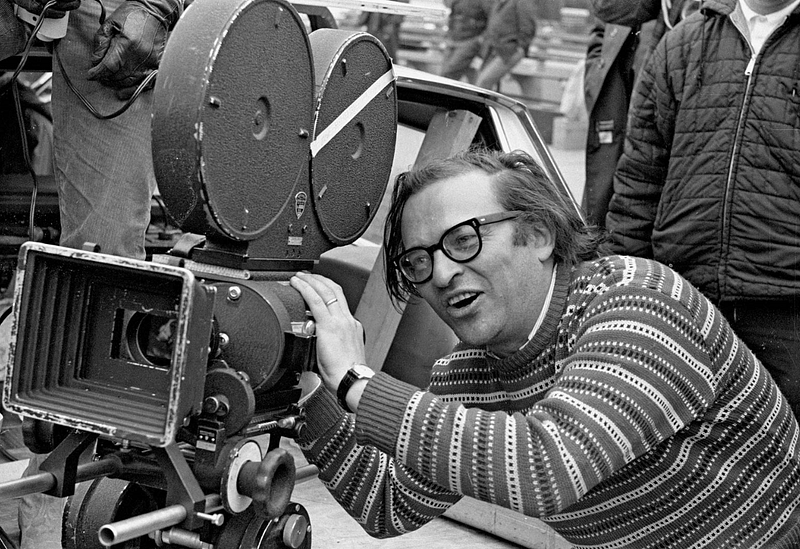
A weekly series featuring reflections on filmmaking by one of the truly great movie directors.
Roger Ebert said this about Making Movies: “It has more common sense in it about how movies are actually made than any other I have read.” That alone is enough reason to read this book authored by Sidney Lumet.
Known as an actor’s director, Lumet directed 17 different actors in Oscar-nominated performances: Katharine Hepburn, Rod Steiger, Al Pacino, Ingrid Bergman, Albert Finney, Chris Sarandon, Faye Dunaway, Peter Finch, Beatrice Straight, William Holden, Ned Beatty, Peter Firth, Richard Burton, Paul Newman, James Mason, Jane Fonda and River Phoenix. Bergman, Dunaway, Finch and Straight won Oscars for their performances in a Lumet movie.
Among his filmmaking credits are such stellar movies as 12 Angry Men, The Pawnbroker, Serpico, Dog Day Afternoon, Network, Equus, Prince of the City, The Verdict, and Running on Empty. He also has five screenwriting credits including Q&A and Night Falls on Manhattan.
As I’ve done with Sundays with Ray Bradbury and Sunday’s with Stephen King’s “On Writing,” I will work my way through Lumet’s book focusing on insights applicable to the craft of screenwriting.
Today: From “Making Movies,” Chapter 1, The Director: The Best Job in the World, p. 10.
I’ve been talking about why I decided to do a particular movie. Now comes the most important decision I have to make: What is the movie about? I’m not talking about plot… But what is it about emotionally? What is the theme of the movie, the spine, the arc? What does the movie mean to me?
The question “What is the movie about?” will be asked over and over again throughout the book. For now, suffice it to say that the theme (the what of the movie) is going to determine the style (the how of the movie). The theme will decide the specifics of every selection made in all the following chapters. I work from the inside out. What the movie is about will determine how it will be cast, how it will look, how it will be edited, how it will be musically scored, how it will be mixed, how the titles will look, and, with a good studio, how it will be released. What it’s all about will determine how it is to be made.
This is the first time I’ve read Making Movies. I make the point because I have taught this screenwriting principle for over a decade:
Theme = Meaning
In fact, I teach an entire week-long course exploring this concept.
Which is to say, I couldn’t agree more with Lumet’s take.
Think of the screenplay universe being composed of two worlds:
The Plotline is the physical realm of action and dialogue, what the audience sees and hears.
The Themeline is the psychological realm of intention and subtext, what the audience senses and interprets.
The Plotline answers the question: What is the story about?
The Themeline answers the question: What does the story mean?
The Plotline is what happens.
The Themeline is why we care.
Here’s the thing: This foundation of the movie exists in the screenplay. It is the screenwriter who sets everything into motion including the what of the movie and the how of the movie. It’s right there in your script.
Or ought to be.
Those questions Lumet asked himself: What is the movie about? What is it about emotionally? What is the theme of the movie, the spine, the arc? What does the movie mean to me?
Those are the exact same questions the screenwriter needs to ask. If you can’t answer those questions in a specific, coherent fashion, then you probably need to spend more time with your characters and your story.
The answers to these questions and how they are manifest in the script pages are important not just to connect with a director, but also in providing a basis for how the movie will be produced.
Drop by next Sunday for the next in our series on the Sidney Lumet book, Making Movies.
For more background on Sidney Lumet’s filmmaking career, go here.