Sundays with Sidney Lumet’s “Making Movies”
A weekly series featuring reflections on filmmaking by one of the truly great movie directors.
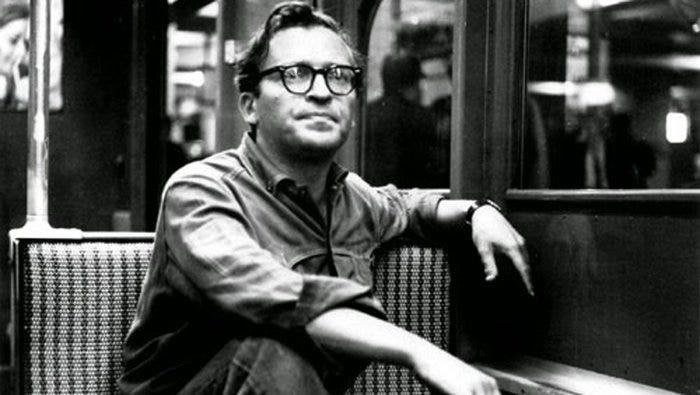
A weekly series featuring reflections on filmmaking by one of the truly great movie directors.
Roger Ebert said this about Making Movies: “It has more common sense in it about how movies are actually made than any other I have read.” That alone is enough reason to read this book authored by Sidney Lumet.
Known as an actor’s director, Lumet directed 17 different actors in Oscar-nominated performances: Katharine Hepburn, Rod Steiger, Al Pacino, Ingrid Bergman, Albert Finney, Chris Sarandon, Faye Dunaway, Peter Finch, Beatrice Straight, William Holden, Ned Beatty, Peter Firth, Richard Burton, Paul Newman, James Mason, Jane Fonda and River Phoenix. Bergman, Dunaway, Finch and Straight won Oscars for their performances in a Lumet movie.
Among his filmmaking credits are such stellar movies as 12 Angry Men, The Pawnbroker, Serpico, Dog Day Afternoon, Network, Equus, Prince of the City, The Verdict, and Running on Empty. He also has five screenwriting credits including Q&A and Night Falls on Manhattan.
As I’ve done with Sundays with Ray Bradbury and Sunday’s with Stephen King’s “On Writing,” I will work my way through Lumet’s book focusing on insights applicable to the craft of screenwriting.
Today: From “Making Movies,” Chapter 2: The Script: Are Writers Necessary?, pp. 42–43. The lead-in to this excerpt includes some anecdotes in which Lumet had so poor working relationships with writers.
Most of my relationships with writers have been just the opposite. My respect for them would grow so great during our working time that I’d want them in on every aspect of the production. Chayefsky, who was also a producer of Network, was a formidable talent. Beneath that comic exterior was a really funny guy. His cynicism was partly a pose, but a healthy dose of paranoia was also in his character. He told me that Network got made only because it was part of a settlement of a lawsuit that he’d brought. I don’t know if this was true, but he was litigious. His answer to conflicts very often was, “Can I sue?”
— —
He clearly knew more about comedy than I did. In a scene where Howard Beale comes wandering into the building looking like a lunatic, mumbling in wet pajamas and a raincoat, the guard had a line as he opened the door: “Sure thing, Mr Beale.” In my heavy-handed way, I told the guard to take in Peter Finch’s disheveled state, then humor him as he said the line. Paddy was at my ear in a second. “This is TV,” he whispered. “He shouldn’t even notice him.” He was right, of course. The line got the laugh at deserved. It wouldn’t even have been funny delivered my way.
But in the marvelously written and acted scene when William Holden tells Beatrice Straight he’s in love with someone else, Paddy started toward me with a comment. I held up my hand and said, “Paddy, please. I know more about divorce than you do.”
We had a wonderful give-and-take during both rehearsal time and shooting time. There were no problems from the first reading of the script through the opening of the movie. Paddy came to rushes (when we look at the previous day’s work), and I invited him into the cutting room. By that time he was happy as could be, and he declined. After the first rough cut of the picture, we sat together with the script and made maybe ten minutes of dialogue cuts, and that was it.
When I look around at some of the absurdities in our lives, at the grotesque times we live through, I constantly wonder what Patty might have done with them. He would have had too much to write about. I miss him every day.
Obviously, the writer-director relationship can be critical to the success or failure of a movie. Some directors, either through their own insecurities or egos, refuse to allow the writers on set. In the end, this arrangement may work out in the finished film, but one would think a director would benefit from having the writer present to share insights into scenes and characters. After all, it is often the case that the writer has spent the most time with the story and knows it most intimately.
With Chayefsky, who won three Oscars for screenwriting (Marty, Hospital, Network), Lumet had no doubt as to the writer’s talent and understanding of his stories. It appears they both respected each other’s instincts. Here are the two scenes cited above. The first, Howard Beale entering the TV studio where he is about to deliver his “I’m as mad as hell and I’m not going to take it anymore” speech.
The second is the break-up scene between Max and Louise.
The two takeaways I would draw from this book excerpt for aspiring screenwriters are these:
- Movies are — for better or worse — primarily a director’s medium. If you choose not to pursue directing your own material, you have to anticipate, even prepare yourself for a final product which may not represent your vision. That may not be a bad thing. Between the actors inhabiting your characters and the director having an insightful vision, that process may result in something better than you imagined. However, it may also lead to a bad movie. Since it’s a director’s medium, you will have little input and no control over what ends up on the screen.
- The single best thing you can do to avoid such a situation is to write a script which is so well-written, where it’s clear that you have a specific vision for the characters and story that rings true to the director, producers, and studio execs, you become indispensable. This can happen. I think of movies like Juno or Little Miss Sunshine in which the director embraced the writer’s vision for the story, then added their own, each resulting in successful movies. Note: Both writers won Oscars for their scripts. That fact alone reinforces this point: Write a great script.
Actually, there is a third takeaway and that’s the fact that the only editorial changes Lumet made in concert with Chayefsky was to cut ten minutes of dialogue in Network. One might think that a wordsmith as brilliant as Paddy Chayefsky would be super protective of the words he wrote, particularly dialogue for which he was famous. But here is a quote from the writer himself:
“If it should occur to you to cut, do so. That’s the first basic rule of editing.”
If a writer like Chayefsky was as ruthless as he was editing his words, we should be, too.
Come back next Sunday for more of Lumet’s thoughts on story and working with screenwriters.
For previous installments, go here.
For more background on Sidney Lumet’s filmmaking career, go here.
To purchase my book The Protagonist’s Journey: An Introduction to Character-Driven Screenwriting and Storytelling, go here.