Sundays with Sidney Lumet’s “Making Movies”
A weekly series featuring reflections on filmmaking by one of the truly great movie directors.
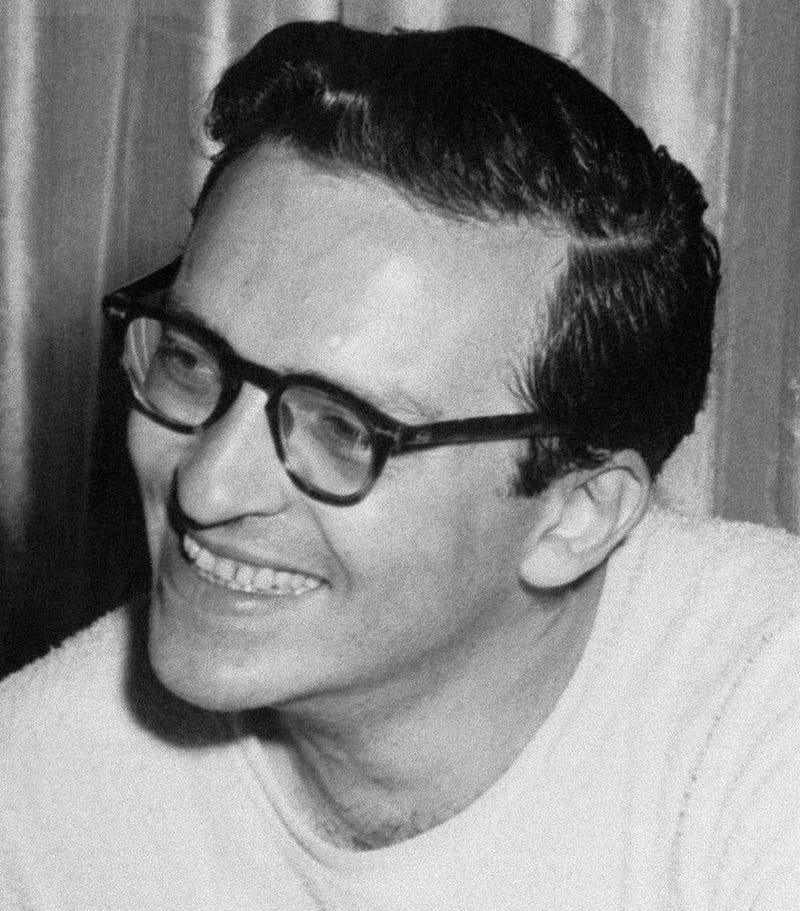
A weekly series featuring reflections on filmmaking by one of the truly great movie directors.
Roger Ebert said this about Making Movies: “It has more common sense in it about how movies are actually made than any other I have read.” That alone is enough reason to read this book authored by Sidney Lumet.
Known as an actor’s director, Lumet directed 17 different actors in Oscar-nominated performances: Katharine Hepburn, Rod Steiger, Al Pacino, Ingrid Bergman, Albert Finney, Chris Sarandon, Faye Dunaway, Peter Finch, Beatrice Straight, William Holden, Ned Beatty, Peter Firth, Richard Burton, Paul Newman, James Mason, Jane Fonda and River Phoenix. Bergman, Dunaway, Finch and Straight won Oscars for their performances in a Lumet movie.
Among his filmmaking credits are such stellar movies as 12 Angry Men, The Pawnbroker, Serpico, Dog Day Afternoon, Network, Equus, Prince of the City, The Verdict, and Running on Empty. He also has five screenwriting credits including Q&A and Night Falls on Manhattan.
As I’ve done with Sundays with Ray Bradbury and Sunday’s with Stephen King’s “On Writing,” I will work my way through Lumet’s book focusing on insights applicable to the craft of screenwriting.
Today: From “Making Movies,” Chapter 2: The Script: Are Writers Necessary?, pp. 45–46.
Generally, I don’t invite the writer to the rushes or the editing room. But if it’s possible, I want the writer to see the first cut. First cuts of a picture always have to have some time taken out of them. Most writers are able to see repetitions in their own work. Because of the camera, some of what’s been written may become clear sooner. And in a disciplined final cut, any duplication should go. The writer can be helpful in this process.
In a sense, a movie is constantly being rewritten. The various contributions of the director and the actors, the music, sound, camera, decor, and editing, are so powerful that the movie is always changing. All these factors add digressions, increase or subtract from clarity, change the mood, or tip the balance of the story. It’s like watching a column of water whose color keeps changing as different dyes are added. I think it’s important for the writer to understand and, ideally, enjoy the process. In movies it’s inevitable, and as long as the primary intention has been kept, the new elements should be welcomed.
I think that’s generally true: If you read a script and watch the movie at the same time — a practice I highly recommend for screenwriters — it’s common to find scripted content which did not make it into the film version of the story. [There are exceptions. Most animated movies are closely aligned to the scripts because of the exacting process required in the script phase for that medium. In terms of live-action, the Coen brothers may be the best example of what’s on the page ends up on the screen: no more, no less.]
There’s an object lesson here for screenwriters: Sometimes what we think is necessary turns out to be unnecessary. There is a kind of magic that happens during production and post between the contributions provided by the camera, the actors, the editor, and so forth. This is especially true with dialogue as the power of visual storytelling can make lines or even entire dialogue-laden scenes superfluous.
In other words, writers should not be precious about what they’ve put down on the page. A screenplay is not a novel. It is not the final product, but rather an essential piece of a collaborative process. We need to respect that process.
However, we also have a responsibility to the story. Depending upon where we enter the scripting process, especially if we have originated the project and stuck with it throughout, it’s quite likely no one knows the heart, soul, and, essence of the story as well as we do. Lumet makes this point several times in this chapter of “Making Movies.” That is the sign of an enlightened director.
It’s interesting Lumet phrases it this way: “In a sense, a movie is constantly being rewritten.” Not revised. Rewritten. From a screenwriter’s perspective, the filmmaking process is probably best thought of as an extension and expansion of the written word.
Ideally, that process conjures up movie-making magic along the way.
Here is an 1995 interview with Sidney Lumet:
Come back next Sunday for more of Lumet’s thoughts on story and working with screenwriters.
For previous installments, go here.
For more background on Sidney Lumet’s filmmaking career, go here.
To purchase my book The Protagonist’s Journey: An Introduction to Character-Driven Screenwriting and Storytelling, go here.