Sundays with Sidney Lumet’s “Making Movies”
A weekly series featuring reflections on filmmaking by one of the truly great movie directors.
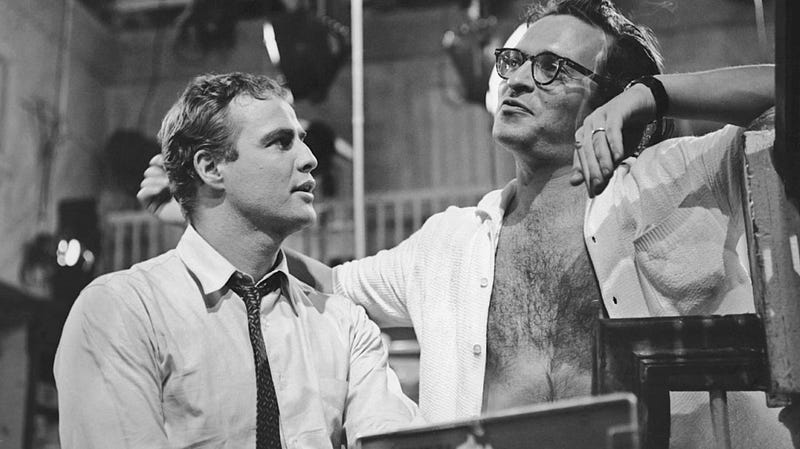
A weekly series featuring reflections on filmmaking by one of the truly great movie directors.
Roger Ebert said this about Making Movies: “It has more common sense in it about how movies are actually made than any other I have read.” That alone is enough reason to read this book authored by Sidney Lumet.
Known as an actor’s director, Lumet directed 17 different actors in Oscar-nominated performances: Katharine Hepburn, Rod Steiger, Al Pacino, Ingrid Bergman, Albert Finney, Chris Sarandon, Faye Dunaway, Peter Finch, Beatrice Straight, William Holden, Ned Beatty, Peter Firth, Richard Burton, Paul Newman, James Mason, Jane Fonda and River Phoenix. Bergman, Dunaway, Finch and Straight won Oscars for their performances in a Lumet movie.
Among his filmmaking credits are such stellar movies as 12 Angry Men, The Pawnbroker, Serpico, Dog Day Afternoon, Network, Equus, Prince of the City, The Verdict, and Running on Empty. He also has five screenwriting credits including Q&A and Night Falls on Manhattan.
As I’ve done with Sundays with Ray Bradbury and Sunday’s with Stephen King’s “On Writing,” I will work my way through Lumet’s book focusing on insights applicable to the craft of screenwriting.
Today: From “Making Movies,” Chapter 1, The Director: The Best Job in the World, p. 26.
Of course, the actors are shooting completely out of sequence. But that’s one of the benefits of rehearsal. I rehearse for a minimum of two weeks, sometimes three, depending upon the complexity of the characters. We had no money to make 12 Angry Men. The budget was $350,000. That’s right: $350,000. Once a chair was lit, everything that took place in that chair was shot. Well, not quite. We went around the room three times: once for normal light, a second time for the rain clouds gathering, which changed the quality of the light coming from the outside, and the third time when the overhead lights were turned on. Lee Cobb arguing with Henry Fonda would obviously have shots of Fonda (against wall C) and shots of Cobb (against wall A). They were shot seven or eight days apart. It meant, of course, that I had to have a perfect emotional memory of the intensity reached by Lee Cobb seven days earlier. But that’s where rehearsals were invaluable. After two weeks of rehearsal, I had a complete graph in my head of where I wanted each level of emotion in the movie to be. We finished in nineteen days (a day under schedule) and were $1000 under budget. [emphasis added]
From the standpoint of physical production, the context of this scene involves Lumet detailing how — for budgetary reasons — he would shoot all the scenes in one location against various walls (e.g., Wall A, Wall B, Wall C, etc.), one wall at a time. Since shots would be done out of sequence, this is why it was critical for Lumet to have a “complete graph in my head” of “each level of emotion,” a “perfect emotional memory of the intensity” of each actor playing each character. This way, he could work with the actors to achieve a continuity in terms of each character’s emotional throughline.
All of this begins with the screenplay. For while the actors bring their unique interpretive sensibilities to their roles … and the director has their own vision of where characters are and should be emotionally scene to scene … and how the magic of the filmmaking process may influence both actors and director about each character’s arc … the fact remains that this process must begin somewhere. And that start point is the script.
Therefore, it is imperative for the screenwriter to replicate in their own way what Lumet espouses: WE must have a “perfect emotional memory of the intensity” of each character with every scene we write, indeed, every moment within every scene. WE must have a “complete graph” in our head of “each level of emotion” for each character, not only in the moment, but where they are in terms of whatever arc they may be experiencing on their specific psychological journey. WE are the first arbiters in assessing, then communicating the emotional nature of all of our story’s characters to readers (e.g., director, actor, producer, studio exec).
How to do that? In my view, by putting ourselves in a position where the characters drive the process. As Lumet would spend time rehearsing with his actors, reading aloud through the script over and over, so, too, do we need to spend the requisite amount of time with our characters so they come to life.
This is a process of receptive writing where by giving ourselves over to our characters, learning as much as we can about them, and trusting they will steer us into and through their individual and collective journeys, we find the story of their lives.
If we short-change that process, we run the risk of not only crafting thin characters, but also missing the story in part or entirely. And “depending upon the complexity of the characters,” that process of receptive writing may take many weeks, even months.
This is not a rule, but rather a statement of faith: If we earnestly immerse ourselves in the lives of our characters, they will reveal themselves to us. In so doing, we can come to such a deep level of understanding about our characters and their emotional lives, that intimacy and understanding will not only inspire our writing, but also guide us into writing scenes that are emotionally authentic. And if we accomplish that, then we increase the chance that actors and the director will align themselves with our take of the characters and their emotional nature. In making the movie, they have the freedom to do what they do to bring the written word to life, but hopefully a process grounded in and guided by the story we have written.
As I say: Begin with character. End with character. Find the story in between.
Next week, we start going through Chapter Two of Making Movies. Its title? “The Script: Are Writers Necessary?”
Drop by next Sunday for the next in our series on the Sidney Lumet book, Making Movies. For previous installments, go here.
For more background on Sidney Lumet’s filmmaking career, go here.