Sundays with Sidney Lumet’s “Making Movies”
A weekly series featuring reflections on filmmaking by one of the truly great movie directors.
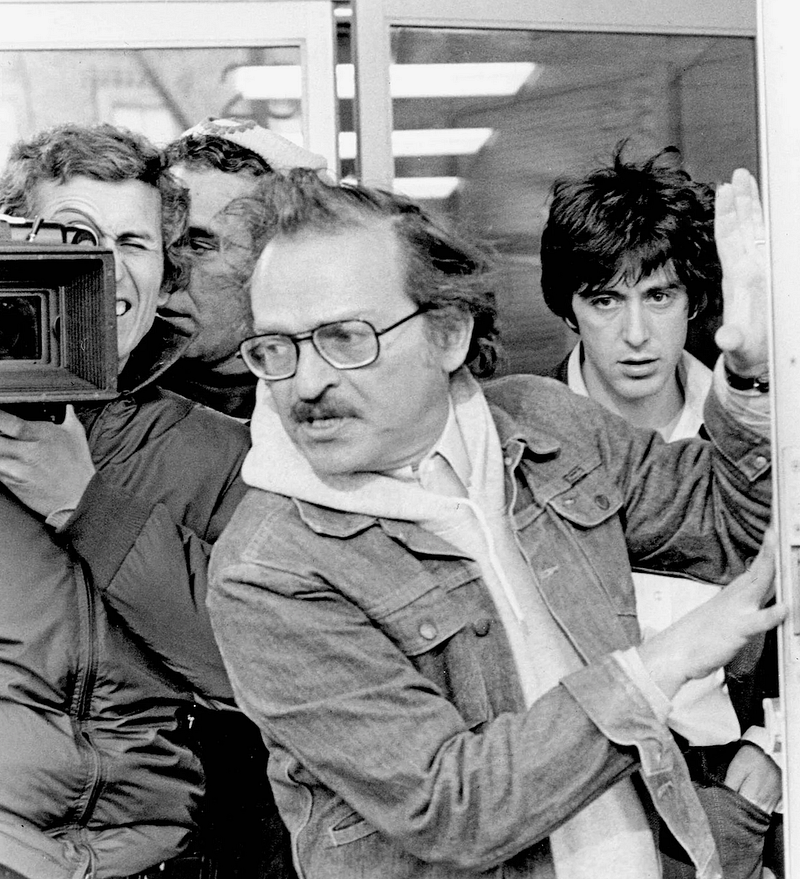
A weekly series featuring reflections on filmmaking by one of the truly great movie directors.
Roger Ebert said this about Making Movies: “It has more common sense in it about how movies are actually made than any other I have read.” That alone is enough reason to read this book authored by Sidney Lumet.
Known as an actor’s director, Lumet directed 17 different actors in Oscar-nominated performances: Katharine Hepburn, Rod Steiger, Al Pacino, Ingrid Bergman, Albert Finney, Chris Sarandon, Faye Dunaway, Peter Finch, Beatrice Straight, William Holden, Ned Beatty, Peter Firth, Richard Burton, Paul Newman, James Mason, Jane Fonda and River Phoenix. Bergman, Dunaway, Finch and Straight won Oscars for their performances in a Lumet movie.
Among his filmmaking credits are such stellar movies as 12 Angry Men, The Pawnbroker, Serpico, Dog Day Afternoon, Network, Equus, Prince of the City, The Verdict, and Running on Empty. He also has five screenwriting credits including Q&A and Night Falls on Manhattan.
As I’ve done with Sundays with Ray Bradbury and Sunday’s with Stephen King’s “On Writing,” I will work my way through Lumet’s book focusing on insights applicable to the craft of screenwriting.
Today: From “Making Movies,” Chapter 2: The Script: Are Writers Necessary?, pp. 30–31.
Once we’ve agreed on the all-important question “What’s this picture about?” we can start in on the details. First comes an examination of each scene — in sequence, of course. Does this scene contribute to the overall theme? How? Does it contribute to the story line? To character? Is the story line moving in an ever increasing arc of tension or drama? In the case of a comedy, is it getting funnier? Is the story being moved forward by the characters?
— —
I think inevitability is the key. In a well-made drama, I want to feel: “Of course — that’s where it was heading all along.” And yet the inevitability mustn’t eliminate surprise. There’s not much point in spending two hours on something that became clear in the first five minutes. Inevitability doesn’t mean predictability. The script must still keep you off balance, keep you surprised, entertained, involved, and yet, when the denouement is reached, still give you the sense that the story had to turn out that way.
So much to unpack here, all of it exciting my own writing instincts.
- Does this scene contribute to the overall theme? This speaks to one of the primary values of a story’s central theme: It becomes a touchstone for the writer to use in zeroing in on the point of each scene. Not just plot, but what the story means.
- Is the story line moving in an ever increasing arc of tension or drama? This question, which may be applied to every scene and each sequence, forces the writer to engage the psychological journey of the characters, specifically the Protagonist. For it is their inner conflict explored in the events of the plotline and interactions with other characters which generates “tension and drama.” This is not some intellectual or conceptual exercise, but rather an exploration of the emotional life of this central character. By extension, it is that emotional throughline which is what the audience taps into through their own emotional experience of the story.
- Is the story being moved forward by the characters? This speaks to why my book is subtitled An Introduction to Character-Driven Screenwriting and Storytelling. A central premise is that it is the characters who move a story “forward” — their goals, wants, needs, choices, actions, and psychological journeys.
- I think inevitability is the key… when the denouement is reached, still give you the sense that the story had to turn out that way. I call it Narrative Imperative. Indeed, Part I of my book is titled: The Protagonist’s Journey as Narrative Imperative. In a nutshell, the journey the Protagonist takes is they one they need to take. It is their fate. The seeds of that journey lie inside the character’s psyche from the point of Fade In. Everything that happens feeds that need, what I call their Unconscious Goal. That is why the Call to Adventure. That is why these characters the Protagonist meets. That is why they experience the events of the plotline. It is inevitable because it is imperative they experience that specific narrative.
Do you remember this interchange toward the end of The Wizard of Oz?
Dorothy: Oh, will you help me? Can you help me?
Glinda: You don’t need to be helped any longer. You’ve always had the power to go back to Kansas.
Dorothy: I have?
Scarecrow: Then why didn’t you tell her before?
Glinda: Because she wouldn’t have believed me? She had to learn it for herself.
She had to learn it for herself. There it is! The essence of the Protagonist’s journey. The “power” to change has always been inside. The Protagonist must go on their journey in order for them to become aware of that power, embrace it, and allow it to infuse their metamorphosis.
It is not a generic journey, but a specific one. Again, the journey the Protagonist takes is the one they need to take.
As television writer-producer Javier Grillo-Marxuach (Lost, Medium, Cowboy Bebop) says: “A great script creates an irresistible narrative flow that propels a reader to an inevitable dramatic conclusion.” And yet…
- The script must still keep you off balance, keep you surprised, entertained, involved. How in the world to do that if the character’s journey is inevitable? Ah, that’s where the proverbial rubber meets the road, isn’t it? In my humble opinion, this is where character-driven storytelling pays off in spades. When we immerse ourselves in the lives of our characters and know especially well the arc of our Protagonist’s psychological journey, they — by their very nature because they are characters — will surprise us. We plan one thing, they steer the plot in another direction. We envision them saying this, they say something quite different. While we may see a story’s bigger picture, characters live in and act in the moment. Thus, they make choices which derive from where they are in that moment. The potential for surprising turn of events exists within our characters precisely because they are free agents throughout the story as they progress from one event in the present tense to other events as they unfold in The Now.
And that is why I get so excited reading Lumet’s comments here because they echo everything I believe about the power of character-driven storytelling.
I can’t wait to read more of this book!
Come back next Sunday for more of Lumet’s thoughts on story and working with screenwriters.
For previous installments, go here.
For more background on Sidney Lumet’s filmmaking career, go here.
To purchase my book The Protagonist’s Journey: An Introduction to Character-Driven Screenwriting and Storytelling, go here.