Sundays with Sidney Lumet’s “Making Movies”
A weekly series featuring reflections on filmmaking by one of the truly great movie directors.
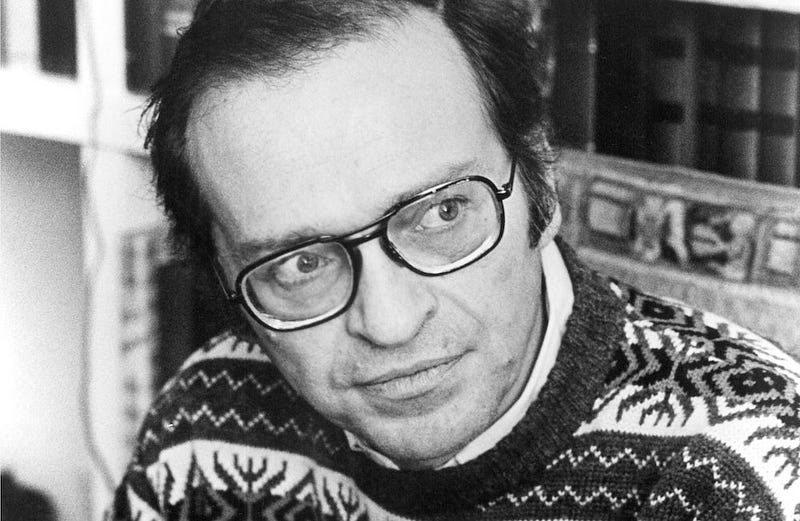
A weekly series featuring reflections on filmmaking by one of the truly great movie directors.
Roger Ebert said this about Making Movies: “It has more common sense in it about how movies are actually made than any other I have read.” That alone is enough reason to read this book authored by Sidney Lumet.
Known as an actor’s director, Lumet directed 17 different actors in Oscar-nominated performances: Katharine Hepburn, Rod Steiger, Al Pacino, Ingrid Bergman, Albert Finney, Chris Sarandon, Faye Dunaway, Peter Finch, Beatrice Straight, William Holden, Ned Beatty, Peter Firth, Richard Burton, Paul Newman, James Mason, Jane Fonda and River Phoenix. Bergman, Dunaway, Finch and Straight won Oscars for their performances in a Lumet movie.
Among his filmmaking credits are such stellar movies as 12 Angry Men, The Pawnbroker, Serpico, Dog Day Afternoon, Network, Equus, Prince of the City, The Verdict, and Running on Empty. He also has five screenwriting credits including Q&A and Night Falls on Manhattan.
As I’ve done with Sundays with Ray Bradbury and Sunday’s with Stephen King’s “On Writing,” I will work my way through Lumet’s book focusing on insights applicable to the craft of screenwriting.
Today: Sidney describes how he always gathers the actors and many key members of the film’s crew for a two-week period of table reads and rehearsals. Lumet talks about how depending upon the complexity of the story, he will have already been in preproduction “anywhere from two and a half to six months.” But before any of that comes to fruition, there is one critical decision that needs to be made. From “Making Movies,” Chapter 1, The Director: The Best Job in the World, p. 8.
The first decision, of course, was whether to do the movie. I don't know how other directors decide. I decide completely instinctively, very often on just one reading. This has produced very good movies and very bad ones. But it's the way I've always done it, and I'm too old to change now. I don't analyze a script as I read it for the first time. I just sort of let it wash over me… I also make sure that I have the time to read a script straight through. The script can have a very different feeling if reading it is interrupted, even for half an hour. The final movie will be seen uninterrupted, so why should reading the script for the first time be any different… What's important is that the material involve me personally on some level.
As screenwriters, we write in a kind of vacuum. Whether we write in the quiet privacy of our home study or a corner table in a bustling coffee shop, the act of writing boils down to us… the story’s characters… and words on a page.
However, looming out there somewhere on the horizon are people who will read our script. Script readers who provide coverage… agents or managers looking for new talent… producers and development executives on the hunt for potential film or television projects… actors searching for juicy roles… and directors considering what to take up next.
Therefore, as we write, we find ourselves in an intriguing situation, whether conscious of the fact or not: While we write for ourselves, shaping words into action and dialogue that meets with our approval, we are also writing for the reader, whoever that may be. There we hope we have somehow managed to convey the movie we see in our mind’s eye onto the page and that this printed version of that “movie” translates into the reader’s imagination.
Perhaps the single most important goal is reflected in the last line of today’s excerpt from Making Movies: To involve the reader “personally on some level.”
What about our story has the potential to engage a reader’s mind? To connect with their feelings? To arouse their emotions? To get them involved with the story so that they care about the characters and follow that interest page to page from Fade In to Fade Out?
As far as a director is concerned, a screenwriter does well to ask, “What is it about my story which will compel a director to take it on as their project?”
If you watch Lumet’s movies, that always boils down to this: the characters. For it is the psychological journey of the characters which “involves” a director on a “personal” level. It is those emotional dynamics which cause the director to identify with the characters and experience the story vicariously through them.
In other words, our goal should be to make the reader, including the director, feel something. And by the way, if our words can arouse emotions within the reader, chances are they will sit and read our script straight through, as opposed to an uninvolving story which allows the reader’s mind to wander… Maybe I should have a muffin… I think I should answer those emails waiting for me… I wonder what’s happening on Twitter?
“What’s important is that the material involve me personally on some level.”
That should be one of our goals with any script we write.
Drop by next Sunday for the next in our series on the Sidney Lumet book, Making Movies.
For more background on Sidney Lumet’s filmmaking career, go here.